

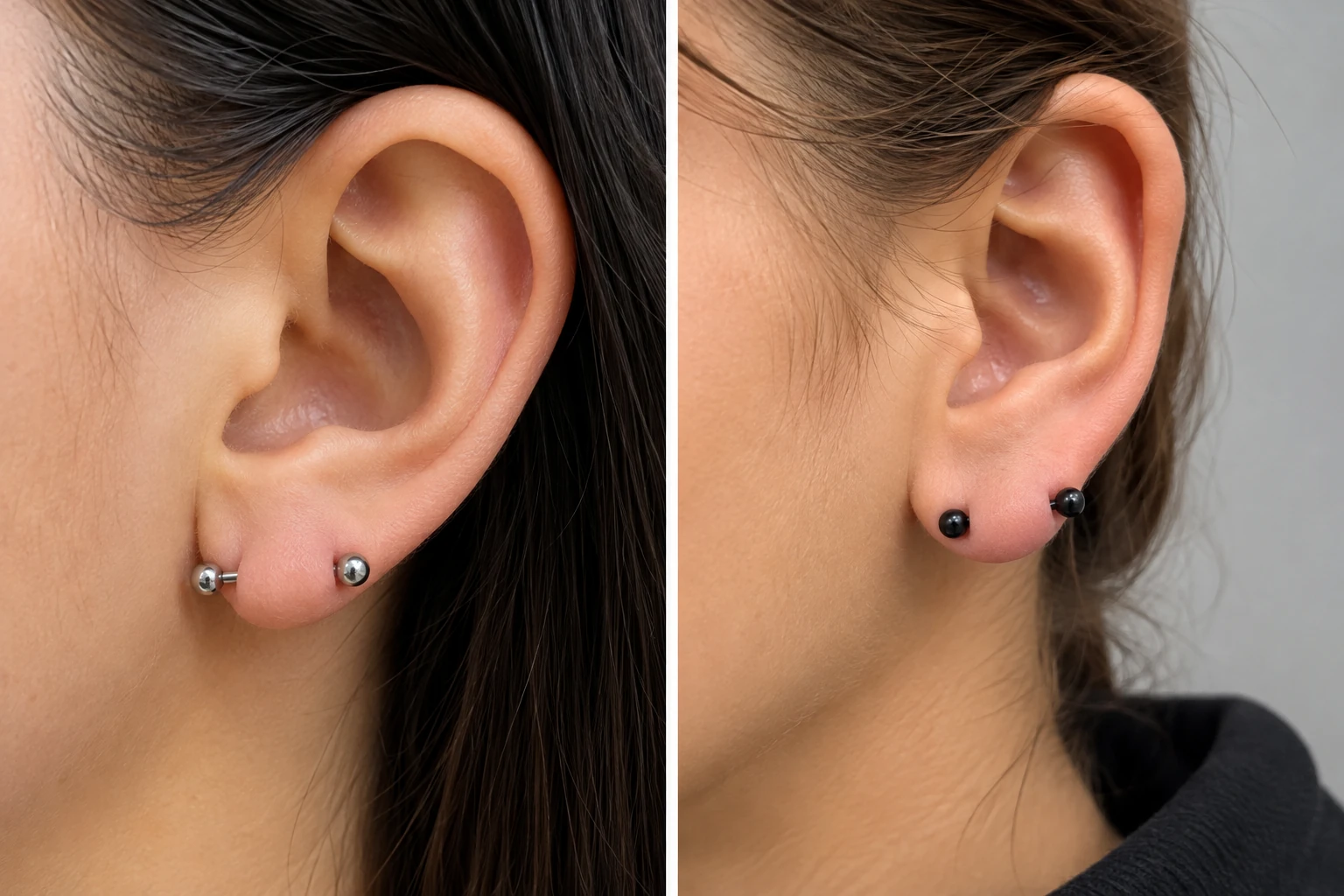

A transverse lobe piercing is a unique ear piercing style that offers a different look from traditional earlobe piercings. Instead of passing vertically through the earlobe from front to back, this piercing travels horizontally through the soft tissue of the earlobe. Its distinctive placement creates an eye-catching appearance while allowing people to experiment with different jewelry styles.
Although transverse lobe piercings look similar to ordinary lobe piercings at first glance, their placement, healing process, and jewelry requirements are quite different. They require careful consideration because the jewelry passes through a larger section of tissue and may be more vulnerable to irritation, migration, and rejection.

If you are considering getting one, understanding its pain level, healing time, jewelry options, potential risks, and aftercare requirements can help you make an informed decision.
In this guide, we will cover everything you need to know about transverse lobe piercing, including its benefits, disadvantages, cost, and essential healing tips.
What Is a Transverse Lobe Piercing?
A transverse lobe piercing is a horizontal piercing that passes through the fleshy part of the earlobe. Unlike a traditional lobe piercing, which creates a straight channel from the front to the back of the ear, a transverse piercing runs sideways through the tissue.
The jewelry typically enters and exits through two openings positioned along the lower portion of the earlobe. A curved barbell or another appropriately designed piece of jewelry connects these openings.
This piercing creates a distinctive appearance because the jewelry follows the natural width of the earlobe rather than sitting vertically through it.
One important detail is that transverse lobe piercings are not suitable for every ear. The amount of soft tissue, earlobe thickness, and individual anatomy determine whether someone can safely get this piercing.
A professional piercer should assess your anatomy before recommending the procedure.
How Is a Transverse Lobe Piercing Different From a Standard Lobe Piercing?
The main difference between these two styles is their direction and placement.
A standard lobe piercing passes through the earlobe vertically, creating an opening on the front and another on the back. It is one of the most common and straightforward ear piercings.
A transverse lobe piercing follows a horizontal path through the fleshy tissue. Depending on the placement, both openings may be visible along the lower edge or sides of the earlobe.
Other important differences include:
Direction: Standard lobe piercings run front to back, while transverse piercings travel horizontally.
Jewelry: Traditional lobe piercings commonly use studs or hoops, whereas transverse piercings generally require specialized curved jewelry.
Healing: Transverse piercings may take longer to heal because of their placement and the amount of tissue involved.
Anatomy: A transverse piercing requires sufficient earlobe tissue and careful placement.
Maintenance: Jewelry movement, pressure, and accidental catching can irritate the piercing.
Because of these differences, a transverse lobe piercing should not be treated exactly like a regular earlobe piercing.
Transverse Lobe Piercing Pain Level
One of the most common questions people ask before getting this piercing is how painful it is.
A transverse lobe piercing generally causes moderate discomfort. However, the exact pain level depends on individual pain tolerance, earlobe thickness, piercing technique, and the experience of the professional piercer.
The procedure involves passing a sterile piercing needle horizontally through the soft tissue. You may experience a sharp pinching sensation followed by pressure.
Some people describe the pain as similar to a standard lobe piercing, while others find it more uncomfortable because of the longer piercing channel.
Does a Transverse Lobe Piercing Hurt More Than a Regular Lobe Piercing?
It can feel more uncomfortable than a traditional lobe piercing, but this is not the same for everyone.
A standard lobe piercing usually involves a relatively short passage through the earlobe. A transverse piercing follows a longer horizontal path, which may create additional pressure and discomfort.
Pain is also influenced by the piercer's technique and the condition of your ear tissue.
Choosing an experienced professional who understands this piercing style can help make the procedure more comfortable.
Transverse Lobe Piercing Healing Time
Healing time is an important consideration before getting a transverse lobe piercing.
A traditional lobe piercing often heals within a few months, but a transverse piercing may require approximately 6 to 12 months or sometimes longer to heal fully.
This extended healing period is partly related to its horizontal placement and the amount of tissue involved.
Healing times vary significantly between individuals. Some piercings may appear healed externally while the internal piercing channel is still recovering.
Stages of the Healing Process
1. Initial Healing
During the first few weeks, you may notice mild swelling, redness, tenderness, and sensitivity around the piercing openings. A small amount of clear or pale fluid that dries into a crust can also occur.
These symptoms should gradually improve rather than become increasingly severe.
2. Intermediate Healing
As the piercing progresses, swelling and tenderness should decrease. The openings may begin to look healthier, although the internal tissue still needs time to recover.
Avoid changing jewelry or applying unnecessary pressure during this stage.
3. Complete Healing
A fully healed transverse lobe piercing should no longer be tender, swollen, or producing unusual discharge. The piercing channel should also be stable.
Do not assume that the piercing is fully healed simply because the outside looks normal. A qualified piercer can help assess whether it is ready for a jewelry change.
Best Jewelry for Transverse Lobe Piercing
Choosing suitable jewelry is essential for comfort and successful healing.
Unlike standard lobe piercings, transverse lobe piercings often require jewelry that follows the horizontal shape of the piercing channel.
1. Curved Barbell
A curved barbell is one of the commonly used jewelry styles for transverse piercings. Its curved shape can accommodate the natural contour of the earlobe.
However, the appropriate jewelry shape depends on the individual's anatomy and piercing placement.
2. Titanium Jewelry
Implant-grade titanium is a popular choice for fresh piercings because it is lightweight, durable, and generally well tolerated.
Look for properly documented implant-grade materials rather than relying on a product simply being marketed as titanium.
3. Solid Gold Jewelry
Solid 14-karat or 18-karat nickel-free gold may be suitable for healed piercings or fresh piercings when the design and quality meet professional piercing standards.
Avoid gold-plated jewelry because the coating can wear away and expose the underlying metal.
4. Internally Threaded Jewelry
Internally threaded jewelry has a smooth post that passes through the piercing, while the removable decorative end screws into it.
This design helps reduce unnecessary friction during insertion and removal.
5. Threadless Jewelry
Threadless jewelry uses a pressure-fit mechanism instead of traditional screw threads. It can provide a comfortable and secure option when properly fitted.
The most important factor is not appearance but proper sizing, material quality, and suitability for your specific anatomy.
How Much Does a Transverse Lobe Piercing Cost?
The cost of a transverse lobe piercing depends on the piercing studio, location, jewelry material, and professional experience.
In the United States, the procedure may cost approximately $40 to $100 or more, excluding premium jewelry in some studios.
High-quality implant-grade titanium or solid gold jewelry may increase the overall expense.
Several factors influence the price:
Professional piercer's experience
Studio reputation and hygiene standards
Jewelry material and design
Geographic location
Follow-up appointments or additional services
Do not choose a piercing studio simply because it offers the cheapest price. Proper sterilization, professional technique, and suitable jewelry are more important than saving a small amount of money.
Transverse Lobe Piercing Aftercare
Proper aftercare is essential for reducing irritation and supporting healthy healing.
Because transverse lobe piercings pass horizontally through the earlobe, pressure and unnecessary movement can cause problems.
Follow these aftercare recommendations.
1. Clean With Sterile Saline Solution
Clean the piercing gently using sterile saline wound wash containing 0.9% sodium chloride.
Follow the product instructions and avoid homemade salt mixtures that may be too concentrated.
2. Avoid Touching the Jewelry
Always wash your hands before touching the area.
Avoid twisting, rotating, pulling, or moving the jewelry unnecessarily. These actions can irritate the healing tissue.
3. Avoid Sleeping on the Pierced Ear
Direct pressure can cause swelling, tenderness, and irritation.
Try sleeping on the opposite side or using a travel pillow with an opening that keeps pressure away from the pierced ear.
4. Keep Hair and Accessories Away
Hair, headphones, hats, and clothing can catch on the jewelry.
Be especially careful when brushing your hair, changing clothes, or using over-ear headphones.
5. Avoid Harsh Cleaning Products
Do not use alcohol, hydrogen peroxide, strong antiseptics, or harsh antibacterial soaps directly on the piercing.
These products may irritate healing tissue and delay recovery.
6. Do Not Change Jewelry Too Early
Changing jewelry before the piercing has healed can damage the internal tissue.
If the jewelry is too tight, too long, or causing irritation, consult a qualified piercer rather than attempting to replace it yourself.
Risks and Complications of Transverse Lobe Piercing
Like other body piercings, transverse lobe piercings carry certain risks.
Understanding these complications can help you recognize problems early.
Infection
Bacteria can enter the piercing through contaminated hands, unclean equipment, or poor aftercare.
Possible infection symptoms include:
Increasing redness and swelling
Worsening pain or warmth
Thick yellow or green discharge
Unpleasant odor
Fever or feeling unwell
If you suspect an infection, seek medical advice promptly. Do not remove the jewelry yourself unless a healthcare professional advises you to do so.
Migration
Migration occurs when jewelry gradually moves from its original placement.
This can happen when the jewelry experiences repeated pressure, trauma, or tension.
You may notice the openings changing position or the tissue between them becoming thinner.
Rejection
Rejection occurs when the body gradually pushes the jewelry toward the surface of the skin.
Signs may include:
Increasingly visible jewelry
Thinning skin around the piercing
Changes in the position of the openings
Persistent irritation
If rejection is suspected, consult a professional piercer or healthcare provider.
Scarring
Improper placement, repeated irritation, and complications can lead to scarring.
Some individuals may also develop hypertrophic scars or keloids, particularly if they have a personal tendency toward these types of scars.
Swelling and Irritation
Mild swelling is common during the initial healing period.
However, prolonged swelling, persistent pain, and jewelry that feels too tight should not be ignored.
A professional assessment can help identify whether the jewelry needs adjustment or whether another complication is developing.
Pros and Cons of Transverse Lobe Piercing
Before choosing this piercing, consider its advantages and disadvantages.
Pros
Unique Appearance: It offers a distinctive alternative to traditional lobe piercings.
Creative Jewelry Options: Different curved designs can create an attractive appearance.
Personal Style: It allows people to experiment with less common ear-piercing placements.
Combination Potential: It can complement other ear piercings when the anatomy and available space allow.
Cons
Longer Healing: It may require 6 to 12 months or longer to heal completely.
Anatomy Restrictions: Not every earlobe is suitable for this piercing.
Jewelry Limitations: Specialized jewelry may be necessary.
Risk of Migration: Its placement can make it vulnerable to pressure and movement.
Aftercare Requirements: Consistent cleaning and protection are important throughout healing.
Can Everyone Get a Transverse Lobe Piercing?
No. A transverse lobe piercing is not suitable for every person.
The thickness, shape, and amount of soft tissue in the earlobe play an important role in determining whether the piercing can be performed safely.
People with very thin earlobes may not have enough tissue to support the piercing properly.
A professional piercer should examine your ear and determine whether the piercing is appropriate.
You should also discuss any history of keloid scarring, skin conditions, healing difficulties, or previous piercing complications before proceeding.
Never attempt to perform this piercing at home.
Can You Sleep on a Transverse Lobe Piercing?
Sleeping directly on a fresh transverse lobe piercing is not recommended.
Pressure from a pillow can cause irritation, swelling, and discomfort. It may also place unnecessary stress on the jewelry.
During healing, sleep on the opposite side whenever possible.
A travel pillow or piercing pillow with a central opening can help prevent direct contact with the affected ear.
Even after the initial healing period, avoid applying excessive pressure if the piercing remains sensitive.
Can You Wear Headphones With a Transverse Lobe Piercing?
You may be able to wear headphones after getting a transverse lobe piercing, but you should avoid anything that presses directly against the jewelry.
Over-ear headphones can create pressure around the earlobe, while some other headphone designs may accidentally catch the jewelry.
During healing, choose alternatives that do not touch or put pressure on the pierced area.
If wearing headphones causes pain, swelling, or irritation, stop using them until the problem has been assessed.
How to Know If Your Transverse Lobe Piercing Is Fully Healed
A fully healed piercing should be comfortable and stable.
Common signs of healing include:
No persistent redness or swelling
No tenderness when the area is gently touched
No unusual discharge
Stable jewelry placement
No recurring irritation
However, appearance alone cannot always confirm that the internal piercing channel has completely healed.
If you are unsure, ask an experienced piercer to evaluate it before changing jewelry.
Frequently Asked Questions About Transverse Lobe Piercing
1. Is a transverse lobe piercing painful?
A transverse lobe piercing usually causes moderate discomfort. You may experience a sharp pinch and pressure while the needle passes through the earlobe. Individual pain tolerance and anatomy influence the experience.
2. How long does a transverse lobe piercing take to heal?
It may take approximately 6 to 12 months or longer to heal completely. Healing time depends on anatomy, jewelry fit, aftercare, and individual recovery.
3. What jewelry is best for a transverse lobe piercing?
Curved barbells are commonly used, depending on the piercing's placement and anatomy. Implant-grade titanium is often a suitable material for initial jewelry.
4. Can a transverse lobe piercing reject?
Yes. Migration and rejection are possible complications. Persistent pressure, poor placement, and unsuitable jewelry can contribute to these problems.
5. Is a transverse lobe piercing more painful than a regular lobe piercing?
It may be more uncomfortable for some people because of its horizontal placement and longer piercing channel. However, pain varies from person to person.
6. Can I change my transverse lobe piercing jewelry?
You should not change the jewelry until the piercing has completely healed. A professional piercer can assess the healing progress and help with a safe jewelry change.
7. Does a transverse lobe piercing leave a scar?
It can leave small scars if the piercing is removed, becomes irritated, or develops complications. Scarring varies depending on individual skin characteristics and healing.
8. Can I get a transverse lobe piercing on both ears?
Potentially, yes. However, both earlobes must have suitable anatomy. A professional piercer should assess each ear separately.
9. Can I swim after getting a transverse lobe piercing?
It is best to avoid swimming in pools, lakes, oceans, and hot tubs during the initial healing period because water exposure can increase the risk of infection. Follow your piercer's advice about when swimming is safe.
10. Is a transverse lobe piercing suitable for beginners?
It may not be the easiest option for beginners because it requires specialized placement, appropriate jewelry, and consistent aftercare. Discuss your anatomy and expectations with an experienced piercer first.

Final Thoughts
A transverse lobe piercing is an interesting choice for anyone who wants something different from traditional ear piercings. Its horizontal placement and distinctive jewelry create a unique appearance that can complement various personal styles.
However, it also requires careful consideration. The healing period can be relatively long, specialized jewelry may be necessary, and not every earlobe has suitable anatomy.
Before getting this piercing, choose a reputable professional, discuss your expectations, and make sure you understand the aftercare requirements.
With appropriate placement, high-quality jewelry, and consistent care, you can reduce avoidable complications and give your transverse lobe piercing the best opportunity to heal successfully.
Disclaimer: This article is for educational purposes only and does not replace professional piercing advice or medical care. Consult a qualified piercer before getting a transverse lobe piercing and seek medical attention if you experience signs of infection or other complications.
Leave a Reply