


Introduction

What Is a Nasallang Piercing?
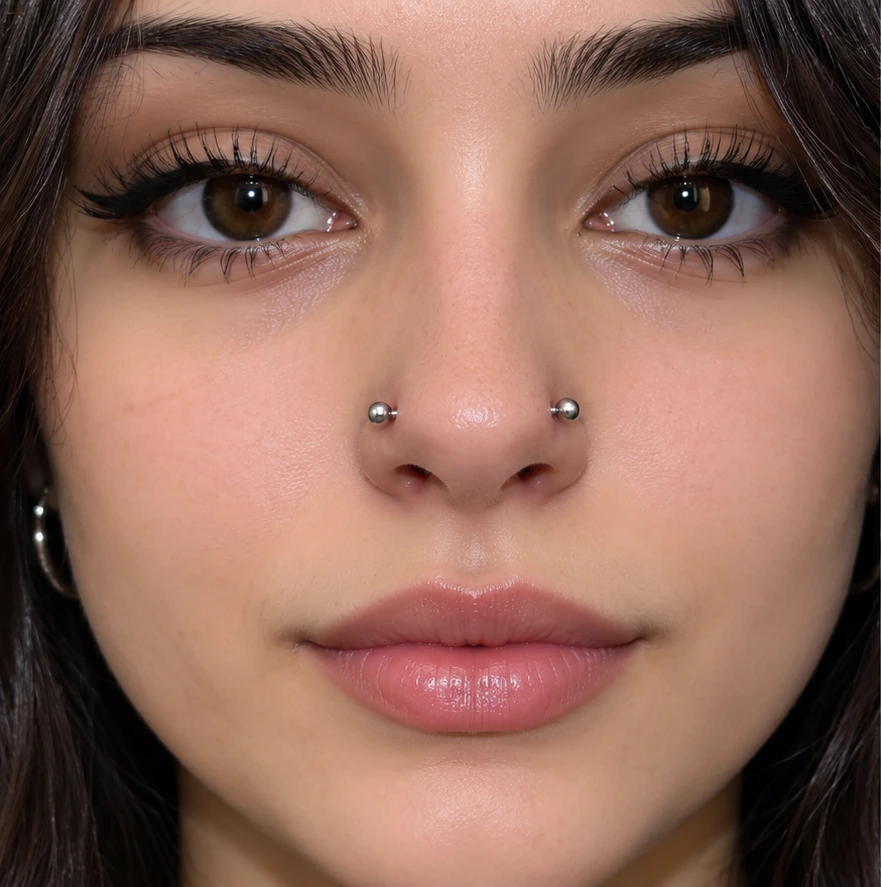
A nasallang piercing is a horizontal piercing that travels through one nostril, across the septum, and out through the opposite nostril. From the front, the jewelry usually appears as a straight barbell with an end visible on each side of the nose. Unlike two separate nostril piercings, a nasallang is one continuous channel through multiple parts of the nose.
The piercing is sometimes confused with an Austin bar piercing. The two are different: an Austin bar generally passes through the soft tissue at the tip of the nose without entering the septum, while a nasallang crosses the septum as well as both nostril areas. Exact placement depends on the person’s anatomy and the piercer’s assessment.
This is not a beginner-level piercing. The route is complex, and accurate alignment matters for both appearance and comfort. A qualified piercer should explain whether the anatomy is suitable and should never promise that every nose can safely accommodate this placement.
How Is a Nasallang Piercing Done?
The process should begin with a consultation. The piercer examines the shape of the nose, the thickness and position of the relevant tissue, and any factors that could affect placement or healing. They should discuss the risks, jewelry material, expected healing period, price, and aftercare before taking payment or beginning the procedure.
If the piercer believes the placement is suitable, they mark the entry and exit points and check that the proposed line is level and appropriate for the individual’s anatomy. The piercing is performed using sterile, single-use equipment and professional infection-control practices. A suitable straight barbell is placed through the channel.
Do not attempt a nasallang piercing at home or ask an untrained friend to perform it. Improvised equipment, poor alignment, non-sterile tools, and unsuitable jewelry can lead to injury, infection, scarring, or a badly positioned piercing. Choose a studio that can explain its sterilization procedures and show examples of healed work—not only fresh piercings.
Does a Nasallang Piercing Hurt?
A nasallang piercing is generally considered more intense than a simple nostril piercing because it passes through several areas of tissue, including the septum. However, pain is personal. It can be affected by anatomy, stress, the piercer’s technique, and an individual’s sensitivity.
Some people describe a brief, sharp pressure during the procedure, followed by soreness, tenderness, or a feeling of pressure in the nose. The area may be sensitive when touched, when cleaning the face, or when putting on clothing that catches the jewelry. Eyes may water during a nose piercing; this can be a normal reflex and does not necessarily mean something has gone wrong.
A numerical pain score cannot reliably predict another person’s experience. If you are worried about pain, tell the piercer before the procedure. Do not use alcohol or recreational drugs to try to make the process easier, and do not take medication specifically for the procedure without checking whether it is safe for you with a qualified healthcare professional.
Nasallang Piercing Healing Time
A nasallang piercing can take many months to heal fully. Because it crosses multiple areas of nasal tissue, healing may be more demanding than healing a single nostril piercing. There is no guaranteed timetable: the condition of the tissue, jewelry fit, aftercare, accidental movement, general health, and individual healing response all matter.
The outside may look calmer before the internal channel has finished healing. Less redness or tenderness does not automatically mean the piercing is ready for jewelry changes. Avoid changing the jewelry simply because it feels comfortable. Ask a qualified piercer to assess healing in person before any change, and seek medical advice if symptoms suggest infection or another complication.
During healing, mild tenderness, localized swelling, and a small amount of pale fluid that dries into a light crust can occur. Symptoms should generally trend toward improvement. Increasing pain, worsening swelling, spreading redness, heat, thick or foul-smelling discharge, fever, or feeling unwell are not signs to ignore.
Nasallang Piercing Jewelry
A straight barbell is commonly used for a nasallang because the piercing travels horizontally through the nose. The correct length and thickness must be selected for the person’s anatomy and the amount of swelling expected. Jewelry that is too short can press into tissue as swelling develops; jewelry that is too long can move excessively, snag, and irritate the channel.
Implant-grade titanium is a commonly recommended option for initial body-piercing jewelry because it is lightweight and can be suitable for people who need to avoid nickel exposure. Other materials may be appropriate in specific circumstances, but the piercer should be able to identify the exact material and its quality. Avoid mystery metals, plated jewelry, rough surfaces, and pieces with damaged threads or sharp edges.
Do not choose jewelry only by its appearance. A decorative barbell that is not designed for a fresh piercing may be unsuitable. The initial jewelry should be selected and fitted by the piercer, with enough room for expected swelling while avoiding unnecessary movement. Any downsizing or replacement should be done only after professional assessment.
How Much Does a Nasallang Piercing Cost?
The cost of a nasallang piercing varies widely by country, city, studio, piercer experience, jewelry material, and whether the quoted price includes follow-up checks. It may cost more than a basic nostril piercing because the placement is technically demanding and requires additional consultation and precision.
Before booking, ask for an itemized quote. Confirm whether the fee includes the procedure, initial jewelry, taxes, and a follow-up appointment. Ask whether there may be an additional charge if a different jewelry size is needed later. A very low price should not be the deciding factor for a complex piercing.
A reputable studio should be willing to explain its hygiene standards, jewelry specifications, and aftercare process. If the studio avoids questions, cannot identify its jewelry materials, or pressures you to proceed without checking your anatomy, consider choosing another professional.
Nasallang Piercing Aftercare
Good aftercare helps reduce irritation and supports normal healing, but it cannot eliminate every risk. Follow the written instructions from your piercer and seek medical advice if you develop concerning symptoms.
· Wash your hands before touching the area or carrying out any necessary care.
· Use sterile saline wound wash suitable for piercing aftercare, following the product instructions and your piercer’s guidance.
· Do not twist, rotate, or slide the barbell to “clean” the channel. Unnecessary movement can irritate healing tissue.
· Avoid touching the jewelry except when care is necessary.
· Do not use alcohol, hydrogen peroxide, harsh antiseptics, or strong homemade mixtures unless a healthcare professional specifically advises them.
· Avoid makeup, skincare products, and fragranced products getting into the piercing.
· Be careful when washing your face, drying with a towel, changing clothes, or handling anything that could catch the barbell.
· Avoid swimming in pools, hot tubs, lakes, and other bodies of water while the piercing is fresh, unless a healthcare professional gives different advice.
· Keep routine hygiene items clean and avoid sharing towels.
· Attend follow-up checks and ask the piercer to assess jewelry fit if swelling changes.
Cleaning more often or using stronger products does not make a piercing heal faster. Over-cleaning can dry out and irritate the skin. A gentle, consistent routine is usually preferable.
Possible Risks and Complications
Every piercing breaks the skin and carries a risk of complications. With a nasallang, the route through multiple nasal structures makes professional assessment particularly important.
Infection: Bacteria can enter through the wound. Worsening pain, heat, swelling, spreading redness, thick discharge, fever, or feeling unwell may indicate infection. Get medical advice promptly if these occur.
Irritation and prolonged healing: Frequent movement, pressure, accidental knocks, poor jewelry fit, or harsh cleaning products can keep the area irritated.
Jewelry embedding or pressure: If swelling makes the barbell too tight, the ends may press into the tissue. Seek prompt professional or medical assessment rather than trying to force the jewelry to move.
Scarring and bumps: Irritation can contribute to raised areas or scar changes. Not every bump is a keloid, and self-diagnosis can be misleading. A clinician can assess persistent or changing lumps.
Allergic reaction: Some people react to jewelry components, particularly nickel. Itching, rash, or persistent irritation should be assessed, and the jewelry material should be reviewed by a qualified professional.
Bleeding or tissue injury: Incorrect placement or trauma can cause bleeding and damage. Persistent bleeding or significant pain needs medical attention.
If you suspect infection, do not remove the jewelry on your own unless a healthcare professional tells you to. Removing it without advice may complicate management in some situations. Seek timely medical care and follow the clinician’s instructions.
How to Choose a Professional Piercer
The skill and judgment of the piercer are especially important for a nasallang. Look for a professional who has experience with complex nasal piercings and is willing to decline the procedure if your anatomy is not suitable.
A clean-looking room alone is not proof of safe practice. Ask direct questions and pay attention to whether the answers are clear and specific. A responsible piercer should welcome informed questions.

Can Everyone Get a Nasallang Piercing?
No. Nasal anatomy differs from person to person, and some people may not have suitable tissue or proportions for a safe and well-aligned nasallang. Previous nasal surgery, injuries, existing piercings, scarring, and certain medical or healing considerations may also affect whether the procedure is appropriate.
A piercer can assess placement and jewelry fit, but they do not replace a medical professional. If you have a condition that affects healing, take medicines that affect bleeding or immunity, have an active skin problem around the nose, or are unsure whether a procedure is medically appropriate, speak with a healthcare professional before booking. Do not stop prescribed medication to get pierced unless the prescribing clinician tells you to.
Can You Hide or Remove a Nasallang Piercing?
A nasallang is difficult to hide because the jewelry is visible across both sides of the nose. A retainer may not be suitable for a fresh or healing piercing, and changing jewelry too early can cause irritation or injury. If you need to conceal it for work, school, or an event, discuss realistic options with the piercer before the procedure.
If you decide you no longer want the piercing, ask a professional about safe removal. The channel may close after jewelry is removed, but timing varies and a mark or scar can remain. Do not pull out jewelry that appears embedded or is associated with severe swelling, bleeding, or suspected infection; seek medical advice.
Nasallang Piercing vs. Other Nose Piercings
A standard nostril piercing passes through one side of the nostril and is usually a simpler placement. A septum piercing passes through the soft tissue area between the nostrils when anatomy allows. An Austin bar passes horizontally through the tip area without crossing the septum. A nasallang is distinct because it crosses both nostril areas and the septum in one horizontal channel.
These piercings differ in appearance, anatomy, jewelry, and healing demands. The most suitable option is not necessarily the most dramatic one. A professional consultation can help you compare placements based on your anatomy and the look you want.
Frequently Asked Questions
Final Thoughts
A nasallang piercing offers a bold, symmetrical look, but it is a complex piercing that deserves careful consideration. Before committing, make sure your anatomy is suitable, choose an experienced professional, understand the jewelry and total cost, and be prepared for a long healing period with gentle, consistent aftercare.
Do not rush the decision or choose a studio based only on price. A professional who explains the risks, answers questions, and puts safety ahead of making a sale is a much better choice. If you experience symptoms that may indicate infection or another complication, contact a healthcare professional rather than trying to treat the problem yourself.
Leave a Reply