


Introduction
Some ear-piercing looks make a statement without needing a lot of hardware. A stacked lobe is a good example. Instead of placing every earring in a straight row across the ear, the piercings sit close together on the lobe, often with one positioned a little higher than the other. The result can be delicate and understated, or bold and highly personal, depending on the jewelry.
What makes this style appealing is its flexibility. You can keep it simple with two tiny studs, build a small cluster of gemstones, or mix a stud with a hoop once the piercings are fully healed. It can also be planned around an existing first lobe piercing, which makes it a natural option for someone who wants to add detail without moving into cartilage.

There is no single layout that suits every ear. Lobe shape, thickness, available space and the size of the jewelry all affect where another piercing can sit comfortably. This guide explains what a stacked lobe piercing is, how placement is planned, what the procedure feels like, how healing works and how to style the finished look safely.
What Is a Stacked Lobe Piercing?
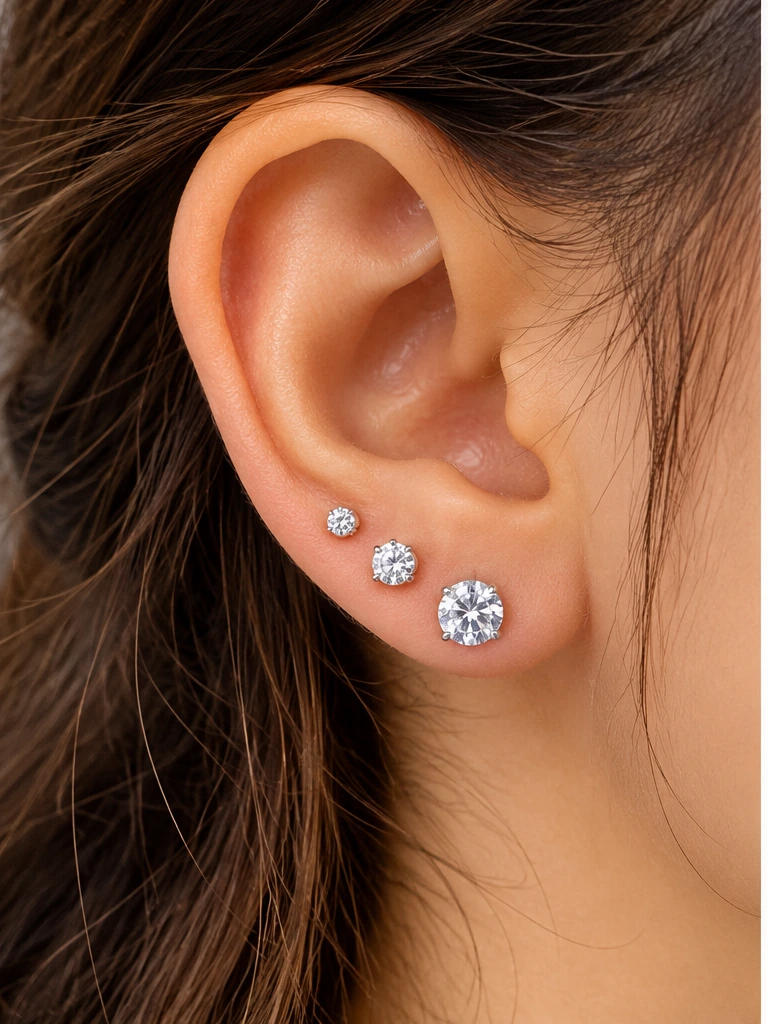
A stacked lobe piercing is an arrangement of two or more lobe piercings placed close together, commonly in a vertical or gently diagonal pattern. The word “stacked” describes the visual arrangement rather than a special piercing technique. Each opening is a separate piercing, and each one needs its own suitable placement and healing time.
Some people use the term for a second lobe piercing positioned above the first. Others use it for three or more piercings grouped into a compact cluster. Because studios and jewellery brands may use slightly different labels, it helps to show your piercer a reference photo and explain exactly which arrangement you like.
A stacked lobe is not the same as a cartilage piercing. Traditional lobe tissue is soft and fleshy, while placements higher on the ear may enter cartilage. The distinction matters because cartilage usually takes longer to heal and has different risks. A professional should confirm that the proposed openings remain in suitable lobe tissue.
Where Is the Piercing Placed?
The placement is usually on the fleshy lower part of the ear, with the new opening sitting above, below or slightly beside an existing lobe piercing. A classic stack has two studs arranged one above the other. A more creative design may follow the natural curve of the lobe or form a small triangle.
The best position depends on your anatomy, not just a photograph. Earlobes vary in size, shape, attachment and thickness. The piercer should look at the ear from the front and side, consider the jewellery you hope to wear, and leave enough room between pieces so that their backs and decorative ends do not press against each other.
Before the needle is used, ask to see the proposed marks while you are sitting upright. Check the spacing with your preferred jewellery size in mind. If the placement looks crowded, too close to the edge, or uneven from the angle you care about, discuss it before proceeding. A careful piercer will be comfortable adjusting the marks or explaining why a particular arrangement is not suitable.
Popular Stacked Lobe Styles
Two-piece classic: Two small studs placed in a neat vertical line create a clean everyday look. Similar-sized stones feel balanced, while a slightly larger lower stud can create a gentle graduated effect.
Three-piece stack: Three openings allow more variation. You might use three tiny plain studs, three stones in different sizes, or a repeated shape such as stars or flowers. The spacing needs to be planned carefully so the jewellery does not crowd the lobe.
Mixed-metal or mixed-jewellery look: Some people like the contrast of a gold-toned stud with a silver-toned piece, or a pearl beside a simple gemstone. Mixing styles can look intentional when one feature—such as shape, scale or finish—ties the pieces together.
Minimalist stack: Very small studs create a subtle detail that works with everyday clothing and other ear piercings. This is often a good choice when you want the arrangement to complement rather than dominate your ear.
Curated cluster: A cluster combines different shapes and sizes to create a small focal point. It can look striking, but it needs enough room and should be planned around the natural outline of the lobe rather than copied exactly from someone else’s ear.
Does a Stacked Lobe Piercing Hurt?
Pain is individual, so no honest guide can promise a particular number on a pain scale. Many people describe a lobe piercing as a quick pinch followed by warmth or tenderness. The sensation lasts only briefly during the procedure, although the area can feel sore afterward.
If you are adding a second or third piercing, each opening is a separate procedure. Having more than one done in the same appointment may mean more tenderness afterward, and it can make sleeping or caring for the area less convenient. Your piercer can discuss whether it makes sense to do the planned piercings together or space them out.
Try not to judge a studio by claims that a piercing is painless. A professional should explain what to expect, answer questions without rushing you and use sterile, single-use equipment. If you feel faint around needles, tell the piercer before the procedure so they can help you prepare.
How Long Does It Take to Heal?
Lobe piercings often heal more quickly than cartilage piercings, but the timeline varies from person to person. A new lobe piercing may take around 6–8 weeks or longer to settle, and some take several months to become fully stable. These are general estimates, not a deadline for changing jewellery.
A piercing can look calm on the outside while the channel is still fragile. Less redness or tenderness does not automatically mean it is ready for a jewellery change. Healing can be affected by placement, jewellery quality and fit, accidental knocks, pressure while sleeping, frequent handling and individual skin response.
If you have several fresh piercings close together, each one may settle at a different pace. Do not assume the whole stack is healed because the oldest opening feels comfortable. Ask a reputable piercer to assess the tissue before changing jewellery, especially if there has been swelling, irritation or a problem with the fit.
What Is Normal During Healing?
Mild tenderness, slight localized swelling and a small amount of pale fluid that dries into light crusting can occur during early healing. The area should generally become calmer over time. Avoid picking at crusts or repeatedly moving the jewellery to check whether it is loose.
Symptoms that are getting worse deserve attention. Increasing pain, spreading redness, heat, significant swelling, thick or foul-smelling discharge, fever or feeling unwell can indicate infection or another complication. Seek medical advice promptly if these occur. Do not remove jewellery from a suspected infected piercing on your own unless a healthcare professional tells you to; removal may complicate the situation.
Best Jewelry for a Stacked Lobe
For a fresh piercing, the priority is safe material, suitable construction and correct sizing—not the most elaborate design. A professional piercer may recommend a flat-back labret or another body-jewellery style appropriate for the placement. The post should allow for expected swelling without being so long that it catches easily.
Implant-grade titanium is a commonly recommended option for fresh piercings, particularly when nickel sensitivity is a concern. Certain verified implant-grade steel options and suitable solid gold may also be appropriate, depending on the individual and the product specification. Ask the studio to identify the exact material rather than relying only on labels such as “hypoallergenic.”
Once the piercings are fully healed, you may have more freedom to experiment with small hoops, gemstone studs, pearls, shapes or decorative clusters. Keep the size and weight comfortable. Heavy or oversized pieces can pull on the lobe, especially if worn for long periods. Avoid rough edges, damaged plating and jewellery with unknown metal composition.
Stacked Lobe Piercing Aftercare
Good aftercare is deliberately simple. Follow the written instructions from your piercer and avoid adding unnecessary products or cleaning steps. General care usually includes:
More cleaning is not always better. Over-cleaning and constant handling can irritate the tissue. If you are unsure whether a product is suitable, ask your piercer or a healthcare professional before applying it.
Can You Sleep on a Stacked Lobe Piercing?
It is best to avoid putting direct pressure on a fresh stack. Sleeping on the pierced side can cause soreness and irritation, and it may press the jewellery into the tissue. Try sleeping on the opposite side while the piercings settle. A clean travel pillow with an opening for the ear may help some side sleepers, provided it does not put pressure on the jewellery.
Also think about everyday pressure. Over-ear headphones, tight hats, helmet straps, hairbrushes and phone use can all catch or press on lobe jewellery. If something repeatedly irritates the area, change the way you use it until healing has progressed.
Can You Get Two or Three Lobe Piercings at Once?
Sometimes, but there is no universal answer. The number that can reasonably be done in one session depends on the ear, the available tissue, the spacing, your health circumstances and how manageable aftercare will be. Several fresh piercings can mean more swelling and more areas to protect while sleeping and getting dressed.
A responsible piercer should assess the ear and explain the practical side—not simply agree to every opening requested. If the tissue is too small or the desired layout would leave inadequate spacing, a staged plan or a different arrangement may be safer. Never try to create the stack yourself or use a piercing gun at home.
Stacked Lobe vs. Second Lobe Piercing
A second lobe piercing usually means one additional opening placed near the original lobe piercing. A stacked lobe arrangement is a styling description that may include a second piercing, but it can also involve three or more openings grouped together. In everyday conversation, the terms can overlap.
The useful question is not which label is technically correct; it is whether the planned placement gives you the look you want while leaving enough room for comfortable jewellery and healing. Bring a reference image, but let the piercer adapt it to your ear.
How Much Does a Stacked Lobe Piercing Cost?
There is no reliable worldwide price because costs vary by country, city, studio standards, jewellery material and the number of piercings. Some studios charge per opening; others may have a consultation or service fee in addition to jewellery. Higher-quality jewellery can increase the initial cost, but choosing solely by the cheapest advertised price is not a good way to compare studios.
Before booking, ask what the quoted price includes: the procedure, initial jewellery, any follow-up check and a possible downsizing appointment. Also ask whether the studio uses sterile single-use needles, has an appropriate sterilization process for reusable equipment and can explain the jewellery material. Clear answers are part of what you are paying for.
How to Choose a Piercer
Look for a professional studio that takes hygiene seriously and is willing to discuss anatomy before taking payment. The piercer should use sterile, single-use needles for the procedure, open sterile supplies in front of you, wash their hands and use fresh gloves. They should be able to explain how reusable tools are sterilized and how jewellery is selected.
Look at examples of healed work, not only freshly pierced ears. Ask questions about placement, material, swelling, aftercare and what to do if a problem develops. A good professional will not pressure you to proceed, dismiss concerns or promise that complications are impossible. They should be willing to say no when your anatomy is not suitable for the requested layout.
Frequently Asked Questions

Final Thoughts
A stacked lobe piercing is a small change that can make an ear-curation look feel more considered. Two simple studs can be just as effective as a more elaborate cluster, and the arrangement can evolve as your style changes. The best result is not necessarily the one with the most jewellery; it is the one that fits your ear comfortably and has been planned with enough space for healing.
Take time to choose a professional, discuss the placement before the procedure and use suitable jewellery. Be patient with aftercare, avoid unnecessary pressure and do not rush a jewellery change. When the anatomy, placement and care all come together, a stacked lobe can be a versatile addition to your everyday style.
Editorial note: This article is for general educational purposes and does not replace an in-person assessment by a qualified piercer or medical advice from a healthcare professional.
Leave a Reply