

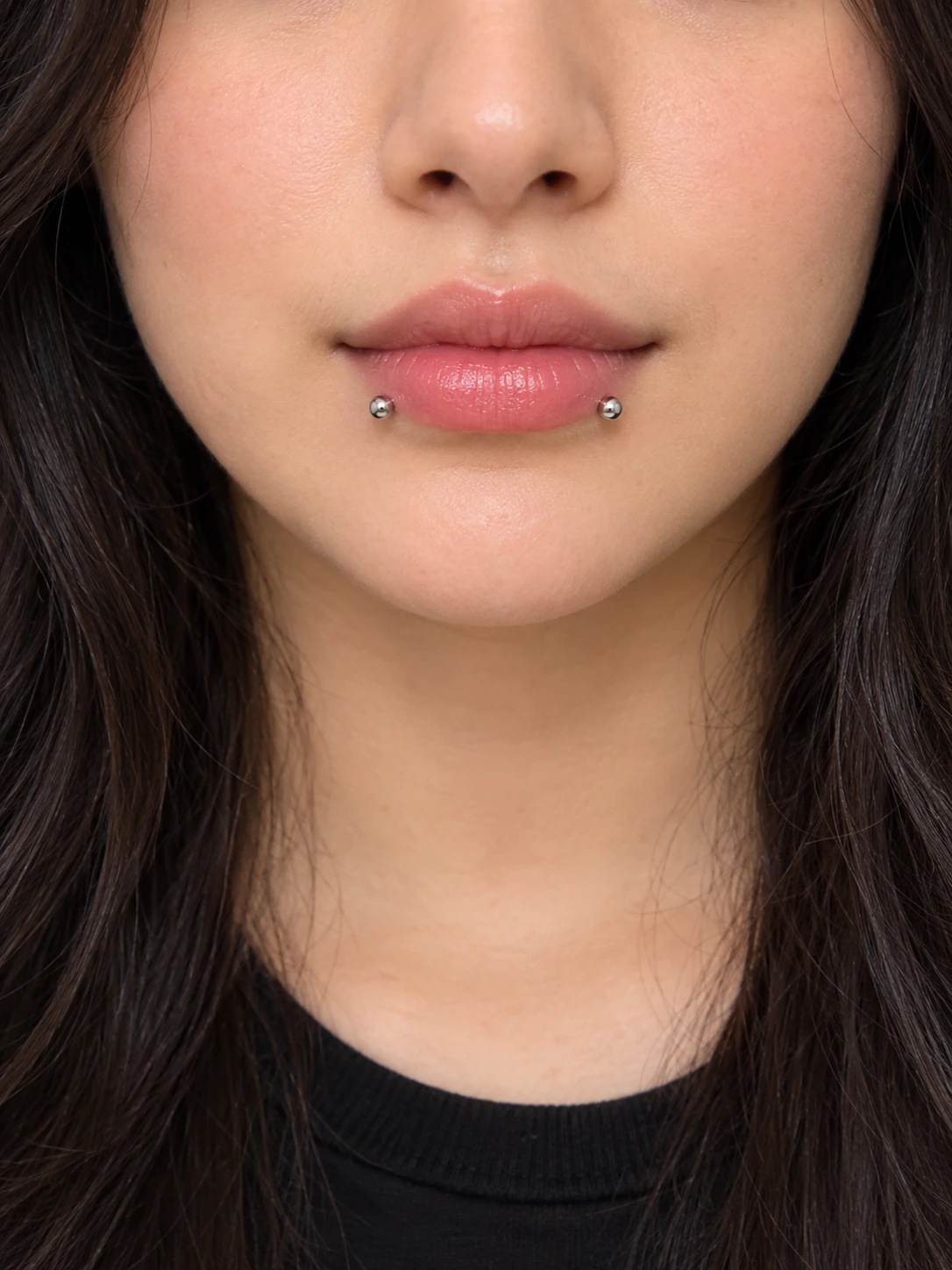

SNAKE BITES PIERCING
Pain, Healing Time, Jewelry, Cost & Aftercare Guide
Learn about snake bites piercing placement, pain, healing time, jewelry, cost, aftercare, swelling, risks, and dental and gum concerns.
Snake bites are a paired lower-lip piercing style, with one piercing on each side of the mouth.
What Are Snake Bites Piercings?
Snake bites are two lower-lip piercings placed on opposite sides of the mouth. Matching or coordinated jewelry creates a balanced look. Placement varies with lip shape and facial anatomy; a qualified piercer should assess both the outside and inside of the lip, including possible contact with teeth and gums.

Placement and Procedure
A professional piercer assesses your anatomy, discusses jewelry and risks, and marks both positions for your approval. The markings should be checked from different angles. The piercer then performs both piercings with sterile, single-use equipment and inserts appropriately sized jewelry. Symmetry is a goal, but natural facial differences mean exact symmetry cannot be guaranteed.
Pain and Swelling
Pain is individual. Each piercing usually causes a brief pinch or pressure, and tenderness or swelling can follow. Swelling is common in the first few days. Initial jewelry needs room for swelling; jewelry that is too tight can press into tissue, while excessively long jewelry may move or catch. Ask a professional about downsizing once swelling settles.
Healing Time
Healing commonly takes several weeks to a few months and varies by person. A piercing may look settled outside while the internal channel is still healing. Avoid changing jewelry until sufficiently healed, unless a qualified piercer recommends an earlier change for fit or safety.
Jewelry Types and Materials
Flat-back labret studs are common; rings create a curved look and may be suitable depending on anatomy and healing stage. Jewelry size depends on lip thickness, placement, swelling and design—there is no universal size. Ask a professional to fit it. Smooth, high-quality implant-grade titanium is commonly used; suitable high-quality gold may also be considered. Avoid low-quality, rough or unknown-metal jewelry.
Aftercare
Wash your hands before necessary contact and avoid touching, twisting or rotating jewelry. Maintain routine oral hygiene gently and follow your piercer’s written instructions. An alcohol-free oral rinse may be advised for the inside of the mouth; avoid harsh products and over-cleaning. Do not play with, bite, pull or click jewelry against your teeth.
Eating, Sleeping and Smoking
Eating may feel awkward while the lip is swollen. Take small bites, chew carefully and avoid biting the jewelry. Avoid pressure on the area while sleeping. Smoking can irritate oral tissue and may interfere with healing; avoiding it during healing is preferable.
Dental and Gum Concerns
Jewelry can contact teeth and gums. Repeated rubbing or impact may contribute to tooth chips, enamel wear, sensitivity, gum irritation or gum recession. Correct placement and fit, professional downsizing when appropriate, avoiding jewelry play, and good oral hygiene can reduce avoidable contact. See a dentist for persistent tooth or gum symptoms.
Risks and Warning Signs
Possible complications include infection, prolonged irritation, excessive swelling, migration, allergic reaction, dental injury and gum problems. Seek medical care for severe or rapidly worsening swelling, fever, spreading redness, increasing pain, significant bleeding or thick/foul-smelling discharge. Difficulty breathing or swallowing, or rapidly increasing swelling, requires urgent medical attention.
Cost and Choosing a Piercer
Cost varies by location, studio, piercer and jewelry; two piercings may cost more than one. Ask whether the quote includes both piercings, initial jewelry, aftercare guidance and follow-up/downsize visits. Choose a trained piercer who uses sterile procedures and single-use needles, explains materials and sizing, assesses oral anatomy, and provides clear aftercare.
Snake Bites vs. Other Piercings
Snake bites are two piercings on opposite sides of the lower lip. Spider bites are two closely spaced piercings on the same side of the lower lip. Angel fangs are generally paired upper-lip piercings and differ in placement and anatomy.
Can They Close or Leave Scars?
Piercing channels can shrink or close after jewelry is removed, and timing varies. Small marks or scars may remain; the result depends on individual healing, how long jewelry was worn, and any irritation or trauma.
Frequently Asked Questions
Is snake bites piercing painful? There is usually a brief pinch or pressure for each piercing; experiences vary.
How long does healing take? Often several weeks to a few months, but complete healing varies.
Can snake bites damage teeth or gums? Yes. Repeated contact can contribute to tooth damage or gum irritation or recession.
Can I wear rings immediately? That depends on anatomy, swelling and piercer assessment. Follow professional advice.
When can I change jewelry? After sufficient healing, or earlier only when a qualified piercer advises a fit-related change.
Are snake bites permanent? The jewelry can be removed, but holes may shrink, close or leave small marks.
Final Thoughts
Snake bites are a distinctive paired lower-lip style. Consider professional placement, suitable jewelry, healing and aftercare, and potential dental or gum contact. Choose an experienced piercer, follow aftercare guidance, and seek professional help for persistent irritation or concerning symptoms.
Leave a Reply