

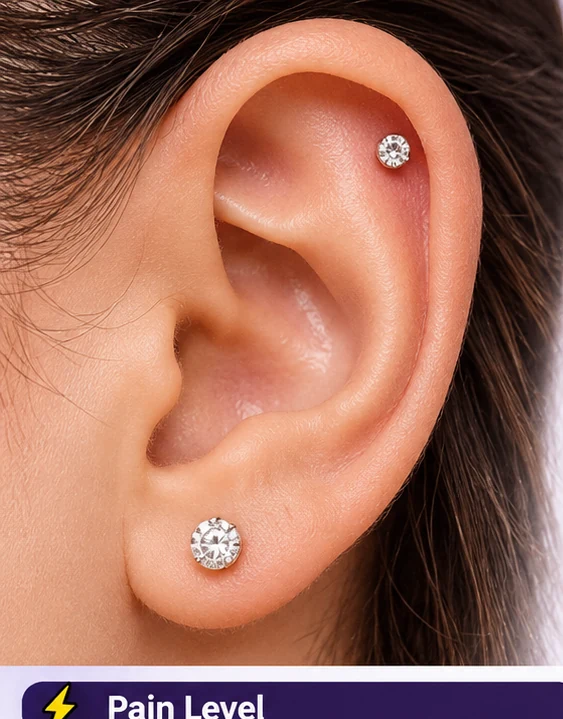

A complete guide to placement, suitability, healing, jewelry choices, risks, and professional aftercare.
Introduction
A scapha piercing is a distinctive cartilage piercing that adds detail to the upper ear without relying on a traditional lobe placement. It is often chosen by people who want a subtle but noticeable look, especially when paired with a small gemstone, flat-back stud, or carefully selected piece of minimalist jewelry. Because the piercing passes through ear cartilage, placement and aftercare matter just as much as appearance.

Before booking an appointment, it helps to understand exactly where the scapha is, whether your ear anatomy is suitable, how much discomfort to expect, and why cartilage piercings can take many months to settle. This guide explains the essentials in straightforward language so you can make an informed decision and discuss the details with a qualified professional piercer.
What Is a Scapha Piercing?
The scapha is the narrow, curved area of cartilage on the outer upper ear, generally located between the helix (the outer rim) and the antihelix (the raised fold closer to the ear’s centre). A scapha piercing is placed through this cartilage area. The precise position depends on the shape, depth, and available space of an individual ear.
Piercing terminology is not always used consistently between studios and regions. Some people use “scapha piercing” to describe a piercing in the flat or scapha region, while others may use “flat piercing” for a similar placement. Ask your piercer to point out the intended entry and exit points on your own ear before the procedure. This simple step helps ensure that you and the piercer are discussing the same placement.
Unlike an earlobe piercing, a scapha piercing goes through cartilage. Cartilage is firmer and has a different blood supply from the soft lobe, which is one reason the healing process can be slower and more sensitive to pressure.
Scapha Piercing Placement and Anatomy
Scapha-region placement reference
A professional piercer should assess your ear while you are sitting upright and your ear is in a natural position. The available flat surface, cartilage thickness, folds, and the way your ear sits against your head can all affect whether the piercing is practical. A placement that looks attractive in a photograph may not work safely or comfortably on every ear.
The piercer should also consider how the jewellery will sit when you sleep, wear headphones, use a phone, or put on glasses, hats, and helmets. A stud that is positioned too close to a fold or pressed by surrounding anatomy may experience repeated friction. Your piercer may recommend a slightly different angle or position to reduce pressure.
Do not try to mark or pierce the area yourself. Cartilage placement requires appropriate training, sterile equipment, and an understanding of anatomy. A reputable studio will explain the proposed placement and answer questions before taking payment or beginning the procedure.
Does Everyone Have Suitable Anatomy?
Not every ear has the same amount of flat cartilage space. Some people have a broad, relatively even area that can accommodate a scapha or flat-style piercing. Others have a pronounced fold, limited room, or a shape that makes the desired jewellery sit at an awkward angle.
An experienced piercer should assess suitability in person rather than promising that every requested placement is possible. If the anatomy is not suitable, ask whether a nearby placement could achieve a similar appearance without putting unnecessary pressure on the cartilage. It is better to choose a safe alternative than to force a piercing into an unsuitable location.
If you have a history of problematic cartilage healing, significant scarring, or a condition that affects wound healing, discuss it with an appropriate healthcare professional and tell your piercer before proceeding.
How Much Does a Scapha Piercing Hurt?
Pain is personal and cannot be predicted precisely. Many people describe a cartilage piercing as a sharp pinch followed by pressure or tenderness. The sensation usually lasts only briefly during the actual piercing, but the area can remain sore, warm, or sensitive afterward.
Pain can vary with cartilage thickness, the exact placement, individual sensitivity, stress, and the technique used by the piercer. It is not useful to compare your experience with someone else’s rating. A calm appointment, clear instructions, and a skilled professional can make the process more manageable.
A proper cartilage piercing should be performed with a sterile, single-use hollow needle by a trained piercer. Avoid studios that use a piercing gun for cartilage. If you feel faint or anxious, tell the piercer before the procedure so they can help you prepare safely.
Scapha Piercing Healing Time
Cartilage piercings often take around six to twelve months to heal fully, and some take longer. The outside may look settled before the deeper tissue has finished healing. A piercing that no longer feels tender is not automatically ready for frequent jewellery changes.
Healing depends on individual biology, placement, jewellery fit, pressure, and consistent aftercare. Repeatedly sleeping on the piercing, catching it with clothing, changing jewellery too early, or touching it with unwashed hands can prolong irritation. A temporary bump or period of tenderness does not always mean infection, but persistent or worsening symptoms should be assessed.
Do not use a calendar date alone to decide when to change jewellery. Have a reputable piercer check the piercing and advise whether it is ready. If the jewellery feels tight, becomes embedded, or the area becomes increasingly swollen, seek professional help promptly.
Best Jewellery for a Scapha Piercing
A flat-back labret stud is commonly considered for an initial cartilage piercing because its smooth backing can sit comfortably against the ear when correctly sized. The front may be a small ball, bezel-set gem, decorative disc, or another low-profile design. The best option depends on the anatomy and the amount of room available.
Implant-grade titanium is a popular initial jewellery material, particularly for people who want to minimise exposure to nickel. Niobium and appropriately certified solid 14-karat or 18-karat gold may also be suitable in some cases. Ask the studio for documented material information rather than relying only on labels such as “hypoallergenic” or “surgical steel.”
Jewellery length and thickness matter. Initial swelling needs room, but a post that is excessively long can move, snag, and irritate the piercing. Once swelling has reduced, a piercer may recommend a professional downsize to a shorter post. Do not change or shorten the jewellery yourself while the piercing is healing.
Avoid plated jewellery, mystery metals, rough edges, and heavy or dangling designs during initial healing. These can create friction, pressure, or unwanted movement. Decorative jewellery can be considered later, once the piercing is fully healed and a professional confirms that a change is appropriate.
How Much Does a Scapha Piercing Cost?
The price varies by country, city, studio reputation, piercer experience, jewellery material, and whether the quoted fee includes the initial jewellery and a follow-up check. A low advertised price may not include a suitable implant-grade piece, so compare what is included rather than choosing on price alone.
Before booking, ask for the total cost, the material and style of the initial jewellery, whether a check-up or downsize appointment is charged separately, and what aftercare guidance is provided. A clean, reputable studio with trained staff and suitable jewellery is a better choice than an unusually cheap service that cannot explain its hygiene standards.
Because prices vary widely, confirm the current rate directly with studios in your area. Do not treat an online estimate as a guaranteed quote.
Scapha Piercing Aftercare: Step-by-Step
Good aftercare is gentle and consistent. Always follow the written instructions provided by your piercer, and seek medical advice if you develop concerning symptoms.
Over-cleaning can irritate the skin just as much as neglecting it. The goal is to keep the area clean while allowing the body to heal without unnecessary handling.
What Should You Avoid During Healing?
The most common avoidable problems come from pressure, friction, and unnecessary movement. Try not to sleep on the piercing, pick at crust, twist the jewellery, or repeatedly check it with your fingers. Be careful when brushing your hair, changing clothes, using a towel, and putting on or removing headphones.
Do not change the jewellery simply because the front looks healed. Cartilage can remain vulnerable beneath the surface. If the jewellery is too long or catches frequently, return to your piercer for an assessment rather than attempting a home adjustment.
Avoid using earbuds or over-ear headphones if they press directly on the piercing. If you need hearing or audio equipment, ask your piercer how to reduce contact while the area heals. Keep hair products, makeup, and skincare away from the healing site where possible.
Irritation, Infection, and When to Get Help
Some mild tenderness, localised swelling, and a small amount of pale crust can occur during early healing. However, increasing pain, spreading redness, pronounced heat, worsening swelling, thick yellow or green discharge, or feeling feverish can indicate a problem that needs medical assessment.
Cartilage infections can become serious and should not be ignored. If you suspect infection, seek prompt medical care rather than relying on online advice or trying multiple home remedies. Do not remove the jewellery on your own if infection is suspected unless a healthcare professional advises you to do so; removal may affect drainage or complicate assessment.
A bump is not automatically a keloid or infection. Irritation bumps can be associated with pressure, unsuitable jewellery, friction, or repeated movement. A qualified piercer can check jewellery fit and placement, while a healthcare professional should assess persistent, painful, spreading, or unusual symptoms. Anyone with a history of keloids should discuss the risk before getting pierced.
How to Choose a Professional Piercing Studio
Look for a studio that is clean, organised, and transparent about its procedures. The piercer should wash their hands, use fresh gloves, open sterile single-use needles in front of you, and use properly sterilised equipment. Reusable instruments should be processed in an appropriate autoclave, with sterilisation practices explained clearly.
A professional should assess your anatomy, discuss jewellery materials and sizing, explain possible risks, and provide written aftercare instructions. They should welcome questions and be willing to refuse a placement that is not suitable. Be cautious if a studio rushes the consultation, cannot identify jewellery materials, uses a gun on cartilage, or dismisses concerns about hygiene.
You can ask how the studio handles sterilisation, what jewellery is included in the quoted price, and when they recommend a follow-up check. A responsible piercer will answer without making unrealistic promises about pain-free procedures or guaranteed healing times.
Can You Combine a Scapha Piercing with Other Ear Piercings?
A scapha piercing can be part of a curated ear arrangement. It may be paired with lobe, helix, or other cartilage jewellery, depending on the available space and the way the pieces sit together. Small, low-profile studs can create a balanced look, while multiple gemstones can add sparkle without requiring large jewellery.
Plan the arrangement with your piercer rather than adding several fresh cartilage piercings at once. Multiple healing piercings can make cleaning and sleeping more difficult, and swelling in one area may affect nearby jewellery. Your anatomy, lifestyle, and ability to protect the area should guide the plan.
If you already have healing piercings, tell your piercer before adding another. They can help you decide whether to wait until the existing piercings are more settled.
Frequently Asked Questions

Conclusion
A scapha piercing can be an elegant way to add personality to the upper ear, but it should be approached as a cartilage piercing that needs careful placement and patient aftercare. The right jewellery, a qualified piercer, and a plan to avoid pressure can make the healing process more manageable.
Before booking, confirm the exact placement, ask about implant-grade jewellery, review the studio’s hygiene practices, and understand the full cost. Give the piercing time to heal, avoid unnecessary handling, and seek medical care promptly if symptoms suggest infection. With realistic expectations and responsible care, you can make a more informed decision about whether a scapha piercing is right for you.
Leave a Reply