

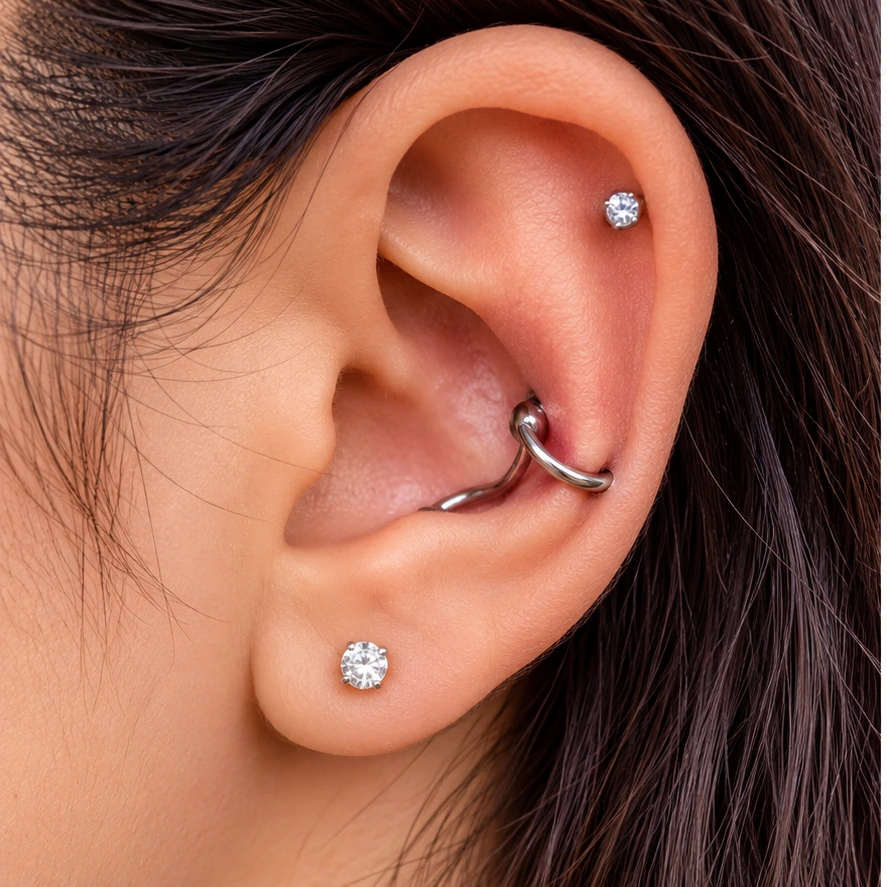

Conch orbital piercing is a unique ear piercing style that combines two piercing holes in the conch area with a single piece of circular jewelry connecting them. Its distinctive appearance makes it an attractive choice for people who want something more creative than a traditional conch piercing.
Unlike a standard conch piercing, which usually involves one hole and one piece of jewelry, a conch orbital piercing uses two separate entry points connected by a hoop. The result is a beautiful orbital effect that follows the natural shape of the ear.

Whether you are considering getting this piercing or simply exploring different ear piercing styles, understanding its placement, jewelry options, healing process, pain level, and aftercare is important.
In this guide, we will explain everything you need to know about conch orbital piercing, including its benefits, potential risks, healing expectations, and how to care for it properly.
What Is a Conch Orbital Piercing?
A conch orbital piercing is an ear cartilage piercing that uses two piercing holes connected by one circular piece of jewelry. Both holes are positioned in the conch area, which is the bowl-shaped section of the ear located near the ear canal.
The term “orbital” refers to the way the jewelry travels through two separate piercing holes, creating a circular appearance around part of the ear.
This style is different from a traditional conch piercing because a standard conch generally has only one piercing hole. An orbital design requires two carefully positioned holes that allow a ring to sit comfortably between them.
The exact placement depends on the shape and anatomy of your ear. Some people have enough conch space for a more compact orbital design, while others may need a different arrangement.
A professional piercer should assess your ear before deciding whether this piercing is suitable.
Conch Orbital Piercing Placement
Placement is one of the most important parts of a successful conch orbital piercing. Both piercing holes need to be positioned at the correct distance and angle so that the circular jewelry can pass through them without creating unnecessary pressure.
The conch area is the central hollow section of the external ear. It is surrounded by cartilage and is commonly used for several popular ear piercing styles.
For a conch orbital piercing, the piercer generally considers:
· The available space in the conch area.
· The natural shape and curvature of the ear.
· The distance between the two piercing holes.
· The diameter of the jewelry.
· The thickness of the ear cartilage.
· The amount of room available for swelling during healing.
The two holes should be aligned with the intended jewelry rather than positioned independently.
Incorrect placement can cause the ring to pull against the piercing channels, resulting in irritation, discomfort, and prolonged healing.
It is important not to choose a placement simply because it looks attractive in a photograph. Your ear anatomy should determine the final design.
What Does a Conch Orbital Piercing Look Like?
A conch orbital piercing creates a distinctive circular appearance in the middle of the ear. A single hoop passes through two separate holes, making the jewelry look as though it orbits the conch area.
Depending on your jewelry choice, the result can be simple and understated or bold and eye-catching.
Some popular styles include:
· A plain silver circular hoop.
· A polished gold orbital ring.
· A delicate titanium hoop.
· A decorative ring with small gemstones.
· A minimalist seamless circular ring.
The final appearance depends on the size of the hoop, the distance between the holes, and the natural shape of your ear.
People who enjoy curated ear styling often combine a conch orbital piercing with helix, lobe, tragus, or flat piercings.
Conch Orbital Piercing vs. Traditional Conch Piercing
Although these piercings share the same general ear region, they are not identical.
A traditional conch piercing uses one hole in the conch cartilage. It can be styled with a flat-back labret stud or, after appropriate healing and professional assessment, a suitable hoop.
A conch orbital piercing uses two separate holes connected by one circular piece of jewelry.
Feature | Traditional Conch | Conch Orbital |
Number of holes | One | Two |
Jewelry | Stud or suitable hoop | One connecting hoop |
Appearance | Simple and classic | Circular orbital design |
Placement | Conch cartilage | Two aligned conch positions |
Procedure | One piercing | Two piercings |
Healing considerations | One channel | Two channels connected by jewelry |
The orbital style can create a more distinctive appearance, but its placement and jewelry fitting require careful planning.
How Painful Is a Conch Orbital Piercing?
Pain is one of the most common concerns for anyone considering a cartilage piercing.
A conch orbital piercing may be more uncomfortable than a standard lobe piercing because it involves cartilage and two separate piercing channels.
However, pain varies considerably between individuals. Some people describe cartilage piercings as a sharp pinch followed by pressure, while others experience a more intense sensation.
Factors that can influence the experience include:
· Individual pain tolerance.
· Cartilage thickness.
· Piercing technique.
· Placement and anatomy.
· Anxiety or stress before the appointment.
· Whether both holes are created during the same session.
Because an orbital piercing involves two holes, the overall procedure may feel more involved than a single conch piercing.
A professional piercer should explain the process before starting and allow you to ask questions.
Do not use alcohol or non-prescribed numbing products to prepare for a piercing without discussing them with a qualified professional.
Conch Orbital Piercing Healing Time
Cartilage piercings generally take longer to heal than standard earlobe piercings.
A conch orbital piercing may take approximately 6 to 12 months or sometimes longer to heal fully. Individual healing times vary, and two piercing channels may not heal at exactly the same rate.
During the healing period, the area may experience temporary tenderness, swelling, redness, and mild crusting. These symptoms should gradually improve rather than become increasingly painful.
Several factors can affect healing:
· Jewelry quality: Implant-grade titanium and other suitable body-jewelry materials can help reduce irritation.
· Placement: Properly aligned piercing channels allow the jewelry to sit without excessive pressure.
· Aftercare: Consistent cleaning and avoiding unnecessary contact support the healing process.
· Sleeping habits: Sleeping directly on the pierced ear can create pressure and irritation.
· Lifestyle: Swimming, dirty hands, frequent jewelry movement, and accidental impacts can complicate healing.
Do not assume that a piercing is completely healed just because it no longer feels sore. A professional piercer should assess it before you change the jewelry.
Best Jewelry for Conch Orbital Piercing
Jewelry selection is especially important for an orbital piercing because one ring connects two separate piercing channels.
The jewelry must have the correct diameter, thickness, and shape to fit your ear comfortably.
1. Implant-Grade Titanium Hoop
Implant-grade titanium is a popular option for fresh piercings because it is lightweight, durable, and generally well tolerated. A properly fitted titanium hoop can provide a clean and modern appearance.
Make sure the material meets recognized implant-grade standards rather than relying on a generic titanium label.
2. Solid Gold Orbital Ring
Solid gold jewelry can create an elegant appearance. For healed piercings, suitable nickel-free solid gold in an appropriate alloy may be an option.
Avoid gold-plated or gold-filled jewelry for fresh cartilage piercings because coatings can wear away and expose underlying metals.
3. Seamless Circular Ring
A seamless ring creates a smooth and minimalist look. However, not every seamless design is suitable for an orbital piercing. The ring must be properly fitted and appropriate for the anatomy and healing stage.
4. Decorative Gemstone Hoop
A gemstone hoop can add extra detail and sparkle. This style is generally better considered after the piercing has healed and a professional confirms that the jewelry is appropriate.
5. Captive Bead Ring
A captive bead ring uses a small bead held in place by tension between the ends of the ring. It offers a distinctive appearance, although the diameter and construction must be suitable for the piercing.
Important: Jewelry for a fresh conch orbital piercing should be selected and fitted by an experienced professional. A standard hoop should not be forced through two holes that are not positioned for it.
How Much Does a Conch Orbital Piercing Cost?
The cost of a conch orbital piercing varies depending on the piercing studio, location, jewelry material, and experience of the piercer.
Because the design involves two piercing holes, some studios may charge separately for each piercing, while others may offer a combined orbital service.
The overall price may include:
· The piercing procedure.
· Initial jewelry.
· Consultation and placement planning.
· Follow-up assessment.
· Jewelry adjustment or replacement, if required.
Premium implant-grade titanium and solid gold jewelry can increase the total cost.
When comparing studios, do not choose solely based on the lowest price. Proper sterilization, professional experience, appropriate jewelry, and clear aftercare instructions are more important.
Ask the studio whether the quoted price includes both piercing holes and the connecting jewelry.
Conch Orbital Piercing Aftercare
Proper aftercare is essential for reducing irritation and supporting the healing process.
Because this piercing involves two cartilage channels connected by one piece of jewelry, unnecessary pressure or movement can affect both areas.
Follow these aftercare recommendations.
1. Clean With Sterile Saline
Use a sterile saline wound wash containing 0.9% sodium chloride. Gently rinse the piercing according to your piercer's instructions. Avoid homemade salt solutions because incorrect concentrations can irritate the skin.
2. Wash Your Hands Before Touching It
Always wash your hands before cleaning or accidentally touching the piercing. Dirty hands can introduce bacteria into the healing channels.
3. Avoid Rotating the Jewelry
Do not twist, rotate, or move the hoop unnecessarily. Moving jewelry can irritate the healing tissue and delay recovery.
4. Avoid Sleeping on the Pierced Ear
Direct pressure can cause swelling, tenderness, and irritation. A travel pillow or piercing pillow with an opening can help keep pressure away from the ear.
5. Keep Hair and Accessories Away
Long hair, headphones, hats, and clothing can catch on the jewelry. Be careful when brushing your hair, changing clothes, and using headphones.
6. Avoid Harsh Cleaning Products
Do not use rubbing alcohol, hydrogen peroxide, strong antiseptics, or harsh skincare products on the healing piercing unless specifically directed by a healthcare professional. These products may damage or irritate healing tissue.
7. Avoid Swimming During Early Healing
Pools, hot tubs, lakes, and other bodies of water can expose a fresh piercing to microorganisms. Avoid submerging the piercing during healing, especially when it is new or irritated.
8. Do Not Change Jewelry Too Early
Even if the outside looks healed, the internal piercing channels may still be recovering. Do not remove or replace the jewelry yourself during the healing period. Ask a professional piercer to assess it first.
Potential Risks and Complications
Like other cartilage piercings, a conch orbital piercing carries certain risks. Understanding these complications can help you make an informed decision.
Infection
An infection may develop if bacteria enter the healing piercing channels. Possible warning signs include increasing pain, spreading redness, warmth, swelling, and thick or foul-smelling discharge.
Cartilage infections can become serious. Seek medical attention promptly if you suspect an infection. Do not remove the jewelry on your own if an infection is suspected unless a healthcare professional advises you to do so.
Irritation Bumps
Small bumps may develop around the piercing because of pressure, friction, jewelry movement, or irritation. They are not always infections or keloids. Identifying and correcting the underlying cause is important.
Jewelry Pressure
If the hoop is too small or the holes are incorrectly aligned, the jewelry may place excessive pressure on the cartilage. This can cause discomfort, swelling, and delayed healing.
Allergic Reactions
Some people experience sensitivity to certain metals, particularly nickel. Choosing suitable implant-grade jewelry can reduce the risk of metal-related irritation.
Scarring
Any piercing can leave a scar. Some people are more prone to raised scars or keloids, so anyone with a history of abnormal scarring should discuss this with a qualified healthcare professional before getting pierced.
Can Everyone Get a Conch Orbital Piercing?
Not necessarily. Ear anatomy plays a major role in determining whether this piercing is possible.
Some ears have a suitable conch shape and enough space for two appropriately positioned holes. Others may not have sufficient room for a comfortable orbital arrangement.
An experienced piercer should examine the depth of the conch, available cartilage, ear shape, distance required between the holes, and whether the hoop can sit without excessive pressure.
If your anatomy is unsuitable, a professional may recommend a traditional conch piercing or another ear piercing style. Never force an orbital design simply to copy someone else's ear jewelry.
Can You Wear Headphones With a Conch Orbital Piercing?
Headphones can be challenging during the early healing period. Over-ear headphones may press against the conch area, while some earbuds can rub against the jewelry or surrounding cartilage.
This pressure can cause irritation and discomfort. During healing, avoid headphones that press against the piercing, keep earbuds away from the jewelry, clean personal audio equipment regularly, stop using any device that causes pain or pressure, and ask your piercer when it is safe to resume wearing your preferred headphones.
The best option depends on your ear anatomy and the placement of the jewelry.
Can You Sleep With a Conch Orbital Piercing?
Sleeping on a fresh conch orbital piercing is not recommended. Pressure from your pillow can irritate both piercing channels and may cause swelling or discomfort.
Try sleeping on the opposite side. A travel pillow can also help by allowing your ear to rest in the central opening without direct contact.
Once the piercing is fully healed, sleeping habits may become less restrictive, but jewelry that causes pressure should still be avoided.
Can You Change a Conch Orbital Piercing?
Yes, but changing the jewelry requires care. The connecting hoop must fit the distance and angle between both piercing channels.
A ring that is too small can create pressure, while an incorrectly shaped ring may pull against the piercing holes.
For this reason, jewelry changes should be handled by an experienced professional, particularly during the healing period. Never attempt to force a new hoop into the piercing.
How to Choose a Professional Piercing Studio
Choosing the right studio is one of the most important decisions when considering a conch orbital piercing. Look for a studio that follows professional hygiene and sterilization practices.
Before booking, consider these points:
1. Check the piercer's experience with cartilage and orbital piercings.
2. Ask whether they assess ear anatomy before confirming placement.
3. Confirm that sterile, single-use needles are used.
4. Ask how reusable instruments are sterilized.
5. Check whether the initial jewelry is made from suitable materials.
6. Request clear written aftercare instructions.
7. Ask about follow-up appointments.
A reputable piercer should be comfortable explaining the procedure and discussing alternative placements if your anatomy is unsuitable.
Frequently Asked Questions
1. What is a conch orbital piercing?
A conch orbital piercing is a cartilage piercing that uses two separate holes in the conch area connected by one circular piece of jewelry.
2. How many holes does a conch orbital piercing need?
It requires two piercing holes positioned so that a single hoop can pass through both.
3. Is a conch orbital piercing more painful than a regular conch?
It may feel more involved because it requires two piercing channels. However, individual pain tolerance and ear anatomy make the experience different for everyone.
4. How long does a conch orbital piercing take to heal?
It may take approximately 6 to 12 months or longer to heal completely. Healing time depends on placement, jewelry, aftercare, and individual factors.
5. What jewelry is best for a fresh conch orbital piercing?
Suitable implant-grade titanium jewelry is a popular choice. The ring must be professionally fitted to the anatomy and the two piercing channels.
6. Can I get both holes pierced at the same time?
An experienced piercer may perform both holes during one appointment if your anatomy and the planned jewelry make it appropriate.
7. Can a conch orbital piercing get infected?
Yes. Like any cartilage piercing, it can develop an infection. Increasing pain, warmth, swelling, spreading redness, or unusual discharge should be assessed by a healthcare professional.
8. Can I wear AirPods with a conch orbital piercing?
Some earbuds may press against the jewelry or healing cartilage. Avoid using them if they cause pressure or irritation.
9. Is a conch orbital piercing suitable for every ear shape?
No. The available cartilage space and natural ear anatomy determine whether the design can be positioned comfortably.
10. Can I sleep on my conch orbital piercing?
Avoid sleeping directly on a fresh piercing. Pressure can irritate the healing channels and prolong recovery.
11. Is a conch orbital piercing permanent?
The jewelry can be removed, but the piercing holes may remain open or leave visible scars. They may also shrink or close over time.
12. Can I get a conch orbital piercing with other ear piercings?
It may be possible to combine it with helix, lobe, or other ear piercings. However, the overall placement should be planned carefully to avoid crowding and unnecessary irritation.

Final Thoughts
Conch orbital piercing is an eye-catching way to create a unique ear-piercing arrangement. Its two-hole design and connecting circular jewelry make it different from a traditional conch piercing.
However, successful results depend on suitable ear anatomy, accurate placement, high-quality jewelry, and consistent aftercare.
Before getting this piercing, consult an experienced professional who can assess your ear and determine whether an orbital design is appropriate.
Remember that cartilage piercings require patience. Avoid unnecessary jewelry movement, protect the area from pressure, and seek medical advice if you notice signs of infection.
With proper planning and professional care, a conch orbital piercing can become a distinctive addition to your ear jewelry collection.
Leave a Reply