

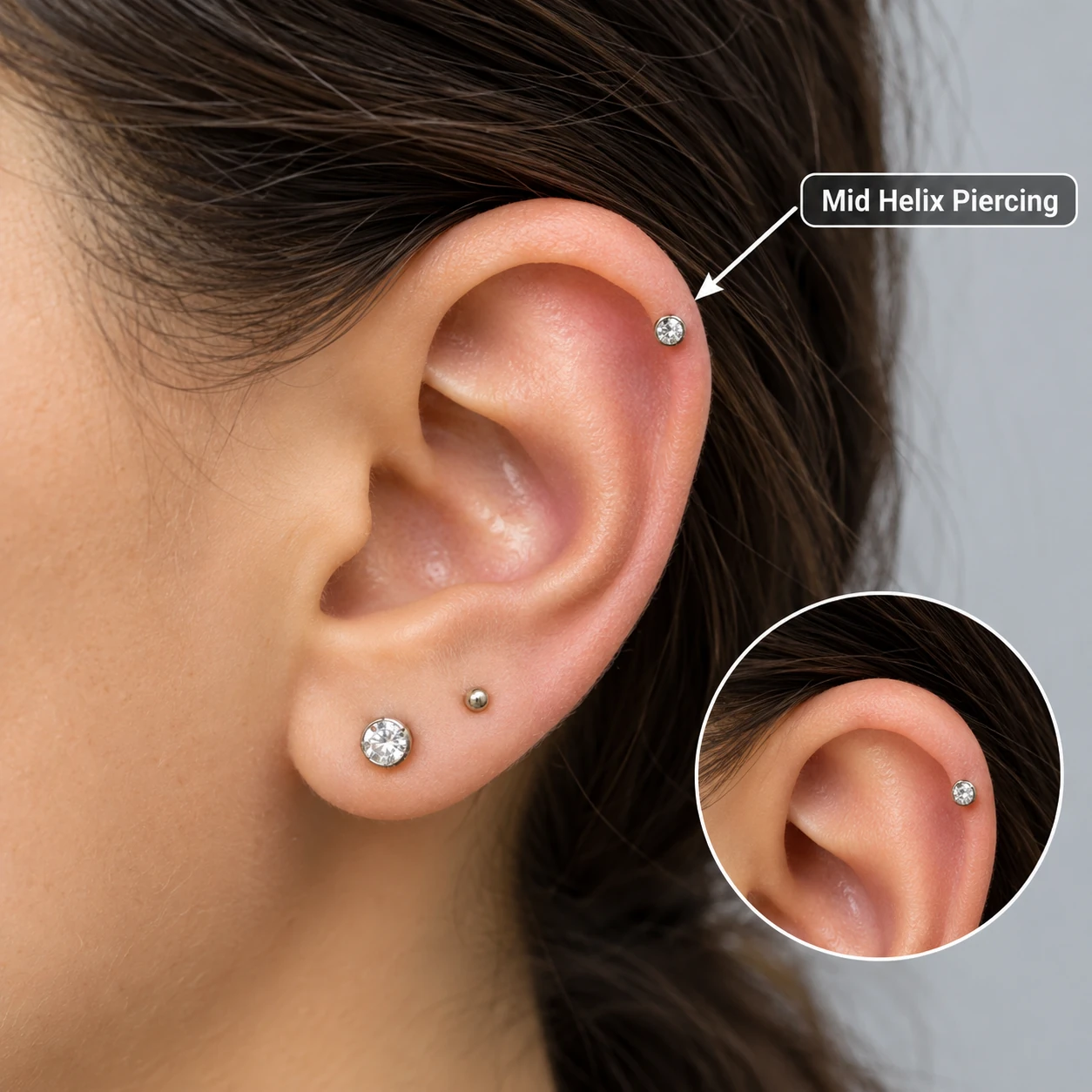

Mid Helix Piercing: Complete Guide
A mid helix piercing is a stylish way to add detail to the outer edge of your ear without choosing a more dramatic cartilage piercing. It sits around the middle section of the ear's outer rim and can look beautiful on its own or alongside lobe and upper helix piercings.

Before getting one, you may want to know how painful it is, how long healing takes, which jewelry works best, and whether it is suitable for your ear shape.
This guide covers mid helix piercing placement, pain, healing, jewelry options, aftercare, possible risks, and the differences between mid helix and other popular ear piercings.
What Is a Mid Helix Piercing?
A mid helix piercing is a cartilage piercing placed along the outer rim of the ear, roughly between the upper helix and the lower part of the ear. The exact position depends on your ear anatomy and the look you want.
Unlike a standard lobe piercing, which passes through soft tissue, a mid helix piercing goes through cartilage. This means it generally needs more time and care to heal.
The placement is popular with people who want a subtle but noticeable addition to their ear jewelry. It can be worn as a single piercing or combined with other piercings to create a balanced ear stack.
Where Is a Mid Helix Piercing Located?
A mid helix piercing sits on the curved outer edge of the ear, around its middle section. It is lower than a typical upper helix piercing and generally higher than the earlobe.
The precise location varies from person to person. Some ears have a more pronounced outer rim, while others have a flatter or narrower cartilage area.
A professional piercer should assess your anatomy before marking the position. They can help determine whether there is enough suitable tissue for the piercing and whether the planned placement will leave enough room for jewelry and future piercings.
Tip: If you want several piercings along the outer rim, discuss their spacing before getting started. Good placement can make future jewelry combinations easier.
How Much Does a Mid Helix Piercing Hurt?
A mid helix piercing is usually described as moderately painful. Because the needle passes through cartilage, you may feel a sharp pinch followed by pressure or tenderness.
Pain is personal, so there is no score that applies to everyone. Your ear anatomy, stress level, piercer's technique, and previous piercing experience can all affect how the procedure feels.
After the piercing, mild soreness, swelling, and tenderness can occur. The area may feel uncomfortable if you accidentally bump it or put pressure on it while sleeping.
To make the experience more comfortable:
· Choose an experienced professional piercer.
· Eat normally before your appointment and stay hydrated.
· Avoid touching or twisting the jewelry afterward.
· Keep pressure from headphones, hats, and pillows away from the area.
How Long Does a Mid Helix Piercing Take to Heal?
A mid helix piercing may take around 6 to 12 months to heal fully, although some piercings take longer.
Cartilage piercings heal slowly, and the outside can look settled before the inside has finished healing. A lack of pain does not necessarily mean the piercing is ready for a jewelry change.
Healing depends on factors such as your anatomy, jewelry fit, aftercare, and how often the area is bumped or compressed.
Mid Helix Piercing Healing Stages
Early healing: You may notice mild swelling, redness, tenderness, or light crusting. These symptoms should gradually settle rather than worsen.
Ongoing healing: The piercing may look normal but remain sensitive to pressure or movement. Continue gentle aftercare and avoid unnecessary handling.
Full healing: The piercing should no longer show persistent tenderness, swelling, or discharge. Have a reputable piercer assess it before changing jewelry if you are unsure.
Do not rush the process. Changing jewelry too early can irritate the piercing and delay healing.
Best Jewelry for a Mid Helix Piercing
The best jewelry depends on your ear anatomy, the placement, and whether the piercing is fresh or fully healed.
1. Flat-Back Labret Stud
A properly fitted flat-back labret stud is often a suitable initial option for a cartilage piercing. Its flat backing can sit comfortably behind the ear when correctly sized.
2. Small Gemstone Stud
A small gemstone stud creates a simple, understated look. It can also work well alongside other small ear piercings.
3. Gold Stud
A gold stud offers a classic appearance. For a fresh piercing, choose suitable body-jewelry material and a design recommended by your professional piercer rather than relying on appearance alone.
4. Hoop or Clicker
Hoops and clickers can create a different look, but their movement may irritate a healing piercing. Wait until the piercing is fully healed and have a professional check the fit before switching.
What Jewelry Material Is Best?
Implant-grade titanium is a common choice for fresh piercings because it can be suitable for people with metal sensitivities. Other options may include verified implant-grade steel or appropriate solid gold, depending on the person's needs and the product's specifications.
Avoid jewelry with rough finishes, unsuitable coatings, or unknown metal composition. The post length and jewelry shape should also allow for initial swelling without excessive pressure.
Mid Helix Piercing Aftercare
Good aftercare helps reduce irritation and supports normal healing. Follow your piercer's instructions and keep the routine simple.
· Wash your hands before touching the area for necessary care.
· Clean gently with sterile saline wound wash when recommended.
· Do not twist, rotate, or repeatedly move the jewelry.
· Avoid sleeping directly on the pierced ear.
· Keep hair, clothing, headphones, and other objects from catching on the jewelry.
· Avoid harsh products such as alcohol, hydrogen peroxide, and unapproved ointments.
· Do not change or remove jewelry during healing without appropriate professional advice.
Avoid swimming in pools, hot tubs, lakes, or other bodies of water while the piercing is fresh, particularly when the wound may be exposed to contaminated water.
Can You Sleep on a Mid Helix Piercing?
It is best to avoid sleeping directly on a fresh mid helix piercing. Constant pressure can cause irritation, swelling, and discomfort.
Try sleeping on the opposite side or using a clean travel pillow that keeps your ear from pressing against the surface. Keep the pillowcase clean and avoid putting pressure on the jewelry.
Mid Helix Piercing Risks
Like other cartilage piercings, a mid helix piercing can develop complications.
Possible problems include:
· Irritation bumps: These can develop from pressure, friction, or an unsuitable jewelry fit.
· Migration or rejection: The jewelry may gradually move toward the surface, depending on placement and tissue conditions.
· Metal sensitivity: Certain metals can trigger itching, redness, or irritation.
· Infection: Increasing pain, heat, swelling, spreading redness, or pus can indicate infection.
· Scarring: Persistent irritation or other complications can lead to scar tissue.
Cartilage infections can sometimes become serious. Seek prompt medical care if you experience worsening pain, significant swelling, spreading redness, fever, or other concerning symptoms. Do not attempt to treat a suspected infection by removing the jewelry yourself; seek advice from a healthcare professional.
Mid Helix vs. Regular Helix Piercing
Feature | Mid Helix | Regular Helix |
Placement | Middle section of the outer rim | Commonly the upper outer rim |
Tissue | Cartilage | Cartilage |
Healing | Often 6–12 months | Often 6–12 months |
Jewelry | Commonly a fitted stud initially | Commonly a fitted stud initially |
Appearance | Balanced, middle-rim detail | Higher placement along the rim |
Both piercings pass through the outer cartilage rim. The main difference is the position.
Healing times are estimates, not guarantees. Neither placement is automatically easier or safer for everyone; anatomy and jewelry fit matter.
Mid Helix vs. Forward Helix Piercing
A mid helix piercing sits along the outer edge of the ear, while a forward helix piercing is located at the front of the upper ear cartilage, closer to the head.
A mid helix is often chosen to add detail along the outer rim. A forward helix can create a more compact look near the face and may require specific anatomy to accommodate the jewelry.
Both require careful placement, suitable jewelry, and patience during healing.
Is a Mid Helix Piercing Right for You?
A mid helix piercing may be worth considering if you like cartilage jewelry but prefer a balanced placement rather than a piercing right at the top of the ear.
It can suit a minimal style, a curated ear arrangement, or a combination of small studs and hoops after healing.
However, not every ear has the same shape or available cartilage. If you wear glasses, headphones, helmets, or other equipment that presses against the area, discuss this with your piercer before making a decision.
Frequently Asked Questions
Is a mid helix piercing painful?
It is generally considered moderately painful because it passes through cartilage. The level of discomfort varies between individuals.
How long does a mid helix piercing take to heal?
Full healing commonly takes around 6–12 months and may take longer. Follow aftercare instructions throughout the healing period.
Can you wear a hoop in a mid helix piercing?
Yes, a hoop may be an option once the piercing has fully healed and a professional confirms that the jewelry fits correctly. A suitable stud is often preferred during initial healing.
What gauge is used for a mid helix piercing?
A 16-gauge post (approximately 1.2 mm) is common for many cartilage piercings, but the correct gauge depends on anatomy, placement, and the piercer's assessment.
Can you get two mid helix piercings?
Some people have enough suitable cartilage for two mid helix piercings. A professional piercer should assess the available space, jewelry clearance, and whether getting both at once is appropriate.
How do you clean a mid helix piercing?
Wash your hands first and use sterile saline wound wash as directed by your piercer. Avoid twisting the jewelry or applying harsh cleaning products.
What should you do if a mid helix piercing develops a bump?
Reduce pressure and friction, avoid touching the bump, and ask a reputable piercer to check the jewelry and placement. If there are signs of infection or worsening symptoms, seek medical care.
Can a mid helix piercing get infected?
Yes. Any piercing can become infected. Increasing pain, warmth, swelling, spreading redness, pus, or fever should not be ignored, especially with cartilage piercings.

Final Thoughts
A mid helix piercing offers a versatile way to decorate the middle section of the outer ear. With thoughtful placement, suitable jewelry, and consistent aftercare, it can become a lasting part of your personal style.
The most important things to remember are to choose an experienced piercer, avoid pressure on the area, use appropriate jewelry, and allow enough time for complete healing. If you notice worsening symptoms or suspect an infection, seek professional medical advice rather than trying to fix the problem yourself.
Leave a Reply