


What Is a Forward Helix Piercing?
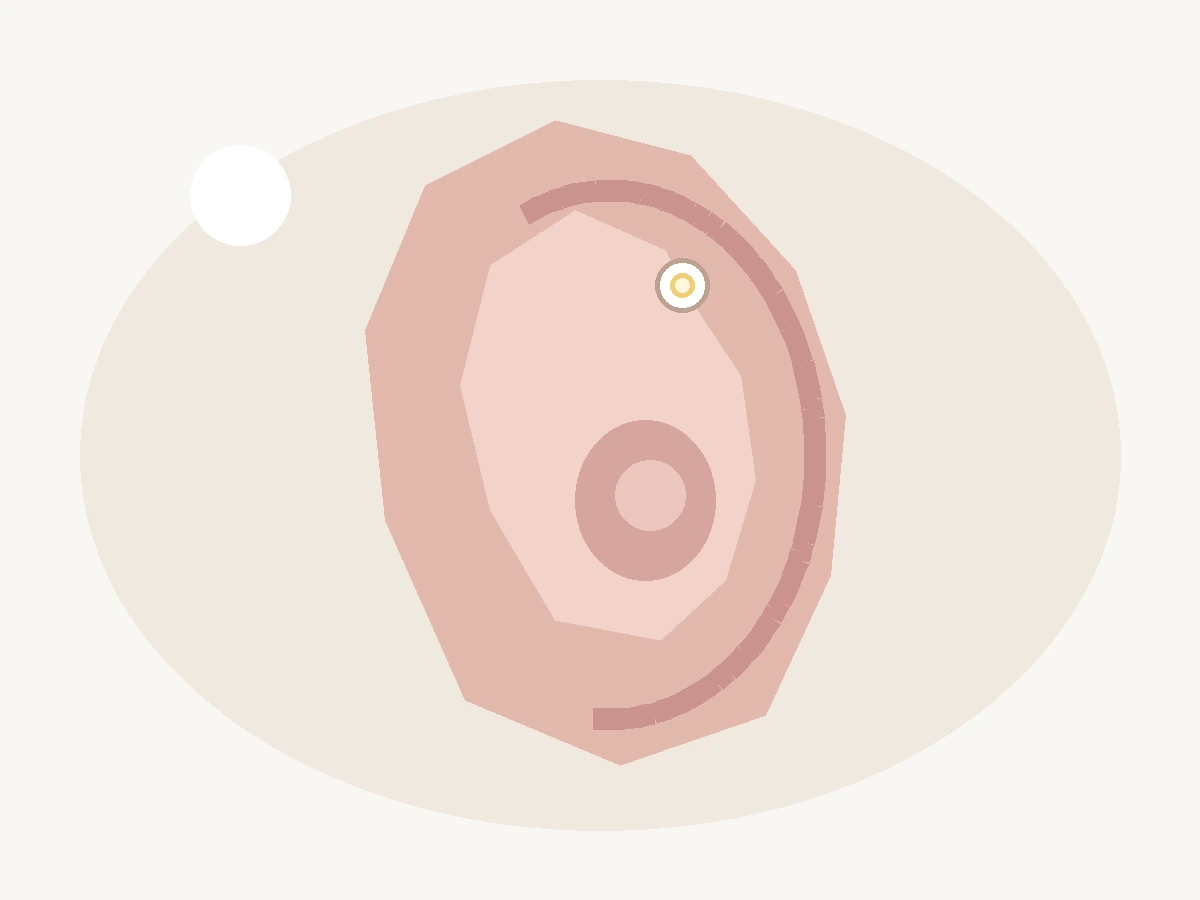
A forward helix piercing passes through the cartilage at the front of the upper ear, above the tragus and near where the ear meets the side of the head.
The name comes from its position. It is essentially located toward the front or ascending portion of the helix, rather than on the upper outer rim where a standard helix is normally placed.
A forward helix can be worn as a single forward helix, double forward helix, triple forward helix, part of a larger ear-piercing combination, a minimalist stud, or a small hoop after the piercing has fully healed.

The exact placement and number of piercings depend on the individual's ear anatomy. Not every ear has enough suitable cartilage or space for multiple forward helix piercings. A professional piercer should assess the ear before marking the final placement.
Where Is a Forward Helix Piercing Located?
The forward helix is located on the front-facing upper cartilage of the ear.
If you look at the outer rim of your ear from the top and follow it downward toward your face, the forward helix area is where the cartilage curves forward.
It sits above the tragus, toward the front of the upper ear, close to the side of the head, and in a relatively narrow cartilage fold.
This location is one reason the piercing can be more visible when someone looks directly at you.
The exact position should not simply be copied from another person's ear. The amount of usable cartilage, the shape of the fold, the thickness of the tissue, and the angle of the ear can all vary. A professional piercer should assess the ear before marking the final placement.
Forward Helix vs Helix Piercing
Although the names sound similar, a forward helix and a standard helix are different placements.
Forward helix: front of upper ear, closer to the face, usually highly visible from the front, with relatively limited space.
Standard helix: farther back along the outer upper rim, generally with more surface area for jewelry.
Both are anatomy dependent, and both commonly use flat-back studs during healing. The forward helix usually requires more attention to glasses, headphones, and the limited space available around the jewelry.
Does Everyone Have the Anatomy for a Forward Helix?
No. Forward helix piercings are anatomy dependent. Some people have a clearly defined fold with enough cartilage for one or more piercings, while others have less usable space.
A professional piercer may examine the shape of the forward helix, cartilage thickness, available surface area, the depth and angle of the fold, existing piercings, jewelry clearance, and your desired final look.
Someone may have enough room for one forward helix but not enough for a double or triple. This is simply natural variation in ear anatomy.
If you have seen a double or triple forward helix online and want the same arrangement, show the photo to your piercer, but let them determine whether your anatomy can safely accommodate it.

How Many Forward Helix Piercings Can You Get?
A forward helix can be pierced once, twice, or sometimes three times.
Single forward helix: the simplest option, often paired with a tiny gemstone, opal, bead, or minimalist decorative end.
Double forward helix: two piercings positioned along the front cartilage. Spacing is important because swelling and later jewelry downsizing need to be considered.
Triple forward helix: three separate piercings. This requires more available cartilage and careful planning. The piercer should consider the final jewelry arrangement before creating the first hole.
How Painful Is a Forward Helix Piercing?
Pain is subjective, so there is no universal pain score.
Many people describe a forward helix as a quick sharp pinch followed by pressure or tenderness. Because it passes through cartilage rather than the soft tissue of the earlobe, it can feel more intense than a standard lobe piercing.
The actual piercing procedure is usually very brief. Afterward, you may experience mild swelling, tenderness, warmth, sensitivity around the jewelry, and temporary redness.
For many people, the bigger challenge is not the few seconds of piercing but protecting the cartilage while it heals.
How Long Does a Forward Helix Take to Heal?
A forward helix is a cartilage piercing, so healing takes considerably longer than a standard earlobe piercing.
A realistic full-healing range is approximately 6 to 12 months, although individual healing can vary. You should not assume that a piercing is fully healed simply because it looks normal from the outside.
During healing, avoid unnecessary touching, avoid rotating the jewelry, protect it from pressure, avoid changing jewelry too early, follow your piercer's aftercare instructions, and have jewelry downsized professionally when appropriate.
Forward Helix Healing Timeline
First few days: the area may be tender, slightly swollen, red, and sensitive to accidental contact.
First few weeks: swelling should gradually settle, although cartilage piercings can remain sensitive. Hair, glasses, headphones, pillows, and clothing can accidentally put pressure on the area.
Around 6–8 weeks: depending on healing, your piercer may assess whether the initial jewelry needs to be downsized. Do not automatically change the jewelry yourself.
Several months: the piercing may look and feel much better while internal healing continues.
Around 6–12 months: many forward helix piercings reach full healing within this general range, although individual healing time can be shorter or longer.
What Jewelry Is Best for a New Forward Helix Piercing?
A flat-back labret stud is one of the most commonly recommended choices for a fresh forward helix.
The flat back sits against the rear of the ear without a large butterfly-style backing, which can be more practical in this compact area.
Suitable high-quality jewelry materials can include implant-grade titanium, appropriate solid 14K or 18K gold, properly manufactured threadless jewelry, and properly manufactured internally threaded jewelry.
Jewelry should be properly sized by a professional rather than selected only from a photograph.
What Gauge Is Used for a Forward Helix?
Forward helix jewelry is commonly found in 16G or 18G, depending on the piercer, jewelry system, and individual anatomy.
The important point is that there is no single universal size that works for every ear. Your piercer should determine gauge, post length, placement angle, and decorative end size.
Do not force jewelry of a different gauge into a healing piercing.
What Size Post Does a Forward Helix Need?
The required post length depends on cartilage thickness, exact placement, swelling, jewelry design, and individual anatomy.
A post that is too short can put pressure on healing tissue. A post that is unnecessarily long can catch on hair or clothing, move excessively, get hit by glasses, and increase irritation.
This is why professional downsizing can be important during healing.
Can You Wear a Hoop in a Forward Helix?
Yes, but a hoop is generally better considered after the piercing has fully healed.
A small hoop can create a delicate, curved appearance, but the diameter needs to match the anatomy. Putting a hoop into a fresh forward helix can create unnecessary movement and pressure.
For a new piercing, a properly fitted flat-back stud is usually the more practical choice.
Forward Helix Jewelry Ideas
Once completely healed, there are many ways to style a forward helix.
Tiny gemstone stud: a small crystal or gemstone gives a clean minimalist appearance.
Opal stud: adds color without requiring a large piece of jewelry.
Gold ball: a tiny gold bead works well for a simple, understated ear stack.
Marquise or decorative end: a small elongated or decorative end can make the piercing more noticeable.
Small hoop: a properly fitted hoop gives the forward helix a different appearance from a traditional stud.
Double or triple styling: matching small pieces can create a coordinated ear stack when anatomy allows.
Forward Helix and Glasses
Glasses deserve special attention. The arms of many glasses pass directly beside the forward helix area. During healing, repeated contact or pressure from glasses can irritate the piercing.
Before getting pierced, consider where your glasses arms sit, whether they touch the forward helix, whether you frequently wear sunglasses, whether your frames can be adjusted, and whether the piercing can be positioned to avoid direct pressure.
If you wear glasses every day, tell your piercer before the marking is finalized.
Can You Wear Headphones With a Forward Helix?
It depends on the type of headphones. Large over-ear headphones may be more comfortable if they do not press against the piercing, while earbuds usually do not directly contact the forward helix itself.
The problem is pressure and friction. During healing, avoid headphones that press against the jewelry, keep headphones clean, do not repeatedly push the jewelry while putting headphones on, and stop using a particular headphone if it causes irritation.
Can You Sleep on a Forward Helix Piercing?
Sleeping directly on a fresh cartilage piercing can cause irritation and prolong healing.
If you normally sleep on your side, consider sleeping on the opposite side, using a travel or donut-style pillow, keeping pressure away from the piercing, and avoiding pillows that push directly against the ear.
Repeated pressure can contribute to swelling, irritation, and bumps.

Forward Helix Piercing Aftercare
Good aftercare is mainly about keeping the piercing clean while minimizing trauma.
Recommended practices include washing your hands before touching the area, using sterile saline according to professional aftercare instructions, keeping the surrounding area clean, keeping pillowcases clean, keeping glasses and headphones clean, avoiding unnecessary pressure, and leaving the jewelry in place.
Avoid twisting the jewelry, picking crusts, constantly touching the piercing, using harsh chemicals, applying unnecessary ointments, changing jewelry too early, sleeping directly on it, and pulling hair through the jewelry.
Should You Rotate a Forward Helix Earring?
No. There is generally no need to rotate or spin healing jewelry.
Moving the jewelry unnecessarily can irritate newly healing tissue.
If crust or dried discharge develops, do not pick it aggressively. Follow your piercer's cleaning instructions and allow the area to settle naturally.
What Causes a Forward Helix Bump?
A bump around a healing cartilage piercing can have several possible causes.
Common sources of irritation include sleeping on the piercing, jewelry that is too long or too tight, repeated touching, hair catching on the jewelry, glasses rubbing the area, headphone pressure, unsuitable jewelry material, excessive cleaning, and accidental knocks.
A bump does not automatically mean the piercing is infected. Persistent swelling, increasing pain, spreading redness, significant warmth, or unusual discharge should be assessed by an appropriate healthcare professional.
Forward Helix Piercing and Infection
Cartilage piercings require care because infections involving cartilage can become more serious than problems involving the earlobe.
Seek medical advice if you develop increasing rather than decreasing pain, significant swelling, spreading redness, increasing warmth, pus-like discharge, fever, or feeling unwell.
Do not attempt to diagnose an infection solely from photographs or online descriptions. If symptoms are severe or rapidly worsening, seek medical attention promptly.
When Should You Downsize a Forward Helix Piercing?
Initial jewelry often needs additional length to accommodate early swelling.
Once swelling has decreased and the piercing is progressing normally, your piercer may recommend a shorter post. Some professional piercing guides discuss a downsizing check around 6–8 weeks, but the correct timing depends on how the individual piercing is healing.
Do not downsize simply because a certain number of weeks has passed. A professional should examine the piercing and determine whether the jewelry can safely be shortened.
Can You Get a Double or Triple Forward Helix at Once?
It may be possible, but more piercings mean more healing sites.
Before getting multiple forward helix piercings, consider available cartilage, your existing healing piercings, sleeping habits, jewelry spacing, your ability to avoid pressure, and your previous healing experience.
The final appearance should be planned before piercing. A good piercer can mark the proposed positions and check the spacing from multiple angles.
How Much Does a Forward Helix Piercing Cost?
The price varies significantly by country, studio, piercer experience, jewelry material, and whether the quoted price includes jewelry.
When comparing studios, check whether the quoted fee includes the piercing procedure, initial jewelry, implant-grade jewelry, downsizing, aftercare guidance, and follow-up checks.
Very cheap jewelry may not be the best way to save money if the material or manufacturing quality is poor.
Is a Forward Helix Piercing Worth It?
Whether a forward helix is right for you depends on your anatomy, lifestyle, jewelry preferences, and willingness to allow a long cartilage-healing period.
It can be an attractive option if you want a small but visible ear piercing, a minimalist look, a front-facing jewelry accent, a piercing that works well in an ear stack, or the option of single, double, or triple styling.
It may require extra consideration if you wear tight glasses, frequently use equipment that presses against your ear, sleep heavily on the piercing side, have limited cartilage space, or want a piercing that heals very quickly.
Forward Helix Piercing Pros and Cons
Pros:
· Visible from the front
· Works well with minimalist jewelry
· Suitable for single or multiple styling
· Small jewelry can create a noticeable effect
· Works well as part of an ear-curation setup
Cons:
· Cartilage takes longer to heal
· Anatomy can limit placement options
· Glasses may cause pressure
· Hair can catch on the jewelry
· Sleeping on it can be difficult
· Jewelry sizing needs to be precise
Frequently Asked Questions
Is a forward helix piercing painful?
It can feel like a sharp pinch followed by pressure. Pain varies from person to person.
How long does a forward helix take to heal?
Full healing commonly takes around 6–12 months, although individual healing times vary.
Can everyone get a forward helix?
No. Forward helix placement depends on the amount and shape of suitable cartilage.
Can I get a double forward helix?
Yes, if your anatomy provides enough usable space. Proper spacing is important.
Can I get a triple forward helix?
Some ears can accommodate three forward helix piercings, but not everyone has enough space.
What jewelry is best for a new forward helix?
A properly fitted flat-back labret stud is a common choice.
What gauge is a forward helix?
16G and 18G are both commonly used.
Can I wear a hoop in a forward helix?
Yes, but a hoop is generally more appropriate once the piercing has fully healed.
Can I sleep on a forward helix piercing?
It is better to avoid direct pressure during healing.
Can glasses irritate a forward helix piercing?
Yes. Glasses arms can sit close to this placement.
Can I wear headphones after getting a forward helix?
You may be able to use headphones that do not touch or press on the piercing.
Why is my forward helix still swollen?
Cartilage can remain swollen or tender for some time. Worsening swelling, pain, heat, spreading redness, or concerning discharge should be evaluated by a healthcare professional.
When can I change my forward helix jewelry?
Do not change jewelry simply because the piercing looks healed. Have a professional assess it before making an early jewelry change.
Final Thoughts
A forward helix piercing is a small cartilage piercing with a distinctive front-facing position. Its compact location makes it attractive for minimalist jewelry, double and triple stacks, and curated ear combinations, but that same limited space makes anatomy and jewelry sizing especially important.
The best starting point is a professional anatomy assessment. Once the placement has been confirmed, choose appropriately sized, high-quality jewelry and give the piercing enough time to heal.
With consistent aftercare and minimal pressure or friction, a forward helix can become a subtle but eye-catching part of your ear-piercing collection.
Leave a Reply