


What Is a Marley Piercing?
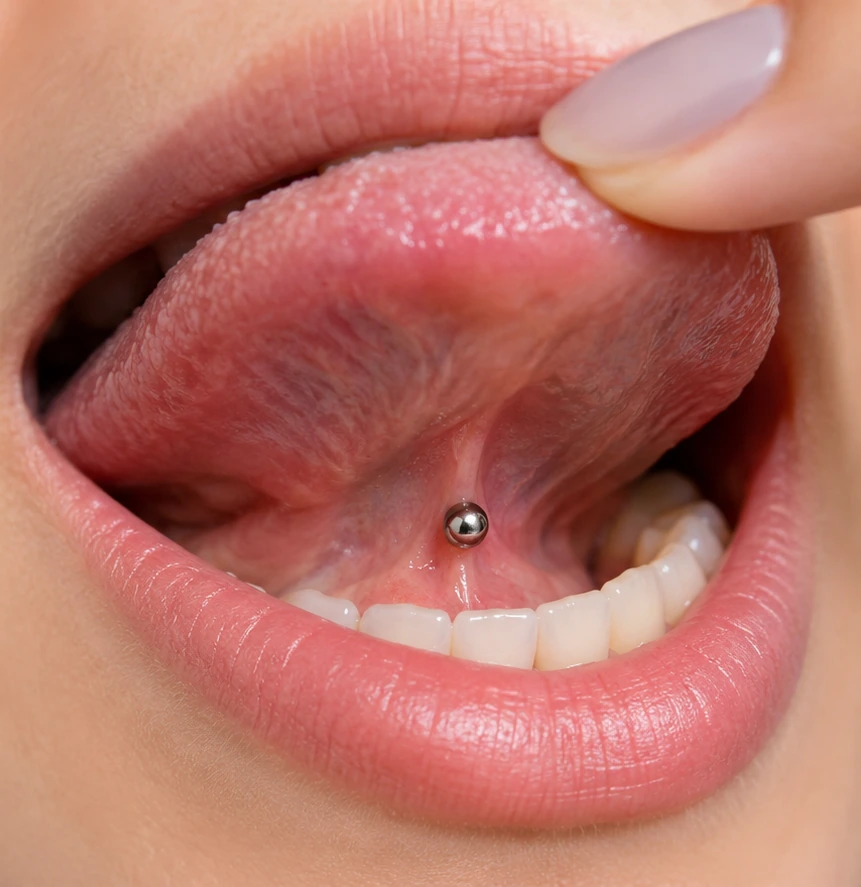
A Marley piercing is an uncommon oral piercing placed through the small fold of tissue underneath the tongue, known as the lingual frenulum. It is also commonly called a tongue web piercing or tongue frenulum piercing.
Unlike a traditional tongue piercing, which passes through the body of the tongue, a Marley piercing is located underneath it. Because of its hidden position, the jewelry is usually difficult to see when the mouth is closed.
Although this piercing may look small and simple, its location requires careful consideration. The underside of the tongue contains delicate tissue, blood vessels, and openings connected to the salivary glands. Not everyone has suitable anatomy for this piercing.

Before considering one, it is important to understand its placement, possible complications, jewelry requirements, and healing process.
Where Is a Marley Piercing Located?
A Marley piercing is positioned through the lingual frenulum, the thin band of tissue connecting the underside of the tongue to the floor of the mouth.
When someone lifts their tongue, this small tissue fold becomes visible. Its thickness, length, flexibility, and attachment vary from person to person.
A professional piercer must examine the area carefully before deciding whether the placement is appropriate. A photograph cannot reliably show whether someone's anatomy is suitable.
The piercing should never be attempted at home because incorrect placement can injure delicate oral structures.
Marley Piercing vs. Traditional Tongue Piercing
These two piercings are different in both location and anatomy.
A Marley piercing should also not be confused with a smiley piercing, which passes through the upper lip frenulum.
Is Everyone Suitable for a Marley Piercing?
No. Anatomy is one of the most important factors.
Some people have a short, thin, tight, or shallow lingual frenulum that may not be suitable for jewelry. Others may have anatomy that makes the placement difficult or unsafe.
An experienced piercer should assess the size and thickness of the frenulum, nearby salivary duct openings, available tissue, tongue movement, and possible contact between jewelry and teeth or gums.
A responsible professional may refuse the procedure if the anatomy creates unnecessary risks. Avoid studios that promise the piercing is suitable for everyone.
How Painful Is a Marley Piercing?
Pain varies between individuals. Some people may experience a quick, sharp sensation during the procedure, followed by tenderness or discomfort.
The experience can depend on individual pain sensitivity, anatomy and tissue thickness, professional experience and technique, anxiety, and jewelry fit.
The small size of the piercing does not mean it is completely painless. Never use alcohol or recreational drugs to manage piercing anxiety. Discuss concerns with your piercer before the appointment.
Marley Piercing Healing Time
Healing time varies from person to person. Oral tissue may appear calmer before the piercing has completely healed.
Several factors can affect recovery, including jewelry quality and fit, oral hygiene, accidental movement or trauma, individual healing response, and irritation from food or oral activities.
Do not change jewelry simply because the piercing looks better. A qualified professional should assess the healing progress before any jewelry adjustment.
If pain, swelling, or other symptoms become worse instead of gradually improving, seek professional advice.
Marley Piercing Jewelry
Jewelry selection is particularly important because the piercing is located in a small and delicate area.
A professional piercer may discuss a small, appropriately fitted jewelry design, such as a suitable curved barbell. However, the correct style depends on individual anatomy.
Material: Implant-grade titanium is commonly used for quality body jewelry. Ask for the exact material specification rather than relying on vague labels.
Size: Jewelry must not be so tight that it compresses the tissue or so loose that it moves excessively.
Design: Heavy or oversized decorative jewelry may create unnecessary movement and irritation.
Quality: Avoid poorly finished, plated, or unidentified metal jewelry.
Never change fresh oral-piercing jewelry yourself.
Marley Piercing Aftercare
Good aftercare helps reduce avoidable irritation and supports healing. Follow the instructions provided by your professional piercer.
Avoid aggressive cleaning. Excessive cleaning can irritate delicate oral tissue.
What Should You Avoid During Healing?
Some everyday activities can increase friction and irritation.
Avoid biting or pulling the jewelry, clicking it against your teeth, repeatedly touching the piercing, changing jewelry too early, sharing drinks or utensils, smoking and vaping, using alcohol-based mouthwash, or applying hydrogen peroxide and other harsh chemicals.
Oral contact and activities that may introduce bacteria or traumatize the area should also be avoided until healing is complete and your professional confirms they are safe.
Possible Risks and Complications
Like every body piercing, a Marley piercing carries potential risks. Its oral location makes professional assessment especially important.
Possible complications include swelling and tenderness, infection, gum irritation or recession, tooth damage, tissue injury, jewelry embedding, scarring, and injury to nearby salivary structures.
No piercing is completely risk-free, even when performed by an experienced professional.
Can a Marley Piercing Damage Teeth or Gums?
It can potentially cause dental or gum problems if jewelry repeatedly rubs against nearby structures. Possible problems include gum irritation, gum recession, tooth sensitivity, enamel wear, and chipped teeth.
Jewelry fit and placement are important. Avoid playing with the jewelry or deliberately making it touch your teeth.
If you notice new tooth sensitivity, gum changes, or dental pain after getting pierced, arrange an assessment with a dentist.
Signs of Infection: When Should You Seek Help?
Mild tenderness can occur during early healing, but certain symptoms require professional attention. Watch for increasing pain, significant or worsening swelling, spreading redness, pus-like discharge, fever, or feeling generally unwell.
Seek urgent medical help if swelling affects breathing or swallowing, or if bleeding is heavy or does not stop.
Do not force out embedded jewelry or attempt to treat a suspected infection using home remedies. Seek medical advice rather than relying on online descriptions to diagnose the problem.
Can a Marley Piercing Be Removed?
Yes, a person may decide they no longer want the piercing. However, removal should be discussed with a qualified professional, particularly if the area is swollen, painful, or infected.
After removal, the opening may close, but the final appearance depends on individual healing and whether complications occurred. A small scar or tissue mark may remain.
How Much Does a Marley Piercing Cost?
There is no fixed worldwide price for a Marley piercing. The cost depends on the studio's location, professional experience, jewelry material and quality, consultation and follow-up services, and local market prices.
Because this is an uncommon piercing, some studios may not offer it.
Always ask for the complete price before booking. Professional experience, hygiene, and proper anatomy assessment should matter more than choosing the cheapest studio.
How to Choose a Professional Piercer
Choosing an experienced professional is one of the most important decisions.
Before booking, ask whether the piercer has experience with tongue web piercings, uses sterile single-use needles, properly sterilizes equipment, examines your anatomy first, explains jewelry material and sizing, provides aftercare instructions, and offers follow-up appointments.
Avoid anyone who guarantees that the piercing will heal without complications or encourages you to perform it yourself.
Frequently Asked Questions

Final Thoughts
Marley piercing is an uncommon and discreet oral piercing placed through the lingual frenulum underneath the tongue. Its hidden appearance may attract people looking for a different style, but the location requires careful anatomical assessment.
Before deciding, consult an experienced professional, understand the possible risks, and ask about suitable jewelry and aftercare.
The most important thing is not simply getting the piercing. It is making sure that the placement is appropriate for your anatomy and that you understand how to care for it safely.
Leave a Reply