

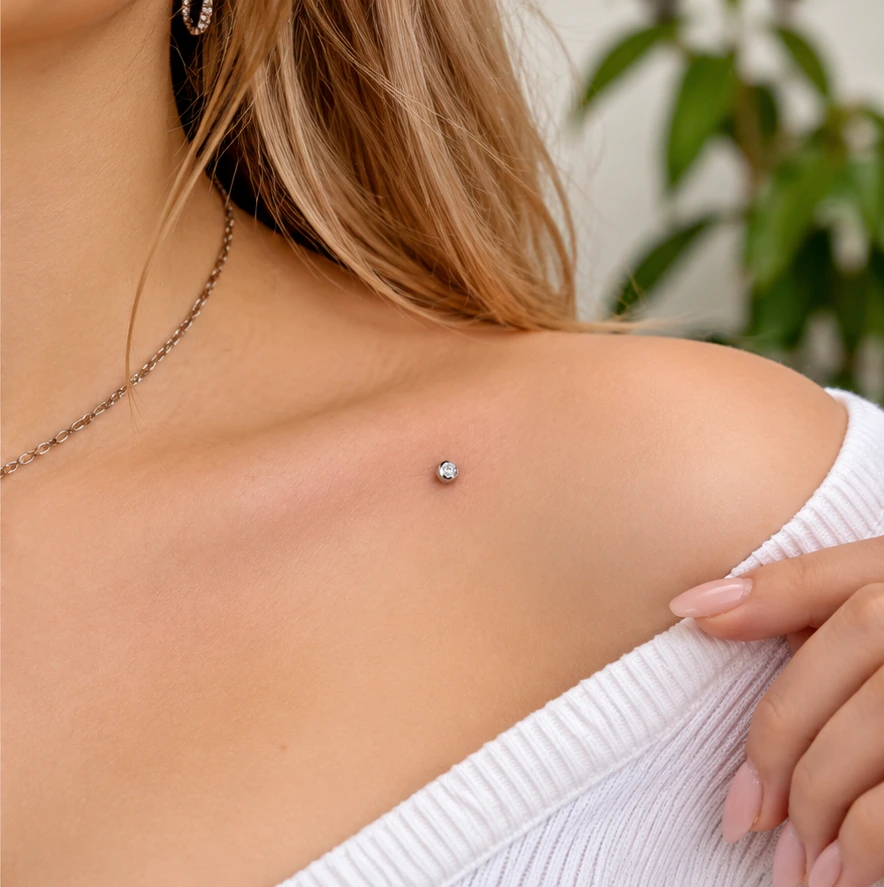

A collarbone piercing is a surface piercing placed on the skin over or near the collarbone. It creates a striking look because the jewelry sits along a visible part of the upper chest. However, this area moves whenever you turn your neck, lift your arms, change clothes, or sleep on your side. That movement can make healing more challenging than healing a piercing in some less mobile areas. Before choosing this style, learn how it is performed, what it feels like, which jewelry may be suitable, how long healing can take, and how to recognize complications.

What Is a Collarbone Piercing?
A collarbone piercing is usually a surface piercing: the jewelry passes through a small section of skin rather than through a thick, protruding piece of cartilage. It may be positioned above, below, or alongside the collarbone, depending on anatomy and the look a person wants. Some people choose one piercing, while others prefer a symmetrical pair. The exact placement matters because the skin and tissue in this region can shift with everyday movement.
The term can also be used loosely for dermal anchors placed near the collarbone. A surface bar and a dermal anchor are not the same procedure. A qualified piercer should explain which technique is being proposed, why it suits the chosen location, and what the likely risks are. Not every person has anatomy that can support a stable surface piercing in this area.
How Is It Different From a Dermal Piercing?
A traditional surface piercing uses a surface bar that enters and exits the skin through two openings. A dermal anchor, sometimes called a single-point piercing, sits under the skin with a small decorative top visible above the surface. Both approaches can be affected by friction, pressure, snagging, and rejection. Their suitability depends on the exact site, the piercer’s assessment, and your lifestyle.
Do not select a technique based only on photographs or social media trends. Ask the piercer to describe the procedure, the jewelry, the expected healing process, and the plan if the piercing begins to migrate. A reputable professional will discuss limitations honestly and will not promise that a surface piercing will last forever.
Does a Collarbone Piercing Hurt?
Pain is subjective. Many people describe the initial piercing as a sharp pinch followed by pressure, warmth, or tenderness. The amount of discomfort varies with personal pain sensitivity, exact placement, technique, stress, and the piercer’s experience. The collarbone area can feel sensitive because the skin may be relatively thin and the site is close to bone, but pain reports are not a reliable way to predict how your own experience will feel.
You may notice soreness, mild swelling, or bruising during the first few days. These symptoms should generally settle rather than steadily worsen. Do not take alcohol or recreational drugs before a piercing, and tell the piercer about medicines or health factors that could affect bleeding or healing. If you feel faint, unwell, or uncertain during the appointment, speak up and ask for a pause.
How Long Does It Take to Heal?
Healing time varies substantially, and surface piercings can be unpredictable. A collarbone piercing may take several months to heal and can take longer, especially if it is repeatedly irritated. The outside can look calm before the deeper tissue has finished healing. Do not assume that a piercing is healed just because it no longer hurts or has stopped producing a small amount of clear fluid.
Healing can be slowed by frequent movement, tight clothing, pressure from bags or seat belts, snagging, harsh cleaning products, smoking, poor nutrition, and touching the jewelry with unwashed hands. Follow the specific aftercare instructions given by your professional piercer, and arrange a check-up if you are unsure whether healing is progressing normally.
Best Jewelry for a Collarbone Piercing
Jewelry choice affects comfort and the chance of irritation. Implant-grade titanium is commonly recommended for new piercings because it is lightweight and can be suitable for people who need to avoid nickel exposure. Other materials may be appropriate in specific circumstances, but material names and quality standards matter: ask for clear information rather than relying on vague labels such as “surgical steel.”
For a surface piercing, a correctly fitted surface bar may be considered by an experienced piercer. A dermal anchor uses a different jewelry base and should not be treated as interchangeable with a surface bar. The jewelry must fit the anatomy without excessive pressure or unnecessary movement. Jewelry that is too short, too long, heavy, or poorly fitted may increase irritation or snagging.
Do not change jewelry yourself during early healing. If the jewelry feels too tight, catches repeatedly, or appears to be sinking into the skin, contact a qualified piercer promptly. Do not force jewelry into place or use a household tool to adjust it.
Collarbone Piercing Cost
The cost depends on the country, city, studio reputation, piercer’s experience, jewelry material, and whether you choose a surface bar or dermal anchor. Some studios quote the procedure and jewelry together; others charge separately for jewelry, follow-up visits, or replacement pieces. Because prices change and local markets differ, there is no single reliable price that applies everywhere.
When comparing quotes, ask what the price includes: consultation, sterile single-use needles, high-quality jewelry, written aftercare instructions, and a follow-up check. A very low price is not necessarily a bargain if the studio cannot explain its sterilization process or jewelry standards. Never choose a piercer solely because they offer the cheapest deal.
Risks and Possible Complications
The most important consideration with a collarbone piercing is that it is a surface piercing in a high-movement area. Possible complications include irritation, infection, scarring, migration, rejection, and injury caused by snagging. Migration means the jewelry gradually shifts from its original position. Rejection occurs when the body pushes the jewelry toward the surface, potentially leaving a scar.
Signs of possible migration include increasingly visible jewelry beneath the skin, a changing angle, widening or thinning skin between the openings, or the holes appearing to move. If you notice these changes, seek advice from a reputable piercer or healthcare professional. Continuing to wear jewelry in a piercing that is rejecting may worsen tissue damage and scarring.
Infection warning signs can include worsening redness, increasing heat, substantial swelling, escalating pain, thick or foul-smelling discharge, or fever. A little clear or pale fluid that dries into a light crust can occur during healing, but worsening symptoms should not be dismissed as normal. Seek prompt medical care if you have fever, spreading redness, severe pain, red streaks, or feel generally unwell. Do not rely on home remedies to treat a suspected infection.
If you think the piercing is infected, do not automatically remove the jewelry yourself. Removal can sometimes complicate drainage or treatment. Ask a healthcare professional for advice about what to do next. If jewelry is embedded or the skin is rapidly worsening, get urgent medical assessment.
Collarbone Piercing Aftercare
Good aftercare focuses on gentle cleaning and preventing friction. Wash your hands before touching the area, and avoid unnecessary handling or twisting of the jewelry. Use sterile saline wound wash when recommended by your piercer. A product intended for wound cleansing should list water and 0.9% sodium chloride as its only ingredients. Avoid mixing homemade solutions unless a healthcare professional specifically advises it.
Do not use alcohol, hydrogen peroxide, harsh antiseptics, tea tree oil, or perfumed products on the piercing unless a qualified healthcare professional directs you to do so. These products can irritate healing tissue. After rinsing, gently pat the area dry with clean disposable gauze or another clean, non-shedding material. Do not pick at crusts or scrape the skin.
Keep clothing, towels, bedding, and hair away from the jewelry as much as possible. Avoid necklaces, straps, or accessories that rub against the area. Be careful when putting on shirts, bras, backpacks, and seat belts. Avoid swimming in pools, hot tubs, lakes, or the sea while the piercing is fresh or not fully healed, because water can expose the wound to germs. Follow your piercer’s advice about exercise and activities that cause friction or heavy sweating.
Sleeping, Clothing, and Everyday Activities
Try to avoid sleeping directly on the piercing. Pressure can cause swelling, soreness, and changes in jewelry position. Choose loose, clean clothing that does not catch on the jewelry, and take extra care when changing shirts. If a strap repeatedly crosses the piercing, adjust how you carry your bag or choose a different style until healing is complete.
Movement of the shoulders and neck is unavoidable, so be realistic about your daily routine. Contact sports, activities with tight uniforms, and work that involves frequent lifting or friction may make healing harder. Ask the piercer whether your regular activities are compatible with the proposed placement before going ahead.
Can You Get a Collarbone Piercing at Home?
No. Do not attempt a collarbone piercing at home or let a friend perform it with a sewing needle, piercing gun, or improvised equipment. The procedure requires anatomical assessment, appropriate sterile equipment, safe jewelry, and training in infection prevention. Improvised methods can cause injury, infection, poor placement, and lasting scars.
Choose a professional studio that follows local health regulations, uses sterile single-use needles where appropriate, opens sterile supplies in front of you, and has an autoclave and documented sterilization practices for reusable equipment. The piercer should explain the procedure, answer questions without pressure, and be willing to decline the piercing if your anatomy is unsuitable.
Who Should Think Carefully Before Getting One?
Consider professional medical advice before getting pierced if you have a condition or treatment that affects wound healing, immune function, bleeding, or infection risk. You should also discuss any history of raised or keloid scars with a healthcare professional. If you are prone to severe metal allergies, ask about jewelry composition before booking. A piercer cannot replace medical advice when an underlying health issue may affect healing.
Think about whether you can protect the area during healing. If your work clothes, sports gear, daily bag, or sleeping position will repeatedly press on the site, postponing the piercing may be sensible. It is better to wait than to rush into a placement that is difficult to care for.
How to Choose a Safe Piercing Studio
Look for a clean studio with a clear sterilization process, professional communication, and a portfolio showing healed results—not only fresh piercings. Ask how often the piercer performs surface piercings, what jewelry they recommend, how they assess anatomy, and what they do if migration begins. They should provide written aftercare information and explain when to seek medical attention.
Be cautious if a piercer promises zero risk, guarantees that the piercing will never reject, dismisses questions about sterilization, or pressures you to proceed immediately. A responsible professional will discuss the possibility of rejection and scarring, explain alternatives, and respect your decision to wait.
Frequently Asked Questions
Is a collarbone piercing permanent?
Not necessarily. Surface piercings can migrate or be rejected by the body, and some need to be removed. Even after removal, a small scar or mark may remain.
Can I wear a necklace with a new collarbone piercing?
It is best to avoid necklaces or chains that rub, press on, or catch the jewelry while it heals. Ask your piercer when it may be safe to resume wearing one.
Can I change the jewelry when it stops hurting?
No. Lack of pain does not prove that the piercing is fully healed. Have a qualified piercer assess it before any jewelry change.
Is redness normal?
Mild tenderness and limited redness can occur early on, but redness that spreads or worsens, especially with heat, increasing pain, pus, or fever, needs medical attention.
Will a collarbone piercing leave a scar?
It can. Scarring is more likely if the piercing rejects, becomes infected, is repeatedly irritated, or is removed after tissue damage. Individual healing varies.
What is the safest jewelry material?
Implant-grade titanium is a commonly used option for fresh piercings. Ask the piercer to confirm the material and appropriate standard, and choose jewelry fitted to your anatomy.
Can I swim after getting pierced?
Avoid swimming while the piercing is fresh or healing because pools, hot tubs, lakes, and seawater can expose it to microorganisms. Ask your piercer for guidance based on healing progress.

Final Thoughts
A collarbone piercing can create a distinctive look, but it needs careful placement and consistent aftercare. Pain and healing time vary, and surface piercings carry a meaningful risk of migration, rejection, and scarring. Before booking, speak with an experienced professional, ask about the exact technique and jewelry, and make sure your daily routine allows you to protect the area. If symptoms worsen or you suspect an infection, seek medical care rather than relying on online advice.
Leave a Reply