

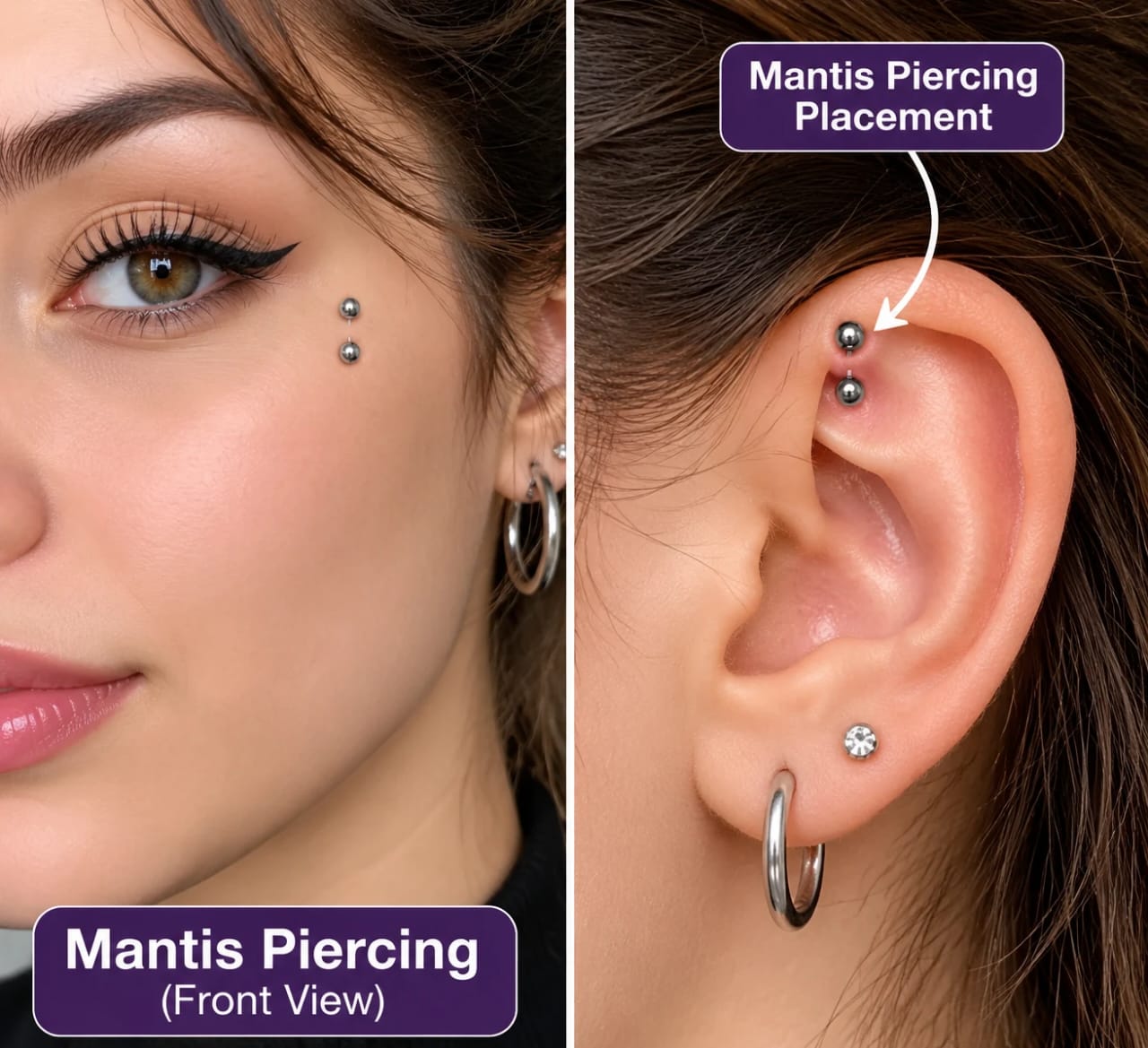

A mantis piercing is a distinctive ear-piercing style that creates a balanced, eye-catching look near the front of the ear. It is often chosen by people who want something more unusual than a standard lobe or helix piercing without covering the entire ear in jewelry. Because the placement is less familiar than many traditional piercings, it is important to understand the anatomy, jewelry requirements, healing process, and possible risks before booking an appointment.
This guide explains what a mantis piercing is, how it is placed, how much it may hurt, how long healing can take, which jewelry is suitable, and how to care for it. Individual anatomy varies, so a qualified professional piercer should assess your ear in person before confirming whether this piercing is suitable.

What Is a Mantis Piercing?
A mantis piercing is a paired ear-piercing arrangement positioned toward the front of the ear, around the area where the upper ear transitions toward the forward-facing cartilage. It is commonly described as two piercings placed symmetrically near the front of the ear, creating the appearance of a small pair of decorative points.
The exact placement and terminology can vary between studios and piercing communities. Some piercers may use the name for a specific two-point arrangement, while others may describe a similar look differently. For that reason, do not rely on the name alone when booking. Show your piercer a clear reference photograph and ask them to explain the exact entry and exit points they propose.
Unlike a conventional lobe piercing, a mantis piercing may involve cartilage. Cartilage has a different blood supply from the soft earlobe and can take considerably longer to heal. Correct placement and suitable jewelry are therefore especially important.
Mantis Piercing Placement: Where Does It Go?
The mantis piercing is generally associated with the forward-facing upper portion of the ear. The intended look is usually a coordinated pair of small pieces of jewelry that frame the front of the ear.
There is no universal ear shape, and the available cartilage differs from person to person. A professional piercer should examine both ears while you are sitting upright. They should check the thickness and curvature of the cartilage, the available space, how the jewelry will sit, and whether everyday movements or glasses could put pressure on the area.
Before the procedure, ask the piercer to mark the proposed locations and let you inspect them in a mirror. Do not agree to a placement that feels too close to an edge, looks uneven, or causes the jewelry to press against surrounding tissue. A responsible piercer may recommend a different arrangement or decline the piercing if your anatomy is not suitable.
How Much Does a Mantis Piercing Hurt?
Pain is personal, so there is no reliable score that applies to everyone. If the planned placement passes through cartilage, it may feel sharper and more intense than a standard earlobe piercing. Many people describe the sensation as a brief pinch or pressure followed by tenderness.
Several factors can influence discomfort:
· **Anatomy:** Cartilage thickness and the exact piercing location can affect the sensation.
· **Technique:** A trained piercer using sterile, appropriate equipment can help make the procedure controlled and efficient.
· **Stress and fatigue:** Feeling tense, tired, or unwell may make the experience harder.
· **Aftercare:** Sleeping on the piercing, bumping it, or changing jewelry too early can prolong soreness.
A piercing should not be performed with a piercing gun, particularly in cartilage. Choose a reputable studio that uses sterile, single-use needles and follows appropriate infection-control procedures. If you are worried about pain, discuss it with your piercer before the appointment rather than taking medication without advice.
Mantis Piercing Healing Time
Healing time depends on the exact tissue pierced, your health, jewelry fit, and how consistently you protect the area. If the mantis arrangement involves cartilage, expect healing to take months rather than days. Cartilage piercings commonly need around six to twelve months or sometimes longer to heal fully.
The outside may look calm before the deeper tissue has healed. This can create a false impression that the piercing is ready for a jewelry change. Do not change or remove the initial jewelry simply because redness or tenderness has reduced. Ask a qualified piercer to assess healing and perform any necessary jewelry downsizing.
During healing, mild tenderness, slight swelling, and a small amount of pale crust can occur. Symptoms should gradually settle. Increasing pain, spreading redness, marked heat, thick discharge, or fever may indicate a problem and should be assessed by a healthcare professional promptly.
Best Jewelry for a Mantis Piercing
Jewelry choice affects comfort, appearance, and the ability of the piercing to heal. The correct style depends on the exact placement and the anatomy of your ear. Your piercer should select the initial jewelry based on tissue thickness, swelling allowance, and the angle of the piercing.
Implant-Grade Titanium
Implant-grade titanium is a popular option for fresh piercings because it is lightweight and suitable for many people with metal sensitivities. Ask for documented implant-grade material rather than accepting a vague label such as “hypoallergenic.”
Solid 14k or 18k Gold
Solid, nickel-free 14k or 18k gold may be suitable once the piercer confirms that the design and finish are appropriate. Avoid gold-plated, gold-filled, or poorly finished jewelry in a fresh piercing because coatings can wear or irritate tissue.
Flat-Back Labret Jewelry
A flat-back labret may be appropriate for some ear-cartilage placements because its smooth backing can sit comfortably against the ear. However, not every mantis arrangement uses the same jewelry. The piercer should choose the correct post length, backing, and end style for each point.
Small Decorative Ends
Tiny beads, discs, or simple gemstones can create a neat, balanced look. Keep the initial design low-profile. Large, dangling, or heavy pieces can catch on hair and clothing and place unnecessary pressure on healing tissue.
Mantis Piercing Cost
The price of a mantis piercing varies by country, studio, piercer experience, jewelry material, and whether the quoted fee covers one or both piercing points. Premium implant-grade jewelry can increase the total cost.
Before paying, ask the studio for an itemized quote that explains:
· Whether the price includes both piercing points.
· Which jewelry material and style are included.
· Whether a follow-up check is included.
· Whether later downsizing has a separate fee.
· What aftercare guidance and support the studio provides.
Do not choose a studio based on the lowest price alone. Sterile technique, suitable jewelry, anatomical assessment, and clear aftercare instructions matter more than a bargain.
Mantis Piercing Aftercare
Good aftercare protects the piercing while the tissue heals. Follow the written instructions from your professional piercer and avoid repeatedly touching or moving the jewelry.
1. Clean With Sterile Saline
Use sterile wound-wash saline with 0.9% sodium chloride as the only active ingredient. Wash your hands before care, then gently rinse or spray the area according to the product directions. Pat dry with clean disposable gauze or paper towel if needed.
2. Do Not Twist or Rotate the Jewelry
Rotating jewelry does not help a piercing heal. It can irritate the channel and introduce bacteria from your hands. Leave the jewelry in place unless a professional piercer or healthcare professional advises otherwise.
3. Avoid Sleeping on the Piercing
Pressure can cause swelling, irritation, and changes in the angle of a healing cartilage piercing. Try sleeping on the opposite side or using a clean travel pillow that keeps the ear from touching the pillow surface.
4. Keep Hair and Products Away
Hair, headphones, hats, phone surfaces, and hair products can irritate a new piercing. Keep the area clear when possible and clean items that regularly touch the ear.
5. Avoid Harsh Cleaning Products
Do not use alcohol, hydrogen peroxide, strong antiseptics, tea tree oil, or homemade salt mixtures unless a healthcare professional specifically directs you to do so. These products can irritate healing tissue. Avoid applying makeup or skincare products directly to the piercing.
6. Do Not Remove Jewelry During a Suspected Infection
If you think the piercing is infected, seek medical advice promptly. Removing jewelry without professional guidance can sometimes cause the opening to close and complicate assessment or drainage. A healthcare professional can advise what to do based on the symptoms.
Risks and Possible Complications
Every piercing carries some risk. Cartilage piercings deserve particular care because infections in ear cartilage can become serious and may affect the shape of the ear if not treated appropriately.
Possible complications include:
· **Infection:** Increasing pain, warmth, swelling, spreading redness, pus-like discharge, or fever need medical assessment.
· **Irritation bumps:** Pressure, friction, poor jewelry fit, and repeated trauma can contribute to bumps around a piercing.
· **Migration or rejection:** Jewelry may gradually move or become more visible through the skin, especially if placement or anatomy is unsuitable.
· **Scarring:** Some people develop raised scars or keloids, particularly if they have a personal or family history of them.
· **Metal sensitivity:** Nickel or unsuitable alloys can trigger itching, redness, or a rash.
· **Prolonged healing:** Repeated pressure, catching, and premature jewelry changes can delay healing.
Seek urgent medical care if you develop severe or rapidly worsening pain, spreading redness, significant swelling, fever, or feel unwell. Do not attempt to treat a suspected cartilage infection only with home remedies.
Is a Mantis Piercing Suitable for Everyone?
Not necessarily. The shape and thickness of the ear determine whether the intended arrangement can be placed safely and comfortably. A professional piercer should assess your anatomy rather than promising that every ear can accommodate the same look.
You may need to postpone the procedure if the area is irritated, injured, or affected by an active skin problem. Tell the piercer about relevant allergies, previous piercing complications, a history of keloids, and any medicines or medical conditions that could affect healing. If you have a condition that affects immunity or wound healing, ask a healthcare professional for advice before getting pierced.
If the proposed jewelry would sit under constant pressure from glasses, headphones, or other equipment, discuss alternatives before proceeding.
Mantis Piercing vs. Other Ear Piercings
The name can be confused with other forward-facing or upper-ear piercings. The main difference is the exact location and arrangement, not simply the jewelry style.
· **Forward helix:** Usually placed through the front rim of the upper ear cartilage, near the head.
· **Tragus:** Passes through the small cartilage flap in front of the ear canal.
· **Rook:** Sits in the inner fold of upper ear cartilage.
· **Conch:** Placed in the bowl-shaped central part of the ear.
· **Standard helix:** Passes through the outer upper rim of ear cartilage.
Because naming conventions can differ, compare photographs and confirm the intended anatomy with your piercer. A label on social media is not a substitute for an in-person assessment.
How to Prepare for Your Mantis Piercing Appointment
A little preparation can make the appointment more comfortable and help you make a safer decision.
1. **Research the studio:** Look for a professional studio with clear hygiene practices, sterile single-use needles, and a portfolio of healed piercings.
2. **Check jewelry quality:** Ask about material documentation, threadless or internally threaded designs, and appropriate sizing.
3. **Eat and hydrate:** Have a normal meal and drink water before your appointment unless a healthcare professional has advised otherwise.
4. **Avoid alcohol or recreational drugs:** Arrive alert and able to understand the procedure and aftercare instructions.
5. **Discuss your routine:** Mention glasses, headphones, helmets, work equipment, or sleeping habits that could put pressure on the area.
6. **Review the placement:** Ask to see the markings from different angles before the piercer begins.
A professional should welcome questions and explain the risks, sterilization process, jewelry, and aftercare. If you feel rushed or pressured, it is reasonable to leave and find another studio.
Frequently Asked Questions About Mantis Piercing
1. What is a mantis piercing?
A mantis piercing is a distinctive ear-piercing arrangement, generally involving a coordinated pair of placements toward the front of the ear. Exact placement can vary, so confirm the intended anatomy with a professional piercer.
2. Does a mantis piercing hurt?
It can cause a brief sharp pinch and pressure. If cartilage is involved, discomfort may be greater than with a standard lobe piercing. Pain levels differ from person to person.
3. How long does a mantis piercing take to heal?
If the placement involves cartilage, full healing may take around six to twelve months or longer. The visible surface can appear healed before the deeper tissue is ready.
4. Can I sleep on my mantis piercing?
Avoid sleeping directly on a healing piercing. Pressure can cause irritation, swelling, and delayed healing. Sleep on the opposite side or use a travel pillow to keep pressure off the ear.
5. What jewelry is best for a new mantis piercing?
A piercer may recommend properly sized implant-grade titanium jewelry. The exact design depends on the placement and your anatomy. Avoid heavy or dangling jewelry during healing.
6. Can I get a mantis piercing on both ears?
A professional piercer can assess whether both ears have suitable anatomy. Getting both sides at once may make sleeping and daily care more difficult, so discuss the practical implications before deciding.
7. Can I change my mantis piercing jewelry early?
Do not change jewelry while the piercing is healing unless a qualified piercer needs to adjust or downsize it. A professional should assess the tissue before any change.
8. Is a mantis piercing the same as a forward helix?
No. The terms generally refer to different placements or arrangements. Because mantis piercing terminology is not fully standardized, show your piercer a reference image and confirm the exact location.
9. What should I do if my mantis piercing becomes swollen?
Some initial swelling can occur, but worsening swelling, heat, increasing pain, spreading redness, pus-like discharge, or fever should be assessed by a healthcare professional. Do not remove the jewelry on your own if infection is suspected.
10. Is a piercing gun safe for a mantis piercing?
A piercing gun is not recommended for cartilage. Choose a trained professional who uses a sterile, single-use needle and appropriate jewelry.

Final Thoughts
A mantis piercing can be an attractive option for anyone who wants a distinctive front-of-ear look. However, the exact placement needs careful planning because ear anatomy varies and the procedure may involve cartilage. Choose an experienced piercer, use suitable jewelry, follow gentle saline aftercare, and allow enough time for complete healing. Most importantly, do not ignore worsening pain, swelling, or signs of infection.
A well-planned piercing should look good without putting unnecessary pressure on the ear. Take time to confirm the placement, understand the risks, and choose safety over trends.
Leave a Reply