


Introduction
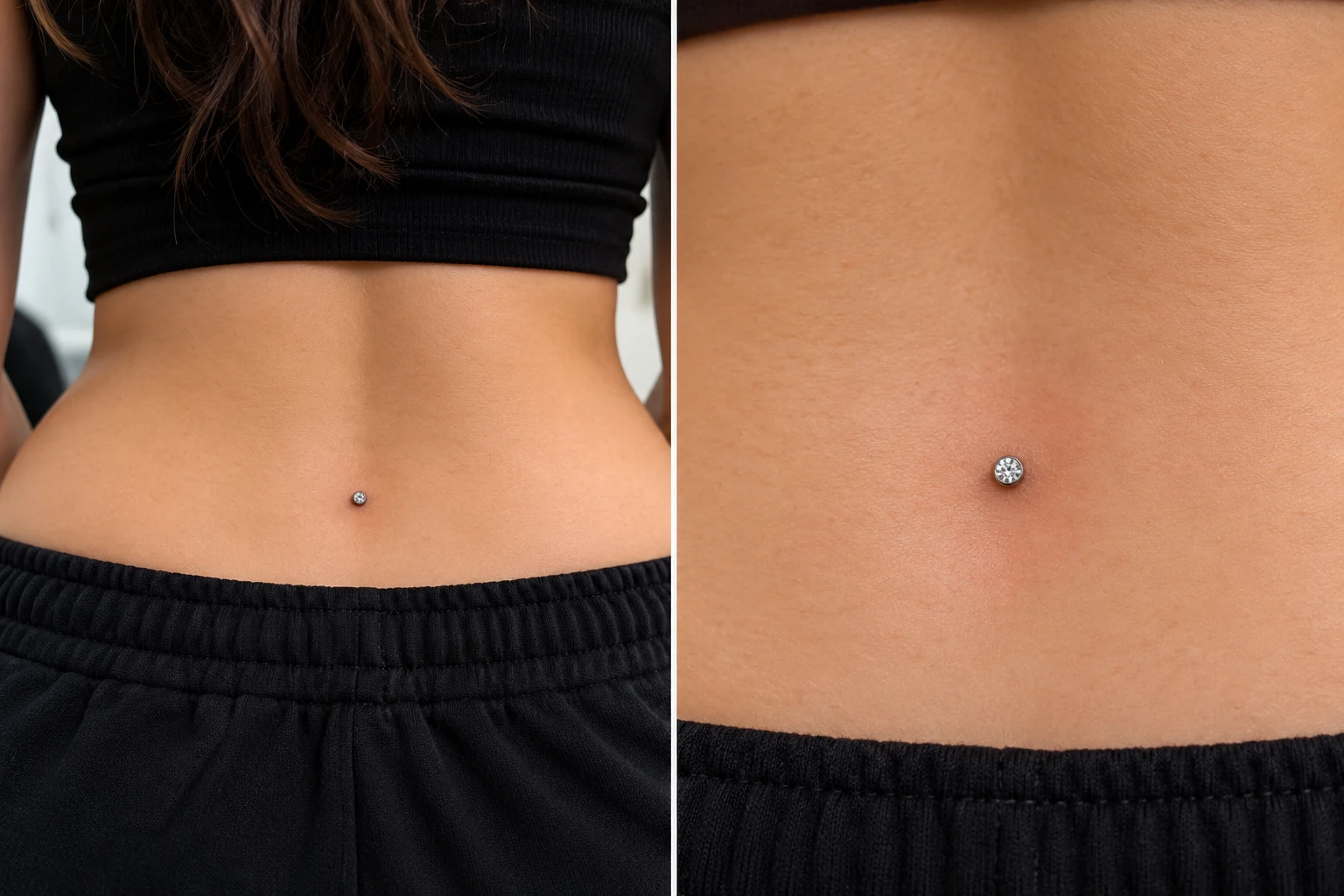
A lower back dermal piercing is a type of surface-style body piercing placed in the skin over the lower back, often near the dimples above the hips or along the lower-back area. Unlike a traditional piercing that passes through a fold of skin and has an entry and exit point, a dermal piercing uses a small anchor positioned beneath the skin. A decorative top sits on the surface, creating the look of a single gemstone or metal detail.
People may choose a lower back dermal piercing because they like its subtle, jewelry-focused appearance or want a placement that can be shown with certain outfits. However, the lower back moves, bends, rubs against clothing, and may press against chairs or waistbands. These everyday movements can make healing more challenging than the placement might suggest.

Before booking an appointment, understand how the piercing is performed, what healing may involve, how to care for it, and why rejection or migration can happen. This guide to lower back dermal piercing explains the main considerations so you can make an informed decision and discuss your personal circumstances with a qualified professional.
What Is a Lower Back Dermal Piercing?
A dermal piercing—also called a single-point piercing or microdermal piercing—has one visible opening. A trained piercer creates a small pocket in the skin and places a tiny anchor under the surface. The jewelry top attaches to that anchor and can sometimes be changed by a professional once the piercing is stable.
A lower back placement may be positioned near the natural dimples of the back, on one side, or as a symmetrical pair. Exact placement depends on your anatomy, skin movement, clothing habits, and the piercer’s assessment. The area should not be chosen from a photograph alone: a placement that suits one person may experience different pressure or movement on another.
Because the anchor sits beneath the skin, a dermal piercing is not the same as a conventional lower-back surface bar. It is also not permanent in the way a tattoo is intended to be. The body can gradually push the anchor toward the surface, and a dermal piercing may eventually need professional removal.
Popular Lower Back Dermal Piercing Styles
Some people prefer one small, low-profile top placed near a lower-back dimple. Others choose a matching pair for a balanced look. Common decorative tops include simple polished discs, small gemstones, opal-style designs, and flat shapes. The safest choice is not necessarily the largest or most eye-catching one: a low-profile top is generally less likely to catch on clothing than a tall setting.
Ask the piercer which materials are appropriate for initial jewelry and whether the design can be securely attached to the anchor. Implant-grade titanium is commonly considered a suitable option for many new piercings. Do not assume that any item marketed as “surgical steel,” gold-colored, or hypoallergenic is automatically appropriate; material quality and exact specifications matter. Avoid changing the jewelry yourself during healing.
How Is the Piercing Done?
A professional should begin with a consultation. They should review your anatomy, explain realistic outcomes and risks, discuss jewelry materials, and answer questions without pressuring you to proceed. The studio should use sterile, single-use equipment where appropriate, clean procedures, and an autoclave for reusable instruments that require sterilization. You should see the piercer wash their hands and use fresh gloves.
The skin is cleaned, and the intended position is discussed before the procedure. A dermal anchor is then inserted using an appropriate professional technique, and the decorative top is fitted. The exact method varies by practitioner and anatomy. Do not attempt to pierce yourself or let an untrained friend do it: incorrect placement and non-sterile equipment increase the risk of infection, scarring, and other complications.
Before leaving, the piercer should provide clear written aftercare instructions and explain when to seek help. If the studio dismisses questions about sterilization, uses questionable equipment, or promises that rejection is impossible, choose another provider.
Does a Lower Back Dermal Piercing Hurt?
Pain varies from person to person and depends on anatomy, technique, anxiety, and individual sensitivity. You may feel a sharp pinch or pressure during the procedure, followed by tenderness, warmth, or a bruised feeling. The lower back is not equally sensitive for everyone, so other people’s pain ratings cannot reliably predict your experience.
Do not take someone else’s medication or use numbing products unless a qualified healthcare professional or your piercer has confirmed that they are appropriate. Tell the piercer if you feel faint, have a history of fainting during procedures, or are particularly anxious. Eating normally beforehand, staying hydrated, and following the studio’s instructions may help you feel more comfortable.
Pain that steadily worsens after the initial period, severe swelling, spreading redness, significant heat, or pus should not be dismissed as normal healing. These symptoms may indicate a complication and need professional assessment.
Healing Time: What to Expect
Healing is gradual and varies by person, placement, jewelry, and how much the area is disturbed. A dermal piercing may look settled on the surface before the tissue underneath has fully healed. Do not use a fixed calendar date as proof that it is safe to change the top, swim, or stop aftercare.
In the early stage, mild tenderness, limited swelling, and a small amount of clear or pale fluid that dries into a light crust can occur. Over time, these signs should generally become less noticeable. Repeated rubbing, tight waistbands, sleeping directly on the piercing, snagging, and unnecessary touching can prolong irritation.
There is no guaranteed healing timeline for a lower back dermal piercing. Ask your piercer to assess progress in person, particularly before any jewelry change. If symptoms are worsening rather than improving, or if you suspect infection, seek medical advice rather than waiting for the expected healing period to pass.

Lower Back Dermal Piercing Aftercare
Consistent, gentle aftercare is important. Follow the specific written instructions from your reputable piercer and seek medical advice for signs of infection.
1. Wash your hands with soap and water before touching the area for necessary care.
2. Clean gently with sterile saline wound wash when recommended. Choose a product whose ingredients are simply water and 0.9% sodium chloride; avoid homemade mixtures that may be too salty or contaminated.
3. Let clean water run over the area in the shower if appropriate, then gently pat dry with clean disposable gauze or a clean paper product. Do not rub or twist the jewelry.
4. Avoid tight waistbands, belts, rough fabrics, and clothing seams that press directly on the piercing.
5. Try not to sleep directly on the site. Reduce activities that repeatedly stretch, compress, or snag the area while it is healing.
6. Do not pick crusts, squeeze the skin, rotate the top, or repeatedly check whether the anchor moves.
7. Avoid applying alcohol, hydrogen peroxide, iodine, harsh antiseptics, ointments, fragranced lotions, or makeup to the piercing unless a healthcare professional specifically instructs you to use a product.
8. Avoid soaking the piercing in pools, hot tubs, lakes, or other potentially contaminated water while it is healing. Ask your piercer or healthcare professional when activities can safely resume.
More cleaning is not always better. Over-cleaning and strong products can irritate the skin. If a dressing is recommended, use it exactly as instructed and avoid sealing the area with an improvised, non-breathable covering. Keep the area protected from friction without trapping moisture.
Clothing, Exercise, and Sleeping
The lower back is regularly exposed to pressure from jeans, leggings, waistbands, belts, chair backs, and bedding. During healing, choose clean, loose clothing that does not rub across the jewelry. A garment that feels comfortable while standing may press against the piercing when you sit, bend, or drive, so test movement gently without repeatedly manipulating the jewelry.
Exercise may be possible, but activities that stretch the lower back, create heavy friction, or place equipment against the area can irritate it. Keep gym equipment and clothing clean, avoid direct pressure, and follow your piercer’s advice about returning to particular activities. If a movement causes repeated pulling or pain, modify it until the site has settled.
For sleep, avoid lying directly on the piercing where possible. Clean bedding can reduce exposure to dirt, but clean sheets do not prevent pressure-related irritation. The goal is to limit unnecessary friction and impact while the tissue heals.
Risks and Possible Complications
Every piercing carries risks, and dermal anchors have particular limitations because the body may gradually move them toward the surface. Understanding these possibilities is part of informed consent.
· **Infection:** Increasing pain, spreading redness, warmth, swelling, pus, or feeling unwell can be warning signs. Fever or rapidly spreading symptoms need urgent medical attention.
· **Migration and rejection:** The anchor may shift, become more visible, or be pushed out as the body responds to the foreign object. No piercer can guarantee that rejection will never occur.
· **Scarring:** Removal, rejection, infection, or repeated irritation can leave a mark or scar. The size and appearance vary.
· **Snagging and trauma:** Clothing, towels, seat backs, and sports equipment may catch the jewelry and injure the tissue.
· **Allergic or irritant reactions:** Some jewelry materials or skin products can cause itching, rash, or irritation.
· **Bleeding and bruising:** Some bleeding or bruising may occur around the procedure, but persistent or heavy bleeding needs assessment.
· **Pressure-related irritation:** Sitting, bending, sleeping, or wearing tight clothing may repeatedly compress the area.
Seek prompt medical advice if you have worsening symptoms, significant swelling, spreading redness, pus, or concerns about infection. If you feel very unwell, develop a fever, or notice rapidly spreading redness, seek urgent care. Do not remove jewelry yourself when infection is suspected unless a clinician advises you to do so; premature removal can complicate assessment or drainage. A healthcare professional can guide the safest next step.
Migration and Rejection: Signs to Watch For
Migration means the anchor changes position over time. Rejection occurs when the body pushes the anchor closer to or through the surface of the skin. Warning signs may include a change in the angle or position of the top, increasing visibility of the anchor, thinning skin over it, persistent irritation, or a widening opening.
Do not wait for the anchor to tear through the skin. Contact an experienced piercer for an assessment if the jewelry seems to be moving, and consult a healthcare professional if the skin is breaking down, bleeding, or showing signs of infection. A piercer may recommend professional removal when the anchor is no longer stable. Trying to push it back into place, glue it down, or secure it with household materials can cause further injury.
Some placements are more vulnerable to movement and pressure than others. A careful consultation can reduce avoidable risks, but it cannot eliminate the possibility of migration or rejection.
How Much Does a Lower Back Dermal Piercing Cost?
The cost depends on the country, city, studio, piercer’s experience, jewelry material, and whether you choose one dermal piercing or a pair. A quote may cover the procedure and basic jewelry, while premium decorative tops, follow-up visits, or later removal may cost extra. For this reason, a single global price is not reliable.
When comparing studios, ask for the complete price in advance and clarify what is included. A very low price should not outweigh hygiene, training, safe jewelry, and clear aftercare. Ask whether the studio charges separately for assessment, jewelry upgrades, or removal if the piercing migrates or rejects. If you are budgeting, allow for follow-up care and possible professional removal rather than considering only the initial appointment.
Choosing a Safe Piercer
Look for a professional who regularly performs dermal piercings and can explain the procedure, limitations, and removal process. The studio should be clean, have appropriate sterilization procedures, use sterile single-use needles or other appropriate sterile equipment, and provide traceable information about jewelry materials. Local licensing or health-department requirements vary, so check the rules where you live.
A responsible professional will discuss the possibility of rejection and scarring honestly. Be cautious of anyone who guarantees a permanent result, discourages medical care for infection symptoms, or suggests that painful complications should simply be ignored.
Can You Remove a Lower Back Dermal Piercing?
A dermal anchor should be assessed and removed by an experienced professional, or by a healthcare professional when there is infection, tissue damage, or another medical concern. Removal is not always as simple as unscrewing the visible top because the anchor sits beneath the skin. The method depends on how it was placed, how much tissue has grown around it, and whether complications are present.
Do not cut, dig, pull, or force the anchor out at home. These actions can cause bleeding, infection, and additional scarring. After removal, follow the professional’s wound-care instructions and watch for signs of infection. The area may leave a small mark or scar, and the final appearance can take time to settle. Ask the professional what to expect based on the current condition of your skin.
Who Should Think Carefully Before Getting One?
A consultation with a qualified healthcare professional may be especially important if you have a condition or treatment that affects wound healing, a history of problematic scars, a known metal allergy, immune-system concerns, or a tendency to develop skin infections. Do not stop prescribed medication to prepare for a piercing. Discuss relevant medical circumstances with a clinician and be honest with the piercer.
Consider postponing the procedure if the intended site is irritated, injured, infected, or affected by a skin flare. Also consider whether your work, clothing, sports, or daily routine will place frequent pressure on the lower back. A piercing that constantly catches on a waistband or chair may be difficult to maintain even if the initial procedure goes smoothly.
Lower Back Dermal Piercing vs. Traditional Surface Piercing
A dermal piercing usually has one visible opening and a small anchor beneath the skin. A traditional surface piercing uses a bar that enters and exits through two openings. Both styles can experience irritation, migration, rejection, infection, and scarring, but their anatomy and jewelry are different.
Neither option is risk-free, and one is not automatically the right choice for everyone. The best approach depends on your anatomy, the exact placement, the piercer’s experience, and your willingness to follow aftercare and accept the possibility of removal. Ask a qualified piercer to explain the practical differences for the specific area you are considering.
Frequently Asked Questions
Is a lower back dermal piercing permanent?
No. A dermal anchor may remain in place for a long time, but it can migrate or be rejected by the body. It may also need removal because of irritation, injury, or personal preference.
How long does a lower back dermal piercing take to heal?
There is no single timeline that applies to everyone. Surface appearance can improve before deeper tissue has fully settled. Follow aftercare guidance and have a qualified professional assess it before changing jewelry or stopping care.
Can I get two lower back dermal piercings at once?
Some people choose a symmetrical pair, but the decision depends on anatomy, overall health, and the piercer’s assessment. Two sites also mean two areas to care for and monitor.
Can I sleep on my back after getting one?
Direct pressure may irritate the site. Try to avoid sleeping on the piercing while it heals and follow your piercer’s advice for your particular placement.
Can I swim after getting a lower back dermal piercing?
Soaking a healing piercing in pools, hot tubs, lakes, or other potentially contaminated water can increase exposure to microbes. Avoid these activities while it is healing and ask a qualified professional when it is appropriate to resume them.
What jewelry is best for a new dermal piercing?
Ask a reputable piercer about suitable implant-grade materials and a low-profile design. Material quality, fit, and the specific anchor system all matter. Avoid changing jewelry yourself during healing.
Will a lower back dermal piercing leave a scar?
It may. Scarring can occur after removal, rejection, infection, or repeated irritation. The final mark varies by person and by how the site heals.
What should I do if the piercing looks infected?
Seek medical advice promptly if pain, swelling, warmth, redness, or discharge is increasing. Fever, feeling very unwell, or rapidly spreading redness requires urgent medical care. Do not try to treat a suspected infection with harsh chemicals or by digging out the anchor.
Can I remove it myself if I no longer want it?
No. The anchor sits under the skin, and attempting to cut or pull it out can injure the area. Arrange professional removal, and seek medical care if there are signs of infection or tissue damage.
Does a lower back dermal piercing always get rejected?
No, but rejection and migration are recognized risks. Proper placement and aftercare may reduce avoidable irritation, but they cannot guarantee that the anchor will remain in place.
Final Thoughts
A lower back dermal piercing can create a distinctive, minimalist jewelry look, but the lower back is exposed to movement, clothing friction, and pressure throughout the day. The most important steps are choosing a reputable and experienced piercer, selecting appropriate jewelry, following gentle aftercare, and recognizing warning signs early.
Think beyond how the piercing looks on the day of the appointment. Consider your usual clothes, sleeping position, exercise routine, and ability to protect the area during healing. Be realistic about migration, rejection, scarring, and possible removal. If you decide to proceed, ask questions, follow professional guidance, and seek medical care for symptoms that may indicate infection or another complication.
Leave a Reply