


Introduction
Hip bone piercing is a body-piercing style chosen by people who want jewelry near the front or side of the hips. It can create a subtle accent above the waistband or a more noticeable decorative look with two symmetrical piercings. Although the result can be striking, this area moves frequently and is often exposed to pressure from clothing, sitting, exercise, and sleeping. Those factors can make healing more complicated than people expect.
Before choosing a hip bone piercing, it is important to understand the available techniques, likely discomfort, healing expectations, jewelry choices, possible complications, and the daily care required. Anatomy varies from person to person, so a qualified professional piercer should assess the area in person and explain whether a surface piercing or a dermal anchor is suitable. This guide is educational and does not replace individualized advice from a reputable piercer or a healthcare professional.

What Is a Hip Bone Piercing?
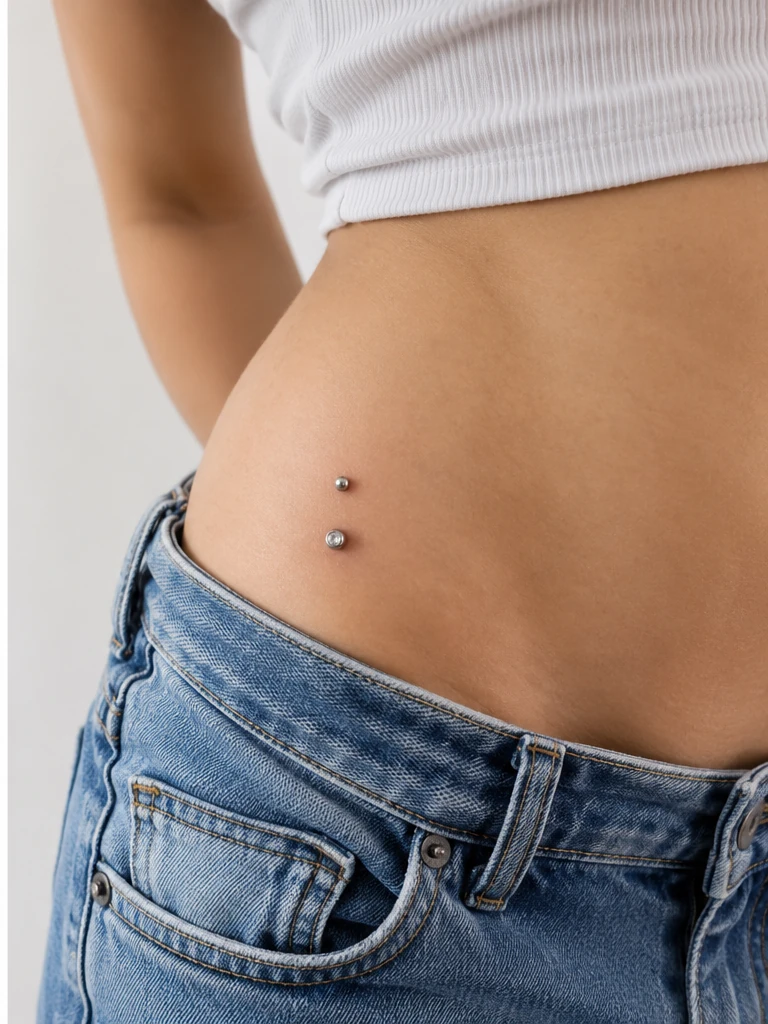
The term hip bone piercing usually describes decorative jewelry placed over or near the iliac crest, the prominent upper edge of the pelvis. It is a location description rather than one single piercing technique. Depending on anatomy and the desired look, a piercer may discuss a surface piercing or a single-point dermal anchor. These methods are not interchangeable, and neither can be guaranteed to heal successfully.
A surface piercing has an entry and exit point connected beneath the skin by a surface bar designed for that placement. A dermal anchor sits under the skin and holds a removable decorative top, so it generally has one visible opening. A professional should explain the benefits and limitations of each option, including the possibility of migration, rejection, scarring, and removal.
Types of Hip Piercings
1. Surface Hip Piercing
A surface hip piercing uses a specially shaped surface bar placed beneath the skin. Both ends of the jewelry remain visible. The shape of the bar is intended to reduce some pressure on the tissue, but placement in a high-movement area still carries a meaningful risk of irritation, migration, or rejection. The piercer must assess skin thickness, natural movement, and clothing pressure.
2. Hip Dermal Piercing
A hip dermal piercing, also called a microdermal or single-point piercing, uses a small anchor beneath the skin with a decorative top visible at the surface. Some people choose one dermal on each hip for a balanced appearance. Dermals can snag on waistbands or become irritated by repeated friction, and they may eventually need professional removal.
3. Single or Paired Placement
Some people prefer one piercing on one hip, while others choose matching placements on both sides. Symmetry depends on body shape and natural anatomy, so a piercer should mark the positions while the client is standing and moving naturally. Do not choose a position solely from a photograph; a placement that suits one body may not suit another.
How Painful Is Hip Bone Piercing?
Pain is personal and cannot be predicted precisely. People may feel a sharp pinch, pressure, or brief stinging during the procedure, followed by tenderness or a bruised feeling. The amount of discomfort depends on the technique, individual sensitivity, the piercer’s method, and the exact placement. A numeric pain rating found online is only a rough personal report, not a reliable medical measurement.
The area can remain sore when walking, bending, sitting, or wearing fitted clothing. Avoid alcohol or recreational drugs before a procedure, and tell the piercer about medicines, allergies, fainting history, or health conditions that may affect healing. Never attempt to pierce your own hip or let an untrained person do it.
Hip Bone Piercing Healing Time
Healing varies widely. Surface piercings and dermal anchors can take months to settle, and some never fully stabilize because the hip area experiences repeated movement and friction. The outside may look calm before the tissue underneath has healed. A lack of pain does not prove that the piercing is fully healed.
During healing, mild tenderness, limited swelling, and a small amount of clear or pale fluid that dries into a crust can occur. Symptoms should gradually improve rather than intensify. Increasing pain, spreading redness, warmth, significant swelling, thick pus, fever, or red streaks require prompt medical assessment. Do not remove jewelry yourself if you suspect an infection; seek medical advice because removal decisions depend on the situation.
Best Jewelry for Hip Bone Piercing
Jewelry should be selected for the exact piercing type and your anatomy, not just for appearance. Ask a reputable piercer about implant-grade titanium or other verified materials appropriate for body piercing. Material names alone are not enough: quality, manufacturing standards, finish, and fit matter.
For a surface piercing, a correctly sized surface bar may be recommended. For a dermal anchor, the decorative top must be compatible with the anchor. Jewelry that is too tight can press into tissue; jewelry that is too long or raised can catch on clothes. Avoid changing jewelry during healing unless your piercer says it is necessary and performs the change safely.
Choose smooth, well-finished jewelry without rough edges. Cheap plated pieces, unknown alloys, and decorative tops that snag easily may increase irritation. If you develop itching, a rash, or persistent irritation, ask a professional to assess whether the material, fit, or aftercare routine is contributing.
How Much Does a Hip Bone Piercing Cost?
The cost depends on your country and city, the studio’s standards, the piercer’s experience, the technique, the jewelry material, and whether you choose one or two placements. Dermal anchors and surface piercings may have different prices. Some studios quote the service and jewelry together; others charge separately.
Rather than choosing the cheapest option, contact established studios and ask for a written quote that includes the procedure, suitable initial jewelry, aftercare instructions, and any follow-up visit. Confirm that the studio uses sterile, single-use needles where appropriate, opens sterile equipment in front of you, and has clear hygiene procedures. Do not let a discount persuade you to accept unsafe equipment or rushed placement.
Risks and Possible Complications
Infection
A piercing breaks the skin and can allow bacteria to enter. Risk can increase when equipment is not sterile, hands are unclean, jewelry is repeatedly touched, or aftercare is unsuitable. Worsening redness, heat, pain, swelling, discharge, or fever should not be ignored.
Migration and Rejection
Migration means the jewelry gradually shifts from its original position. Rejection occurs when the body pushes the jewelry toward the skin surface. The skin over the bar or anchor may become thinner, and more of the jewelry may become visible. If this happens, contact an experienced piercer promptly; waiting can increase scarring.
Scarring and Skin Changes
A piercing can leave a small scar even after successful healing. Irritation, infection, repeated trauma, or removal can make scarring more noticeable. People with a history of keloids or abnormal scarring should discuss this with a healthcare professional before proceeding.
Snagging and Pressure
Waistbands, belts, towels, bedding, sports equipment, and tight clothing can catch the jewelry. Repeated pressure may cause inflammation or damage the tissue. The location should be chosen with everyday clothing and activities in mind.
Hip Bone Piercing Aftercare Tips
Follow the written instructions supplied by your professional piercer, and ask a healthcare professional if you have concerns about infection or delayed healing. General care principles include:
· Wash your hands thoroughly before any necessary contact with the area.
· Clean gently with sterile saline wound wash intended for wound care, if recommended by your piercer; avoid mixing homemade solutions that may be too salty.
· Do not twist, rotate, squeeze, or repeatedly move the jewelry.
· Avoid alcohol, hydrogen peroxide, harsh antiseptics, and fragranced products on the healing piercing unless a clinician specifically directs their use.
· Reduce friction from tight waistbands, belts, and rough fabrics. Choose clean, comfortable clothing that does not press on the jewelry.
· Avoid swimming in pools, hot tubs, lakes, or other bodies of water while the piercing is healing, following your piercer’s guidance.
· Keep bedding and clothing clean, and avoid sleeping directly on the piercing.
· Pause activities that repeatedly bend, rub, or compress the area until your piercer advises that they are safe.
· Attend follow-up checks if offered, and do not change or remove jewelry on your own when complications are suspected.
Can Hip Bone Piercings Reject or Migrate?
Yes. Surface piercings and dermal anchors are vulnerable to migration or rejection, and the hips are a challenging location because the skin moves and clothing often rubs against it. No piercer can promise that a piercing will last permanently. Early warning signs may include persistent irritation, a change in angle, jewelry becoming increasingly visible, or skin growing thinner over the jewelry.
If you notice these changes, arrange an assessment with a reputable piercer as soon as possible. Do not push jewelry back into place or try to remove an embedded anchor at home. A clinician should assess suspected infection, severe pain, significant bleeding, or jewelry that appears to be embedding in the skin.
What to Expect During the Appointment
A responsible appointment should begin with a discussion of your health history, anatomy, expectations, risks, jewelry, and aftercare. The piercer should inspect the proposed location, explain the technique, and mark the placement so you can review it before the procedure. You should feel comfortable asking questions or declining if anything seems unsafe.
Check that the studio is clean, the piercer uses appropriate sterile equipment, and jewelry is suitable for initial placement. Ask how the studio handles follow-up care and complications. Avoid any provider who dismisses questions, promises zero risk, or recommends ignoring signs of infection.
Who Should Think Carefully Before Getting One?
Anyone who cannot avoid repeated friction at the proposed site should think carefully before choosing a hip piercing. Contact-sport participants, people whose work requires tight uniforms or belts, and people who frequently wear restrictive waistbands may find it difficult to protect the area. If you have a condition or take medication that may affect bleeding, immunity, wound healing, or scarring, discuss the plan with a healthcare professional before booking.
Pregnancy, planned medical procedures, a current skin infection, or a history of problematic healing may also affect timing or suitability. A qualified piercer can explain technical considerations, but medical questions should be answered by an appropriate healthcare professional.
Frequently Asked Questions
Is hip bone piercing safe?
No piercing is risk-free. Risk is reduced by choosing a reputable, hygienic studio, suitable jewelry, careful placement, and appropriate aftercare, but infection, migration, rejection, and scarring remain possible.
How long does a hip bone piercing take to heal?
Healing can take months and varies by technique, anatomy, and aftercare. Surface and dermal piercings may remain vulnerable to irritation for a long time. Follow professional advice rather than relying on a fixed calendar.
Can I wear jeans after getting a hip piercing?
Tight jeans or waistbands may rub or press on the piercing. Choose clothing that does not touch or snag the jewelry, especially during early healing.
Can I exercise with a new hip piercing?
Activities that cause rubbing, stretching, pressure, or snagging may irritate the area. Ask your piercer how to modify exercise and return gradually as healing allows.
Can I get both hips pierced at once?
Some people choose paired piercings, but having two sites means caring for two healing areas. Discuss anatomy, placement, and whether doing both at once is appropriate with your piercer.
What jewelry material is best?
Ask about verified implant-grade materials and jewelry designed for your exact piercing. Fit and finish are as important as the material label.
What are signs of rejection?
Jewelry that shifts, becomes more visible, or appears to be covered by increasingly thin skin may be migrating or rejecting. Seek a prompt assessment rather than waiting for the skin to break.
Should I remove jewelry if I think it is infected?
Do not make that decision on your own. Seek medical advice promptly; whether jewelry should remain or be removed depends on the clinical situation.
Will a hip piercing leave a scar?
It can. Scarring varies by anatomy, healing, complications, and whether removal is needed. No one can guarantee a scar-free result.
Can I pierce my hip at home?
No. Home piercing creates avoidable risks involving infection, incorrect placement, tissue injury, and unsuitable jewelry. Use a trained professional in a hygienic studio.

Final Thoughts
Hip bone piercing can be an attractive form of body adornment, but it requires realistic expectations and careful consideration. The location is exposed to movement, pressure, and friction, so healing may be difficult and migration or rejection can occur. Learn the difference between a surface piercing and a dermal anchor, choose a reputable professional, use suitable jewelry, and follow consistent aftercare. If the area becomes increasingly painful, hot, swollen, or produces concerning discharge, seek medical assessment rather than relying on online advice.
For the best outcome, make the decision based on your anatomy, daily routine, and willingness to care for the piercing—not only on its appearance in photos. A professional consultation before booking is the safest place to start.
Leave a Reply