


Introduction
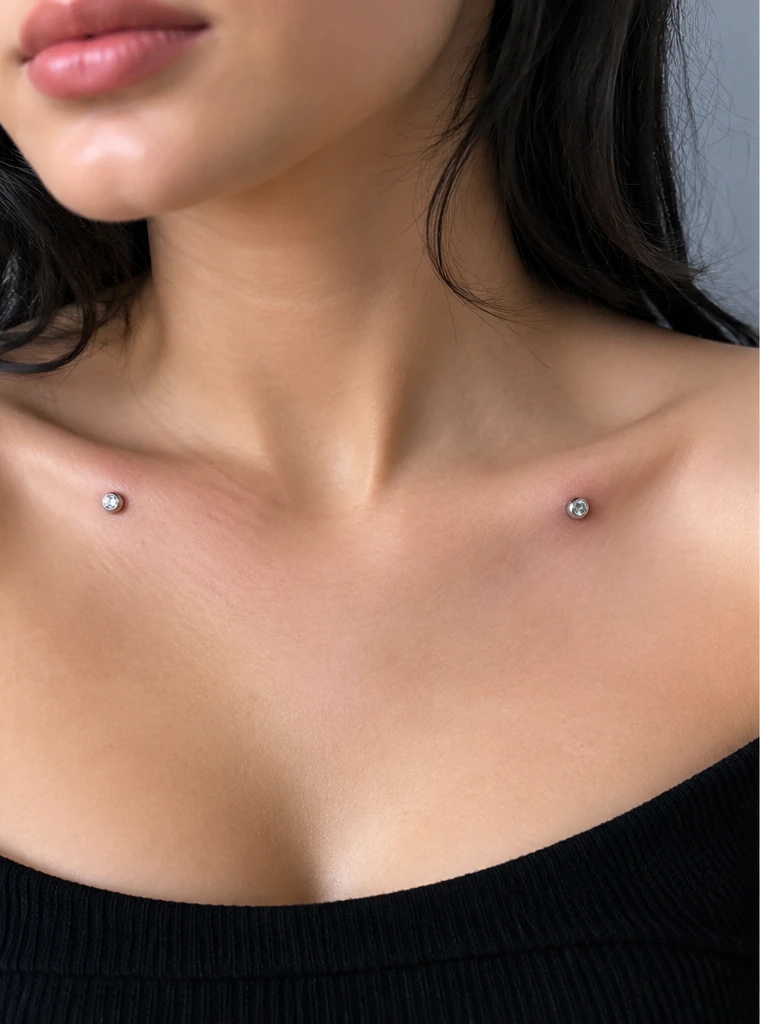
A collarbone piercing is a body piercing placed on the skin around the collarbone, also called the clavicle. It creates a striking look because jewelry sits near the natural lines of the shoulders and upper chest. Many people use the term “collarbone piercing” to describe a surface piercing or a dermal piercing placed above or below the collarbone. These are not the same as a traditional ear or nose piercing: they rely on shallow placement or an anchor under the skin, so they can be more likely to migrate, reject, snag, or leave a scar.

If you are considering a collarbone piercing, learn about the available styles, pain, healing time, jewelry, cost, and possible complications before booking an appointment. A qualified professional piercer can assess your anatomy and explain whether a surface bar or a dermal anchor is a realistic option for your skin and lifestyle.
What Is a Collarbone Piercing?
A collarbone piercing is a piercing placed in the skin over or near the clavicle. The collarbone itself is bone, and the jewelry is not pierced through the bone. Instead, the piercing passes through skin and the tissue beneath it. Depending on the placement and jewelry, it may be called a clavicle piercing, collarbone dermal piercing, or collarbone surface piercing.
The exact name can vary between studios and online communities. For that reason, ask the piercer to show you the proposed placement and explain the technique rather than relying on the name alone. The area moves when you turn your neck, lift your arms, carry a bag, or change clothes. That movement can put pressure on the piercing and affect how well it heals.
Types of Collarbone Piercings
There are two common approaches to jewelry placed around the collarbone: surface piercings and single-point dermal piercings.
Surface collarbone piercing: A surface bar enters and exits the skin in the same general area, leaving two visible ends. A correctly selected surface bar is designed to sit under the skin without putting unnecessary pressure on the entry and exit points. Even with suitable jewelry, surface piercings can migrate or reject over time.
Collarbone dermal piercing: A dermal anchor is placed beneath the skin, with one decorative top visible on the surface. Some people choose one dermal on each side of the collarbone for a balanced look. Others prefer a single accent. Dermal anchors can catch on clothing and may eventually need professional removal.
Single versus paired placement: A single piercing creates a subtle focal point, while paired piercings can create a symmetrical look. Symmetry depends on anatomy, posture, and natural collarbone shape, so a piercer should mark the sites while you are standing naturally.
Horizontal or angled placement: Some designs follow the collarbone line, while others use a slight angle. The safest position is not always the one that looks most symmetrical in a photograph. Tissue thickness, movement, and the amount of pressure on the site matter more than copying a particular image.
Collarbone Piercing Jewelry
Jewelry choice is especially important for a piercing in a high-movement area. Ask your piercer about implant-grade titanium or another documented, body-safe material suitable for initial piercing. Implant-grade titanium is often a practical option for people who need to avoid nickel exposure. Solid nickel-free gold may be appropriate in some cases, but not every gold alloy is suitable for a fresh piercing. Avoid plated, mystery-metal, or low-quality jewelry.
A surface piercing usually requires a properly fitted surface bar selected for the individual anatomy. A dermal piercing uses an anchor with a compatible top. The jewelry should not be too tight, press into the skin, or sit so high that it catches easily. Do not change, twist, or remove initial jewelry yourself. Ask the piercer when a change is appropriate and have a professional assess any fit problem.
Jewelry style can be simple or decorative. Small flat tops may snag less than large raised designs, while gemstones or shaped tops can add visual detail. For a new piercing, prioritize safe fit and a low snag profile over a large decorative piece.
How Much Does a Collarbone Piercing Cost?
The price depends on the studio, piercer’s experience, jewelry material, location, and whether you choose one piercing or a pair. A dermal anchor and a surface piercing may have different fees. Some studios quote the piercing service separately from jewelry, while others include basic jewelry in the total.
Before booking, ask for an itemized quote that covers the piercing procedure, initial jewelry, any required follow-up, and possible removal fees. Do not choose a studio solely because it offers the lowest price. Sterile equipment, high-quality jewelry, clear aftercare instructions, and an experienced piercer are more important than saving a small amount.
Prices vary too much by country and studio to give one figure that will be accurate everywhere. Check current prices directly with reputable local studios and confirm what the quoted amount includes.
Does a Collarbone Piercing Hurt?
Pain is personal, so there is no reliable number that applies to everyone. People often describe a brief sharp pinch during placement, followed by tenderness, warmth, or a bruised feeling. A dermal anchor and a surface piercing use different techniques, and the experience can vary with the exact site, tissue, and the piercer’s method.
Do not drink alcohol or use recreational drugs before the appointment, and do not take medication just to make the procedure easier unless a qualified healthcare professional has advised you to do so. Eat normally beforehand, stay hydrated, and tell the piercer if you feel faint or have a relevant medical concern. A professional should explain the procedure and obtain your consent before starting.
Healing Time: How Long Does It Take?
Collarbone piercings can take months to settle, and some never heal reliably because of movement, pressure, or rejection. There is no guaranteed healing timeline. A piercing may look calm on the outside while the tissue underneath is still healing.
During healing, avoid sleeping directly on the area, tight straps, backpacks that rub the jewelry, rough fabrics, and activities that repeatedly stretch or impact the skin. Sweat and friction can irritate the site, so clean gently after exercise and change out of damp clothing. Do not assume that reduced tenderness means the piercing is fully healed.
Keep follow-up appointments if your piercer offers them. If the jewelry becomes increasingly visible beneath the skin, the skin between the entry and exit points becomes thinner, or the anchor appears to be moving toward the surface, seek professional advice promptly. These can be signs of migration or rejection.
Aftercare: How to Clean a Collarbone Piercing
Good aftercare reduces avoidable irritation, although it cannot eliminate the risk of rejection or infection.
1. Wash your hands with soap and water before touching the area.
2. Use sterile saline wound wash when recommended by your piercer. Choose a product whose ingredients are simply water and 0.9% sodium chloride; avoid homemade mixtures that may be too salty or contaminated.
3. Let shower water rinse away residue gently. Pat the surrounding area dry with clean disposable gauze or paper towel, without rubbing or catching the jewelry.
4. Do not rotate, twist, squeeze, or play with the jewelry.
5. Avoid alcohol, hydrogen peroxide, harsh antiseptics, tea tree oil, and antibiotic ointments unless a clinician specifically recommends a treatment. These products may irritate tissue or interfere with appropriate care.
6. Keep makeup, body lotion, perfume, sunscreen, and hair products away from the healing site where possible.
7. Keep clothing, towels, seat belts, bag straps, and bedding from catching on the jewelry.
Do not remove jewelry on your own if you suspect infection. Contact a healthcare professional for advice; removing jewelry without guidance can sometimes complicate the situation. If the jewelry is embedding, the skin is rapidly worsening, or you have severe pain or fever, seek urgent medical care.
Risks and Possible Complications
The collarbone area is exposed to movement and friction, so complications deserve careful consideration.
Migration and rejection: The body may gradually push a surface piercing or dermal anchor toward the skin’s surface. Warning signs include a changing angle, jewelry becoming more visible, thinning skin, or a widening channel. Rejection may leave a noticeable scar.
Infection: Increasing redness, warmth, swelling, worsening pain, thick or foul-smelling discharge, red streaks, or fever can signal infection. Some early tenderness and a small amount of clear or pale fluid can occur during healing, but symptoms that worsen rather than improve need assessment.
Scarring: A raised scar or a small indentation can remain after jewelry is removed. People who form keloids or have a history of problematic scars should discuss that risk with a healthcare professional before getting pierced.
Allergic reaction: Some metals, especially those containing nickel, can cause itching, rash, or irritation. Ask about the exact material used rather than accepting a vague description such as “surgical steel.”
Snagging and trauma: Jewelry may catch on clothing, towels, seat belts, or bag straps. A hard pull can tear tissue or dislodge an anchor.
Pressure and movement: The collarbone and shoulder area move during ordinary activities. Repeated pressure from sleeping, sports, lifting, or straps may keep the piercing irritated.
A reputable piercer should explain these risks honestly and be willing to advise against the procedure if your anatomy or lifestyle makes it unsuitable.
Who Should Avoid or Delay a Collarbone Piercing?
Consider delaying the procedure if the skin near the planned site is irritated, infected, sunburned, or injured. Speak with a healthcare professional first if you have a condition or treatment that affects wound healing, immunity, bleeding, or infection risk. If you have diabetes that is not well controlled, take immune-suppressing medication, or have a history of keloid scarring, personalized medical advice is particularly important.
Think about your daily routine, too. Contact sports, swimming, heavy backpack use, uniforms with tight straps, and work that involves frequent friction can make healing harder. If you cannot protect the area from repeated pressure, waiting may be the safer choice.
How to Choose a Professional Piercer
Look for a studio that follows local health and safety rules and can clearly describe its sterilization process. A good piercer should use sterile, single-use needles where appropriate, open sterile supplies in front of you, wear fresh gloves, and provide written aftercare instructions. The studio should be clean and should never pressure you to proceed.
Be cautious if a piercer promises that rejection cannot happen, uses vague jewelry descriptions, dismisses your questions, or cannot explain how sterile equipment is handled.
Can You Sleep, Exercise, or Shower With a Collarbone Piercing?
You can generally shower while caring for a healing piercing, but avoid scrubbing the site and dry it gently afterward. Avoid swimming in pools, lakes, hot tubs, or the sea during early healing unless your healthcare professional and piercer advise otherwise, because water exposure can introduce germs and irritate the area.
Exercise may be possible, depending on the activity, but avoid movements, equipment, or clothing that press against or snag the jewelry. Contact sports are particularly risky. Choose loose, clean clothing and clean the area gently after sweating.
Try to sleep on your back or on the opposite side so the piercing is not compressed. Keep sheets and blankets clean, and avoid sleeping in a position that pulls the jewelry. If a strap or garment repeatedly rubs the site, adjust it rather than hoping the skin will adapt.
Can You Remove a Collarbone Piercing?
A professional piercer may be able to remove a dermal anchor or surface jewelry, but the method depends on the type of piercing and how it has healed. Do not dig into the skin, pull an anchor out, or attempt a home removal. That can cause bleeding, tissue damage, infection, and additional scarring.
If you notice signs of rejection or migration, arrange an assessment rather than waiting for the jewelry to come out by itself. A piercer can explain whether removal is appropriate, while a healthcare professional should assess suspected infection or significant tissue damage. Even after professional removal, a small scar or mark may remain.
Collarbone Piercing vs. Chest Dermal Piercing
These terms can overlap in everyday use. A collarbone piercing usually refers to jewelry positioned along or near the clavicle, while a chest dermal piercing may sit lower on the upper chest. Both may use a dermal anchor, and both can be affected by friction, movement, and snagging.
The placement should be selected based on anatomy, clothing, and how much the area moves—not only on the label. Ask your piercer to mark the intended position and explain the expected healing challenges before you decide.
Frequently Asked Questions
Is a collarbone piercing permanent?
No. Jewelry can sometimes be removed, but a surface piercing or dermal anchor may leave a scar, indentation, or pigment change. Rejection can also leave a mark even if you did not plan to remove it.
Is a collarbone piercing safe?
No piercing is completely risk-free. Choosing a qualified professional, appropriate jewelry, and careful aftercare can reduce some risks, but migration, rejection, infection, and scarring remain possible.
Can a collarbone piercing reject?
Yes. Surface and dermal piercings can migrate or reject because the body may push the jewelry toward the surface. Movement, pressure, unsuitable placement, and individual healing can affect the outcome.
Can I change the jewelry myself?
Do not change jewelry during healing unless a qualified piercer advises and performs the change. The channel can be fragile, and changing jewelry too early may cause injury or irritation.
What should I do if the piercing looks infected?
Seek advice from a healthcare professional if you have worsening pain, spreading redness, marked warmth, pus, red streaks, or fever. Do not rely on online advice to diagnose an infection, and do not remove the jewelry without professional guidance.
Does a collarbone piercing leave a scar?
It can. Scarring depends on the piercing type, how the skin heals, whether rejection or infection occurs, and how the jewelry is removed. A professional cannot guarantee scar-free healing.

Final Thoughts
A collarbone piercing can create a distinctive look, but it needs more thought than a piercing in a lower-movement area. Surface bars and dermal anchors have different designs, and both can experience irritation, migration, rejection, or scarring. Before deciding, consult an experienced piercer, ask about the exact technique and jewelry, and consider whether your clothing, work, sleep, and exercise habits will allow the area to heal.
The best choice is an informed one. Prioritize professional technique, suitable jewelry, realistic expectations, and consistent aftercare over trends or the cheapest appointment.
Leave a Reply