


Frowny Piercing: Pain, Healing, Jewelry, Aftercare & Risks
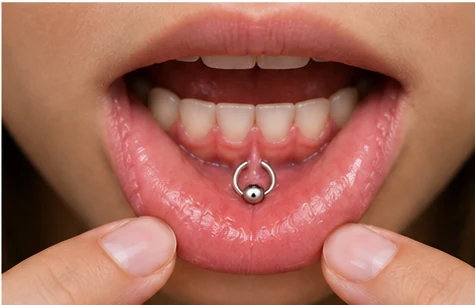
A frowny piercing is a type of oral piercing placed through the thin frenulum underneath the lower lip. It is sometimes described as the lower-lip counterpart of a smiley piercing. Because the jewelry sits inside the mouth, it is usually hidden when your lips are relaxed and becomes visible when you pull your lower lip down.
Although the placement can create a subtle and unusual look, a frowny piercing is different from many external piercings because the jewelry is constantly exposed to the oral environment. This means that anatomy, jewelry placement, oral hygiene, healing, and possible contact with the teeth and gums all matter.
If you are considering a frowny piercing, this guide explains what it is, how it is performed, how much it may hurt, how long healing can take, what jewelry is commonly used, how to care for it, and what risks you should understand before getting one.
What Is a Frowny Piercing?
A frowny piercing passes through the lower labial frenulum, the small fold of tissue connecting the inside of the lower lip with the gum area.
It is called a "frowny" because it is positioned on the lower frenulum, opposite the upper-frenulum placement commonly called a smiley piercing.
Unlike a traditional lip piercing, there is usually no jewelry passing through the visible outer portion of the lower lip. Instead, the jewelry sits inside the mouth.
Where Is a Frowny Piercing Located?
The piercing is located underneath the lower lip, through the lower labial frenulum.
When the mouth is closed, the jewelry may be difficult or impossible to see. Pulling the lower lip downward can reveal the jewelry.
Image placement: Add a clear anatomical illustration showing the lower lip, lower gum, lower labial frenulum, and approximate frowny piercing location.

Frowny vs. Smiley Piercing
The two piercings are closely related because both involve a lip frenulum.
Feature | Frowny Piercing | Smiley Piercing |
Location | Lower lip frenulum | Upper lip frenulum |
Visibility | Usually visible when lower lip is pulled down | Usually visible when smiling |
Tissue | Lower labial frenulum | Upper labial frenulum |
Type | Oral piercing | Oral piercing |
Main concerns | Migration, rejection, gum and tooth irritation | Migration, rejection, gum and tooth irritation |
Common jewelry | Small ring or circular jewelry | Small ring or circular jewelry |
The exact suitability of either piercing depends heavily on individual anatomy. A professional piercer should examine the frenulum before deciding whether the tissue can safely support jewelry.
How Does a Frowny Piercing Work?
Before piercing, a professional piercer should examine the lower frenulum and surrounding oral anatomy.
The area is cleaned and prepared before the piercing. A sterile, single-use piercing needle is then used to create the channel through the frenulum, followed by insertion of the appropriate jewelry.
Because the frenulum is small and delicate, the procedure itself is generally quick.
A reputable professional should also discuss jewelry size, material, placement, aftercare, and possible complications before performing the piercing.
Does a Frowny Piercing Hurt?
Pain varies from person to person.
The lower frenulum contains a relatively small amount of tissue, so the actual piercing procedure is usually brief. You may feel a sharp pinch or pressure when the needle passes through the tissue.
However, pain level should not be used as the only measure of whether a frowny piercing is suitable. Anatomy and the way the jewelry interacts with the teeth and gums are more important long-term considerations.
Some people experience tenderness or mild swelling after the procedure. These symptoms should gradually improve during healing.
Frowny Piercing Healing Time
Oral frenulum piercings are often described as healing within several weeks, but healing varies according to anatomy, jewelry, oral hygiene, irritation, and aftercare.
A related upper-frenulum piercing is commonly reported to heal in approximately 4 to 12 weeks, although an individual piercing may take longer or develop complications.
A piercing can also feel comfortable before the tissue has completely healed. The Association of Professional Piercers notes that piercings heal from the outside inward, so tissue can remain fragile even when the piercing appears healed.
For that reason, do not assume that a frowny piercing is fully healed simply because it no longer hurts.
Frowny Piercing Aftercare
Good oral hygiene is especially important because the piercing is inside the mouth.
1. Keep Your Mouth Clean
Brush your teeth regularly using a soft-bristled toothbrush and maintain normal oral hygiene.
The Association of Professional Piercers recommends brushing the teeth, tongue, and jewelry gently and maintaining daily flossing during healing.
2. Rinse After Eating
Food particles can remain around oral jewelry. Gently rinsing your mouth with water after eating can help keep the area cleaner.
An appropriate alcohol-free oral rinse may also be recommended for oral piercings.
3. Do Not Play With the Jewelry
Avoid pulling, twisting, biting, or repeatedly moving the jewelry.
Manipulating oral jewelry can increase irritation and may introduce bacteria into the piercing.
4. Be Careful While Eating
During early healing, take care when eating hard, crunchy, sticky, or chewy foods that could catch the jewelry.
Small movements may not seem important, but repeated mechanical irritation can make healing more difficult.
5. Avoid Unnecessary Trauma
Be careful when brushing your teeth, flossing, eating, or pulling down your lower lip to look at the piercing.
The frenulum is a small and relatively delicate structure, so excessive pulling can irritate or injure it.
6. Follow Your Piercer's Instructions
Aftercare advice can vary depending on the jewelry, placement, and your individual anatomy.
If you experience a problem, speak with a qualified piercer or healthcare professional rather than repeatedly changing the jewelry yourself.
Frowny Piercing Jewelry
Because the piercing is located inside the mouth, jewelry selection matters.
Common jewelry styles associated with frenulum piercings include small rings and circular jewelry.
The jewelry should be appropriately sized for the individual's anatomy. Jewelry that is too large or positioned incorrectly may create unnecessary contact with the teeth or gums.
The Association of Professional Piercers also recommends having jewelry changes or downsizing performed by a qualified piercer during healing.
What Jewelry Material Is Best?
Body-piercing jewelry can be made from several materials, including implant-grade titanium and other suitable materials.
Titanium is commonly considered a useful option for people who may be sensitive to certain metals. Mayo Clinic also recommends discussing hypoallergenic jewelry options such as titanium, niobium, and appropriate gold alloys with a professional.
The exact material and jewelry design should be selected according to professional piercing standards and your anatomy.
Frowny Piercing Risks
A frowny piercing has risks associated with both piercing a delicate frenulum and having jewelry inside the mouth.
Gum Irritation
Jewelry can rub against nearby gum tissue.
Repeated friction may cause irritation and, in some cases, contribute to gum problems.
Tooth Damage
Oral jewelry can contact teeth during eating, speaking, or normal mouth movement. Oral-piercing guidance from dental organizations has documented risks involving dental trauma and damage from jewelry.
Infection
The mouth contains many microorganisms, so oral piercings can become infected.
Increasing pain, significant swelling, unusual discharge, foul odor, or worsening redness should not be ignored.
Migration and Rejection
The frenulum is a relatively small amount of tissue. Jewelry may migrate through the tissue or eventually be rejected.
If the tissue around the jewelry becomes increasingly thin, the jewelry appears to move toward the surface, or the piercing changes position, contact a qualified piercer for assessment.
Tearing
Because the frenulum is delicate, catching the jewelry while eating, brushing, or pulling the lip can potentially injure the tissue.
Jewelry Embedding or Ingestion
Oral jewelry can become loose. Dental guidance also recognizes risks associated with jewelry becoming embedded or being swallowed or aspirated.
Who Should Avoid a Frowny Piercing?
Not everyone has suitable anatomy for a frowny piercing.
A professional piercer should assess the size and structure of the frenulum before piercing.
Extra caution may be appropriate if you have existing gum problems, dental problems, significant enamel damage, oral infections, or other conditions affecting the area.
If you already have gum recession or dental concerns, discussing the piercing with a dentist before proceeding can be particularly useful.
Can Everyone Get a Frowny Piercing?
No.
The most important factor is not simply whether you want the piercing; it is whether your anatomy can safely support it.
A professional piercer should examine:
Frenulum size
Tissue thickness
Jewelry position
Relationship to the gums
Relationship to the teeth
Existing oral conditions
If the tissue is too small or unsuitable, a responsible piercer may decline the procedure and suggest another option.
How Long Does a Frowny Piercing Last?
There is no guaranteed lifespan.
Some frenulum piercings remain for years, while others migrate or reject much sooner.
Because the jewelry is positioned in a small piece of tissue and may experience regular movement and contact with the mouth, long-term success is not guaranteed.
Good aftercare can reduce avoidable irritation, but it cannot eliminate the possibility of migration, rejection, gum irritation, or dental problems.
Can You Hide a Frowny Piercing?
One reason people choose a frowny piercing is its relatively discreet placement.
The jewelry is located inside the mouth, so it may not be noticeable when your lips are relaxed.
However, it can become visible when you pull down your lower lip.
This makes it different from many conventional lip piercings, where jewelry is visible on the outside of the lip.
Can You Eat Normally With a Frowny Piercing?
You can generally eat during the healing period, but you should be careful.
In the early days, choose foods that are comfortable and avoid repeatedly catching the jewelry while chewing.
After eating, rinse your mouth and continue normal oral hygiene.
If eating consistently causes pain, bleeding, swelling, or trauma to the piercing, contact your piercer or healthcare professional.
Can You Change Frowny Piercing Jewelry?
Do not change new jewelry simply because the piercing looks healed.
Oral piercings can appear healthy externally while the internal tissue is still healing. The Association of Professional Piercers recommends professional assistance for jewelry changes or downsizing during healing.
Once the piercing is properly healed, a qualified piercer can help determine whether a different size or style is appropriate.
Signs of a Problem
Some tenderness and swelling can occur after a new piercing.
However, you should seek professional medical advice if you develop symptoms such as:
Severe or worsening pain
Significant swelling
Persistent or excessive bleeding
Pus-like or unusual discharge
Increasing redness
Fever or feeling generally unwell
Jewelry becoming embedded
Rapid tissue thinning
Significant damage to the gums or teeth
Difficulty breathing or swallowing
Serious swelling or breathing difficulty requires urgent medical attention.
Frowny Piercing vs. Traditional Lip Piercing
A frowny piercing and a traditional lip piercing have very different placements.
A conventional lip piercing passes through the lip itself, while a frowny passes through the lower lip frenulum inside the mouth.
The discreet appearance of a frowny can be attractive to people who do not want obvious external facial jewelry. However, its internal location creates its own oral-health considerations.
Frowny Piercing Pros and Cons
Potential Advantages
Discreet appearance
Unique alternative to conventional lip piercings
Usually hidden when the mouth is relaxed
Can be visible when the lower lip is pulled down
Relatively quick piercing procedure
Potential Disadvantages
Not everyone has suitable anatomy
Migration or rejection can occur
Jewelry may contact teeth and gums
Infection is possible
Frenulum tissue can be delicate
Oral jewelry can create dental concerns
Long-term survival is unpredictable
Frowny Piercing Aftercare Mistakes to Avoid
Avoid these common mistakes:
Playing with the jewelry: Constant movement can irritate the tissue.
Ignoring dental contact: If jewelry repeatedly hits your teeth or gums, have the placement assessed.
Changing jewelry too early: A piercing can look healed before the internal tissue is ready.
Using harsh cleaning products: Strong or irritating products can damage healing tissue.
Ignoring unusual symptoms: Persistent swelling, severe pain, unusual discharge, or tissue thinning should be assessed.
Choosing jewelry based only on appearance: Fit and material are more important than decoration during healing.
Is a Frowny Piercing Safe?
There is no completely risk-free piercing.
A frowny piercing may heal without major complications in some people, but its location creates specific concerns because jewelry sits close to the gums and teeth.
The American Dental Association discusses complications associated with oral piercings, including dental trauma, infection-related concerns, jewelry embedding, and aspiration or ingestion hazards.
If you are considering one, the safest approach is to have your anatomy assessed by an experienced professional piercer and to consider your existing dental and gum health before proceeding.
Frequently Asked Questions
What is a frowny piercing?
A frowny piercing is an oral piercing through the frenulum underneath the lower lip. It is often described as the lower-lip counterpart of a smiley piercing.
Is a frowny piercing painful?
It can hurt briefly during the procedure. Individual pain levels vary, and the actual piercing is usually very quick.
How long does a frowny piercing take to heal?
Healing varies between individuals. Frenulum piercings are commonly discussed within a several-week healing range, but complications or irritation can extend healing.
Is a frowny piercing the same as a smiley?
No. A smiley is placed through the upper lip frenulum, while a frowny is placed through the lower lip frenulum.
Can a frowny piercing damage your teeth?
It can. Oral jewelry may repeatedly contact teeth and potentially contribute to dental damage. Jewelry fit and placement are therefore important.
Can a frowny piercing cause gum recession?
Repeated contact or friction from oral jewelry can contribute to gum irritation and other gum problems. If you notice gum changes, have the piercing professionally assessed.
Can a frowny piercing reject?
Yes. Migration and rejection are possible because the frenulum contains a relatively small amount of tissue.
Can I hide a frowny piercing?
Usually, the jewelry is relatively discreet because it sits inside the lower lip. It may become visible when the lower lip is pulled down.
Can I eat after getting a frowny piercing?
You can eat, but you should be careful during healing. Avoid foods and movements that repeatedly catch or irritate the jewelry, and rinse your mouth after eating.
What jewelry is used for a frowny piercing?
Small rings or circular jewelry may be used, depending on the individual's anatomy and the piercer's assessment. Jewelry should be appropriately sized and made from a suitable material.
Should I get a frowny piercing if I already have gum problems?
You should discuss the situation with a dentist and qualified piercer first. Existing gum problems can make an oral piercing a less suitable choice.
Final Thoughts
A frowny piercing is a distinctive lower-lip frenulum piercing that offers a much more discreet look than many traditional lip piercings. Its unusual placement is also what makes professional anatomy assessment particularly important.
Before getting one, consider more than appearance. Think about your frenulum anatomy, dental and gum health, jewelry material and size, aftercare requirements, and the possibility of migration, rejection, infection, or dental irritation.
If you decide to proceed, choose an experienced professional who uses appropriate sterile equipment and jewelry, and follow professional aftercare instructions throughout the healing process.
Leave a Reply