


Introduction
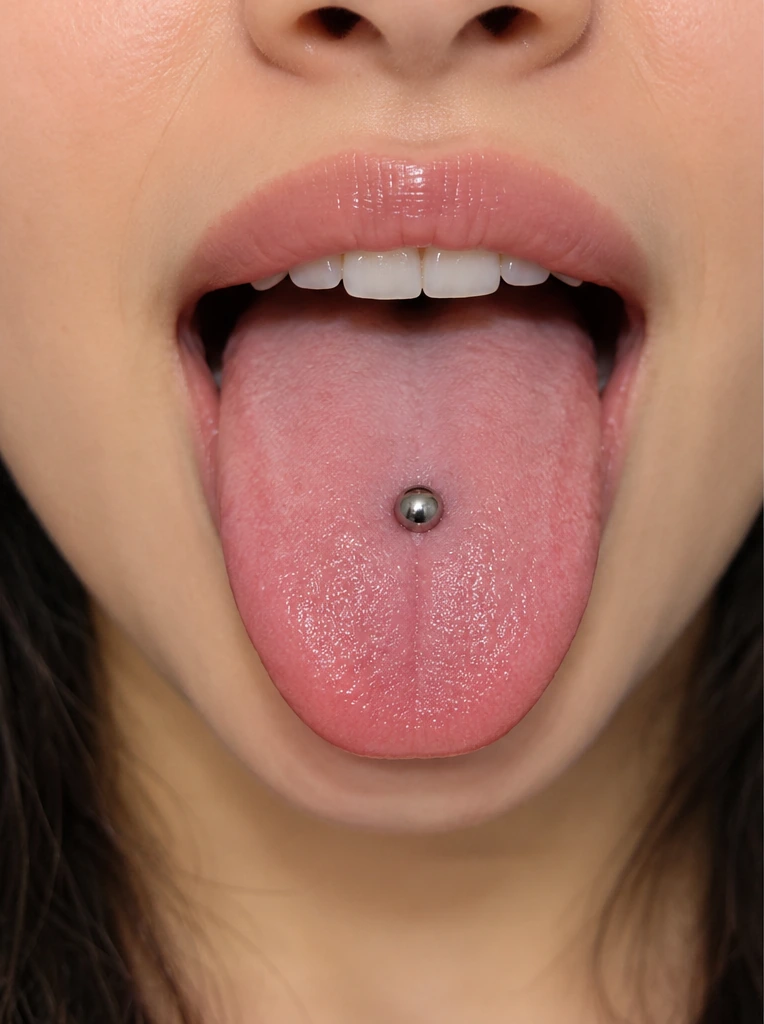
A middle tongue piercing is a traditional tongue piercing placed vertically through the centre line of the tongue. It is usually fitted with a straight barbell, with one end visible on the upper surface of the tongue and the other sitting underneath. Because it is located inside the mouth, this piercing needs more careful consideration than many ear or body piercings. The tongue contains blood vessels, nerves and muscle tissue, while the mouth naturally contains a large number of bacteria.
People often search for a middle tongue piercing to understand its appearance, pain level, healing time, jewelry, price and possible complications. This guide explains those topics in straightforward language. It also distinguishes a traditional midline tongue piercing from other tongue styles, including horizontal tip piercings that are commonly called snake eyes.

An important health note comes first: the American Dental Association (ADA) advises against cosmetic intraoral and perioral piercings because of the potential for negative health outcomes. Risks can include infection, swelling, tooth damage and gum injury. Reading about risk reduction does not make the procedure risk-free, and no online guide can determine whether a piercing is suitable for an individual.
What Is a Middle Tongue Piercing?
A middle tongue piercing is a vertical piercing that passes through the tongue along its central midline. A straight barbell is commonly used, with a ball or decorative end above the tongue and a smaller end underneath. The exact position is not a universal measurement: anatomy differs, and a qualified professional must assess the tongue, underside structures and available space rather than relying on a diagram or a measurement copied from the internet.
The Association of Professional Piercers (APP) describes traditional tongue placement as being along the midline, approximately three-quarters of an inch behind the tip, and usually just in front of the attachment of the lingual frenulum. This is general placement information, not a do-it-yourself instruction or a guarantee that the same position is appropriate for everyone.
The term “middle tongue piercing” is sometimes used casually for different tongue styles. In this article, it means the conventional vertical midline piercing. It does not mean tongue splitting, a horizontal piercing near the tip, or a pair of separate tongue piercings.
Middle Tongue Piercing vs. Snake Eyes and Other Tongue Piercings
The traditional middle tongue piercing travels vertically through the centre of the tongue. Snake eyes, by contrast, is commonly described as a horizontal piercing near the tongue tip, with the jewelry appearing to sit across the front. These are different placements and should not be treated as interchangeable names.
A venom-style tongue piercing generally refers to two separate piercings positioned symmetrically on either side of the tongue’s centre line. A traditional middle tongue piercing is one vertical channel in the centre. Tongue splitting is different again: it is a body-modification procedure that divides the front portion of the tongue and carries serious risks, including severe bleeding, infection and nerve injury.
If a studio uses a different name for a style, ask the professional to explain the direction of the piercing, where both openings would sit and what structures are involved. Do not rely on a social-media label or photograph alone to identify a piercing.
What Does a Middle Tongue Piercing Look Like?
The most recognizable feature is a small piece of jewelry centred on the upper surface of the tongue. When the mouth is open, the upper bead or end is usually visible. The lower end sits underneath the tongue and may be less noticeable. A straight barbell is the usual jewelry shape for the traditional placement.
The final appearance depends on tongue anatomy, jewelry size and the position selected by the professional. Swelling immediately after a procedure can also make the jewelry look longer or more prominent than it will later. Photos taken during the first few days should not be used as a guide to the settled appearance.
Does a Middle Tongue Piercing Hurt?
Pain is subjective. Some people describe a brief sharp pressure during the procedure followed by soreness, while others experience more discomfort. The tongue is sensitive and richly supplied with blood vessels and nerves, so it is not accurate to promise that the procedure will be painless. Anxiety, individual pain sensitivity, anatomy and the technique used can all affect the experience.
Swelling and tenderness may be more noticeable after the procedure than the brief piercing itself. Speaking, eating and moving the tongue can feel awkward while the tissue is irritated. If pain becomes severe, keeps increasing, or occurs with fever, pus, spreading redness or worsening swelling, seek prompt medical or dental assessment rather than assuming it is ordinary healing.
How Long Does a Middle Tongue Piercing Take to Heal?
Healing time varies from person to person. The tongue may feel better before the channel has fully healed, so a reduction in soreness does not necessarily mean the tissue is ready for jewelry changes or rough handling. The APP notes that oral piercings can appear healed before healing is complete because tissue heals from the outside inward.
Avoid treating a single online healing estimate as a deadline. A professional piercer can assess the site, but a dentist or medical professional should evaluate symptoms that suggest infection, injury or another health problem. Do not remove or change jewelry yourself when there is significant swelling, bleeding or suspected infection; get professional advice first.
Swelling: What May Be Expected and What Is an Emergency?
Some swelling, tenderness, light bleeding or bruising can occur in the first several days after an oral piercing. The amount differs between individuals. The APP's oral aftercare guidance describes swelling and tenderness as possible early experiences, while the ADA notes that pronounced swelling can create a risk of airway obstruction.
Breathing difficulty, trouble swallowing saliva, rapidly increasing tongue or floor-of-mouth swelling, uncontrolled bleeding, faintness or a feeling that the airway is narrowing requires emergency medical attention. Do not wait for a studio appointment if breathing or swallowing is affected. Fever, worsening pain, spreading redness, pus or foul-smelling discharge also warrants prompt assessment by a healthcare professional.
Middle Tongue Piercing Jewelry: Type, Material and Fit
A straight barbell is commonly associated with a traditional vertical tongue piercing. Jewelry needs to be appropriate for the person’s anatomy and the piercing position. The length must allow for initial swelling without being excessively long, and the ends should be secure. Poorly fitted or low-quality jewelry can increase irritation and the chance of damage to oral structures.
The APP emphasizes that jewelry must be correctly styled and sized. It also recommends that the initially longer jewelry be replaced with a shorter piece after swelling has subsided, to reduce contact with teeth and other oral structures. Any downsize should be assessed and carried out by a qualified professional; do not attempt a jewelry change while the tongue is swollen or painful.
Material matters, particularly for people with metal sensitivities. Ask the studio for the exact material and relevant quality documentation rather than accepting a vague description such as “surgical metal.” A professional should explain the jewelry’s material, finish, threading or threadless design, size and suitability. Avoid playing with the jewelry, biting it or clicking it against your teeth.
How Much Does a Middle Tongue Piercing Cost?
The cost depends on the country, city, studio, professional’s experience, jewelry material and whether a follow-up or jewelry change is included. A studio may quote one price for the procedure and a separate price for upgraded jewelry or a later downsize. Because prices change and vary widely, it is better to request a current written quote from a reputable local studio than rely on a fixed amount found in an old article.
Do not choose a provider simply because the price is unusually low. Ask what the quoted fee includes, whether sterile single-use needles and properly sterilized equipment are used, what jewelry is included, and whether written aftercare and follow-up are available. If the provider cannot clearly answer hygiene and safety questions, consider walking away.
How to Choose a Piercing Professional
The APP recommends looking for a professional who uses sterile instruments and jewelry, sterile disposable needles, and appropriate sterilization procedures. A responsible studio should be willing to explain its hygiene practices, answer questions without pressure and provide clear written and verbal aftercare information.
Before making a decision, ask how instruments are sterilized, whether sterilization is monitored, how clean and sterile jewelry is stored, what material and size will be used, and how follow-up is handled. The professional should assess your anatomy in person and explain when the procedure should not go ahead. A provider should never encourage you to pierce your own tongue or allow an untrained friend to do it.
Middle Tongue Piercing Risks and Complications
Oral piercings carry risks that can occur during the procedure, in the early healing period or later. The ADA lists complications that include pain, swelling, bleeding, infection, increased saliva, gum injury or recession, tooth damage, scarring, embedded jewelry, difficulty speaking or swallowing, and in some cases airway obstruction. The tongue's rich blood supply means that injury to a vessel can cause prolonged bleeding.
Tooth and gum damage can happen if jewelry repeatedly strikes or rubs against teeth and gums. Biting, rolling, sucking or playing with a barbell can increase this risk. Jewelry can also loosen, become embedded in tissue or be accidentally swallowed or aspirated. Infection is another concern because the mouth contains many microorganisms and the piercing creates a wound in oral tissue.
The ADA advises against cosmetic oral piercing. This is an important point for anyone weighing the aesthetic appeal against potential health consequences. Risk-reduction steps cannot eliminate complications, and people with existing dental problems, relevant medical conditions, a history of unusual bleeding, or concerns about healing should discuss the issue with a qualified healthcare professional before considering any oral piercing.
Middle Tongue Piercing Aftercare
Follow the written instructions supplied by the professional, and seek advice from a dentist or medical professional if symptoms are concerning. The APP recommends careful oral hygiene and an alcohol-free, hydrogen-peroxide-free mouth rinse or clean water for internal rinsing. It advises against overusing mouth rinse and recommends rinsing with clean water after eating, drinking or smoking.
Wash your hands thoroughly before touching the area for any reason. Brush gently with a clean, soft-bristled toothbrush, keep up normal oral hygiene and avoid unnecessary handling of the jewelry. Do not twist, pull, bite or play with the barbell. Avoid sharing cups, plates or eating utensils while the site is healing.
The APP advises avoiding alcohol-based or hydrogen-peroxide mouthwash because it can irritate the site. It also recommends avoiding oral sexual contact during healing, and minimizing smoking or vaping because these can increase risks and prolong healing. Avoid foods and drinks that cause irritation, particularly very hot, spicy, salty or acidic items during the early period. Cool foods and drinks may feel more comfortable for some people.
Do not improvise harsh cleaning mixtures or apply household disinfectants to the tongue. The APP specifically notes that homemade salt solutions can be too concentrated and are no longer its suggested approach. Use products intended for oral care and follow professional instructions. If you are unsure whether a product is suitable, ask a dentist or qualified professional rather than experimenting.
Eating and Speaking After a Middle Tongue Piercing
Eating and speaking may feel awkward while the tongue is swollen or tender. Take small bites, eat slowly and avoid foods that sting or irritate the area. Choose comfortable textures and temperatures, and drink water regularly. Do not chew on the jewelry or use it to move food around the mouth.
Speech can sound different temporarily because the tongue helps form many sounds. Avoid forcing exaggerated tongue movements or repeatedly testing the jewelry. If speech or swallowing problems are severe, worsening or persistent, seek medical advice. Trouble swallowing saliva or any breathing difficulty is an emergency.
Can You Change or Remove the Jewelry?
Do not change the initial jewelry simply because the swelling seems to have gone down. A professional should check whether the tissue is ready and whether a shorter barbell is appropriate. The APP highlights downsizing after swelling subsides as a way to reduce the risk of damage to teeth and oral structures.
If you no longer want the piercing, ask a qualified professional or healthcare provider how to proceed, especially if there is swelling, infection, bleeding or embedded jewelry. Do not force jewelry through tissue or attempt to remove an item that appears stuck. If infection is suspected, get medical advice before removing jewelry, because the appropriate approach depends on the situation.
Frequently Asked Questions
Is a middle tongue piercing the same as a regular tongue piercing?
The phrase usually refers to the traditional vertical piercing through the centre line of the tongue. Names can vary between studios, so confirm the exact placement and direction rather than relying on a label.
Is a middle tongue piercing vertical or horizontal?
The traditional middle tongue piercing is vertical. A horizontal piercing near the tongue tip is a different style and is often called snake eyes.
How painful is a middle tongue piercing?
Pain varies. People may feel brief pressure or sharp discomfort during the procedure, followed by soreness and swelling. No responsible guide can guarantee a painless experience.
How long does a middle tongue piercing take to heal?
Healing varies, and the tongue can feel better before the piercing channel has fully healed. Follow professional aftercare and do not use reduced soreness as permission to change or remove jewelry early.
What jewelry is used for a middle tongue piercing?
A straight barbell is commonly used. The material, length and end design must suit the person’s anatomy and be assessed by a qualified professional.
Can a middle tongue piercing damage teeth?
Yes. Repeated contact between jewelry and teeth can chip, crack or wear enamel, and contact with gums can contribute to irritation or recession. Avoid clicking, biting or playing with the jewelry.
Can a tongue piercing become infected?
Yes. Infection is a possible complication of any piercing, and the mouth contains many bacteria. Worsening pain, fever, pus, foul-smelling discharge or increasing swelling should be assessed promptly.
What should I eat after getting a tongue piercing?
Choose foods and drinks that are comfortable and do not irritate the area. Eat slowly, avoid very hot or spicy foods if they cause discomfort, and follow the written aftercare instructions from your professional.
Can I use regular mouthwash after a middle tongue piercing?
Avoid alcohol-based or hydrogen-peroxide mouthwash because it may irritate the site. The APP suggests an alcohol-free, hydrogen-peroxide-free oral rinse or clean water, used without overdoing it.
When should I seek urgent medical help?
Get emergency help for breathing difficulty, trouble swallowing saliva, rapidly increasing swelling, uncontrolled bleeding or signs that your airway may be affected. Seek prompt medical or dental care for fever, pus or worsening symptoms.
Does the American Dental Association recommend tongue piercings?
No. The ADA advises against cosmetic intraoral and perioral piercings because of the risk of negative health outcomes.
Can I pierce my own tongue at home?
No. Do not attempt a tongue piercing yourself or let an untrained person do it. The tongue has important blood vessels, nerves and structures, and the procedure requires professional assessment and strict infection-control practices.

Conclusion
A middle tongue piercing is the traditional vertical piercing placed along the tongue’s centre line, usually with a straight barbell. It is distinct from snake eyes, venom-style piercings and tongue splitting. Before considering it, understand that oral piercings can cause swelling, bleeding, infection, tooth damage, gum injury and other complications. The American Dental Association advises against cosmetic oral piercings, so the health risks deserve serious consideration. If you have questions about your mouth, teeth, medical history or healing risks, speak with a dentist or healthcare professional before making a decision.
Leave a Reply