


Quick Guide
· What Is an Ashley Piercing?
· Placement and Pain
· Healing and Swelling
· Jewelry and Aftercare
· Risks and Oral Health
· Cost and Choosing a Piercer
· FAQs
What Is an Ashley Piercing?
An Ashley piercing is a lower-lip piercing placed near the center of the lip. The jewelry passes through the lip and has one visible decorative end on the outside, while the other part sits inside the mouth. A flat-back labret-style piece is commonly used.

The exact position depends on your anatomy. A professional piercer should assess lip thickness, movement, existing piercings, and the relationship between the jewelry and your teeth and gums before marking the placement.
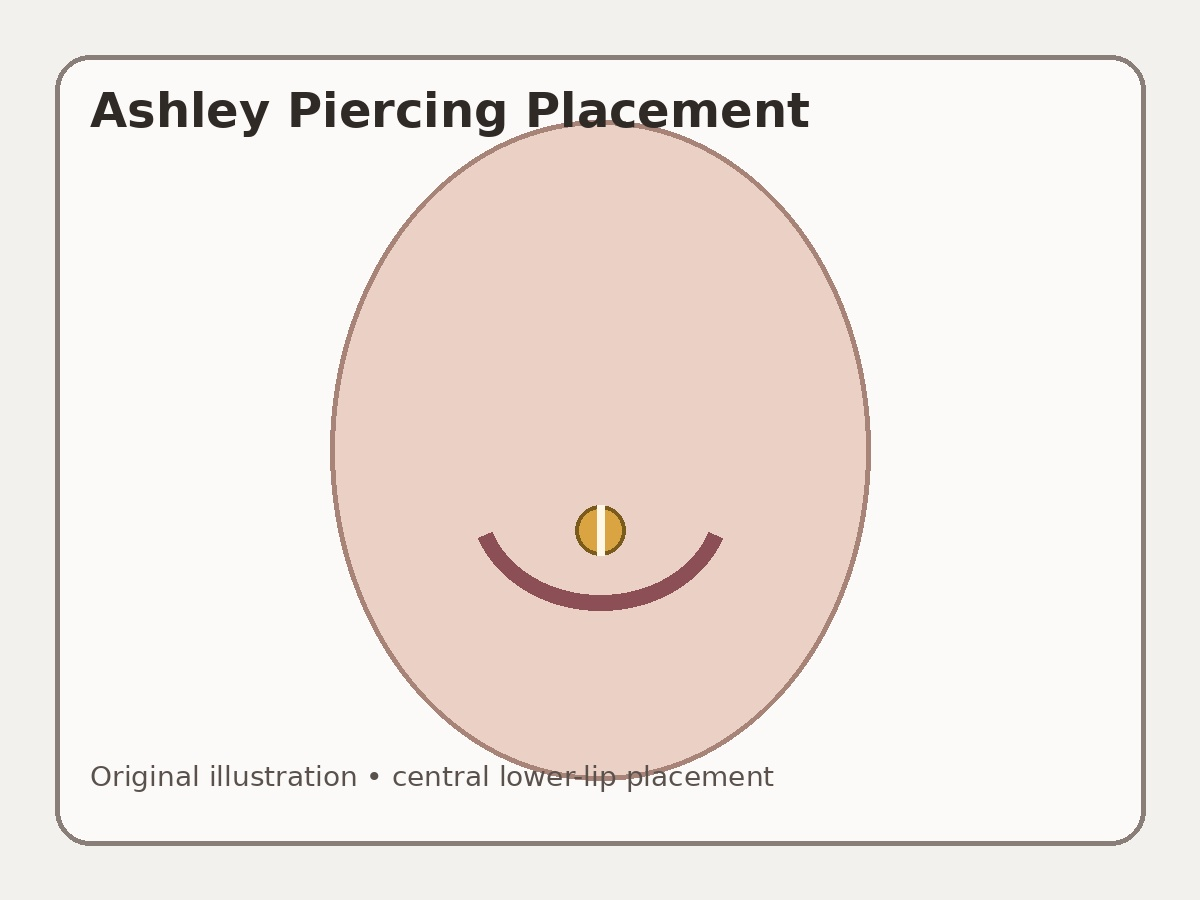
Ashley Piercing Placement
Placement is one of the most important parts of this piercing. The front opening is usually centered on the lower lip, while the back of the jewelry exits into the mouth.
A professional should consider:
• lower-lip shape and thickness
• natural lip movement
• tooth and gum position
• appropriate post length
• potential jewelry contact with teeth
• the appearance you want
A reference photo can help communicate your preference, but your anatomy should determine the final placement.
How Painful Is an Ashley Piercing?
Pain is individual. Most people describe the procedure as a brief sharp sensation followed by pressure or tenderness. The actual needle pass is quick, while swelling and sensitivity can be more noticeable afterward.
Pain can vary with anatomy, personal tolerance, technique, anxiety, and the condition of the tissue. A professional setup and calm, hygienic procedure can make the experience easier.
Ashley Piercing Swelling
Swelling is common after a fresh lip piercing. The lip may look larger than usual and feel tender for several days. Initial jewelry should leave enough room for expected swelling.
As swelling decreases, a professional piercer may recommend downsizing. Jewelry that is left unnecessarily long can move more and may catch on teeth or become irritated.
Ashley Piercing Healing Time
Healing commonly takes several months, but there is no single timeline that applies to everyone. The outside may look settled before the internal channel is fully healed.
Healing can be affected by aftercare, jewelry fit and material, repeated touching, trauma, smoking or vaping, oral hygiene, and individual healing differences. Avoid changing jewelry early just because the piercing looks normal.
Ashley Piercing Jewelry
A flat-back labret is commonly used for an Ashley piercing because the flat interior end can sit more comfortably against the inside of the lip. Jewelry should be properly sized for your anatomy and made from a reputable body-jewelry material.

Implant-grade titanium is a commonly preferred option for fresh piercings. Your piercer should choose the appropriate gauge, post length, finish, and decorative end rather than relying only on appearance.
Ashley Piercing Aftercare
Because an Ashley piercing has an external and oral component, care involves both areas. Follow your professional piercer's instructions and avoid aggressive cleaning.
· Wash your hands before touching the area.
· Clean the external opening gently with sterile saline if recommended by your piercer.
· Maintain normal oral hygiene and brush carefully.
· Rinse gently with plain water after meals to remove food particles.
· Do not twist, spin, bite, pull, or repeatedly move the jewelry.
· Avoid harsh products such as alcohol or hydrogen peroxide directly on the piercing.
· Do not change jewelry early unless a qualified piercer advises you to do so.

Eating With an Ashley Piercing
Eating may feel awkward during the first few days. Take smaller bites, eat slowly, and be careful not to catch the jewelry with your teeth. If spicy, acidic, very salty, or otherwise irritating foods cause discomfort, avoid them while the tissue is sensitive.
Ashley Piercing and Oral Health
Because jewelry sits inside the mouth, dental and gum health deserves special attention. Repeated contact between jewelry and teeth or gums can cause irritation and, in some cases, contribute to enamel wear or gum problems.
If the jewelry constantly hits your teeth, rubs your gums, or causes persistent discomfort, have the piercing assessed by an experienced piercer and consider speaking with a dentist.
Is an Ashley Piercing Safe?
All body piercings have risks. Possible complications include infection, prolonged irritation, migration, rejection, scarring, jewelry embedding, allergic reactions to unsuitable materials, and irritation to teeth or gums.
Risk can be reduced by choosing a reputable professional, using appropriate jewelry, following aftercare instructions, and seeking help when symptoms are worsening.
Normal Healing vs. Warning Signs
Mild swelling, tenderness, temporary sensitivity, and small amounts of clear or pale fluid that dry into a crust can occur during healing. These symptoms should generally improve over time.
Seek medical advice if you develop significant or worsening swelling, severe or increasing pain, spreading redness, thick or foul-smelling discharge, fever, or feel generally unwell. Do not remove jewelry from a suspected infection without professional medical advice.
Migration and Rejection
Migration means a piercing gradually shifts from its original position. Rejection is a more pronounced process in which the body pushes the jewelry toward the surface.
Watch for thinning tissue, a visible change in placement, increasing visibility of the jewelry, or persistent irritation. An experienced piercer can assess whether the jewelry or piercing needs attention.
Can an Ashley Piercing Leave a Scar?
Any piercing can leave a small mark after jewelry is removed. The final appearance varies according to anatomy, healing, jewelry, trauma, infection, and how long the piercing was worn.
When Should You Downsize the Jewelry?
Initial jewelry should accommodate swelling. Once the swelling has reduced, a professional piercer can check whether a shorter post is appropriate. Downsizing too early can cause pressure, while leaving an unnecessarily long post can increase movement and irritation.
How Much Does an Ashley Piercing Cost?
Prices vary by country, studio, piercer experience, jewelry material, and decorative end. When comparing studios, consider hygiene, sterilization, professional experience, jewelry quality, anatomy assessment, and aftercare support rather than choosing solely by the lowest price.
Can You Change Ashley Piercing Jewelry Yourself?
Early jewelry changes are best handled by a professional piercer. Once fully healed, jewelry changes are generally easier, but replacement jewelry should still be clean, correctly sized, and made from a suitable material.
Who May Not Be a Good Candidate?
An Ashley piercing may not be appropriate for every anatomy. A professional piercer should assess lip structure and potential contact with teeth and gums. If you have dental or oral-health concerns, discussing them with a dentist before piercing can also be useful.
Ashley Piercing vs. Vertical Labret
An Ashley piercing generally passes through the central lower lip and has its inner end inside the mouth. A vertical labret travels vertically through the lip and normally has both ends visible externally. The different paths affect appearance, jewelry, and oral contact.
Ashley Piercing vs. Traditional Labret
A traditional labret is generally positioned below the lower lip, whereas an Ashley piercing is centered through the lower lip itself. They can look similar in photos, but their placement and piercing channels are different.
How to Choose a Professional Piercer
Look for a professional who uses sterile, single-use needles, works in a clean studio, uses appropriate sterilization, offers quality jewelry, assesses anatomy before piercing, explains aftercare, and has experience with lip or oral piercings. Ask about the jewelry material and aftercare plan before the appointment.
Frequently Asked Questions
Does an Ashley piercing hurt?
It can cause a quick sharp sensation and pressure. Pain varies from person to person, and tenderness afterward may be more noticeable than the piercing itself.
How long does an Ashley piercing take to heal?
Healing commonly takes several months, but the exact time varies. Do not treat the piercing as fully healed just because the outside looks normal.
Can an Ashley piercing damage your teeth?
Repeated jewelry contact can irritate teeth or gums. Proper placement and jewelry fitting are important, and persistent contact should be assessed.
Can I eat normally after getting an Ashley piercing?
You can eat, but take smaller bites and chew carefully during the early swelling period.
Can I smoke after an Ashley piercing?
Smoking can irritate a fresh oral piercing and is best minimized or avoided during healing.
What jewelry is best?
A properly fitted flat-back labret made from a reputable body-jewelry material, commonly implant-grade titanium, is a common choice.
Can an Ashley piercing close?
Yes. A piercing can shrink or close after jewelry is removed. The speed varies between individuals.
Does an Ashley piercing leave a hole?
A small mark or opening can remain after removal, and the final appearance varies from person to person.
Final Thoughts
An Ashley piercing gives the lower lip a distinctive, minimalist look, but its position inside the mouth means placement, jewelry fit, oral hygiene, and aftercare deserve particular attention.
Choose an experienced professional who can assess your anatomy and explain the risks. During healing, avoid unnecessary movement, maintain good oral hygiene, and seek professional or medical advice if symptoms become progressively worse.
The goal is not simply to get the piercing—it is to give the tissue the best possible conditions to heal while reducing avoidable irritation.
Leave a Reply