

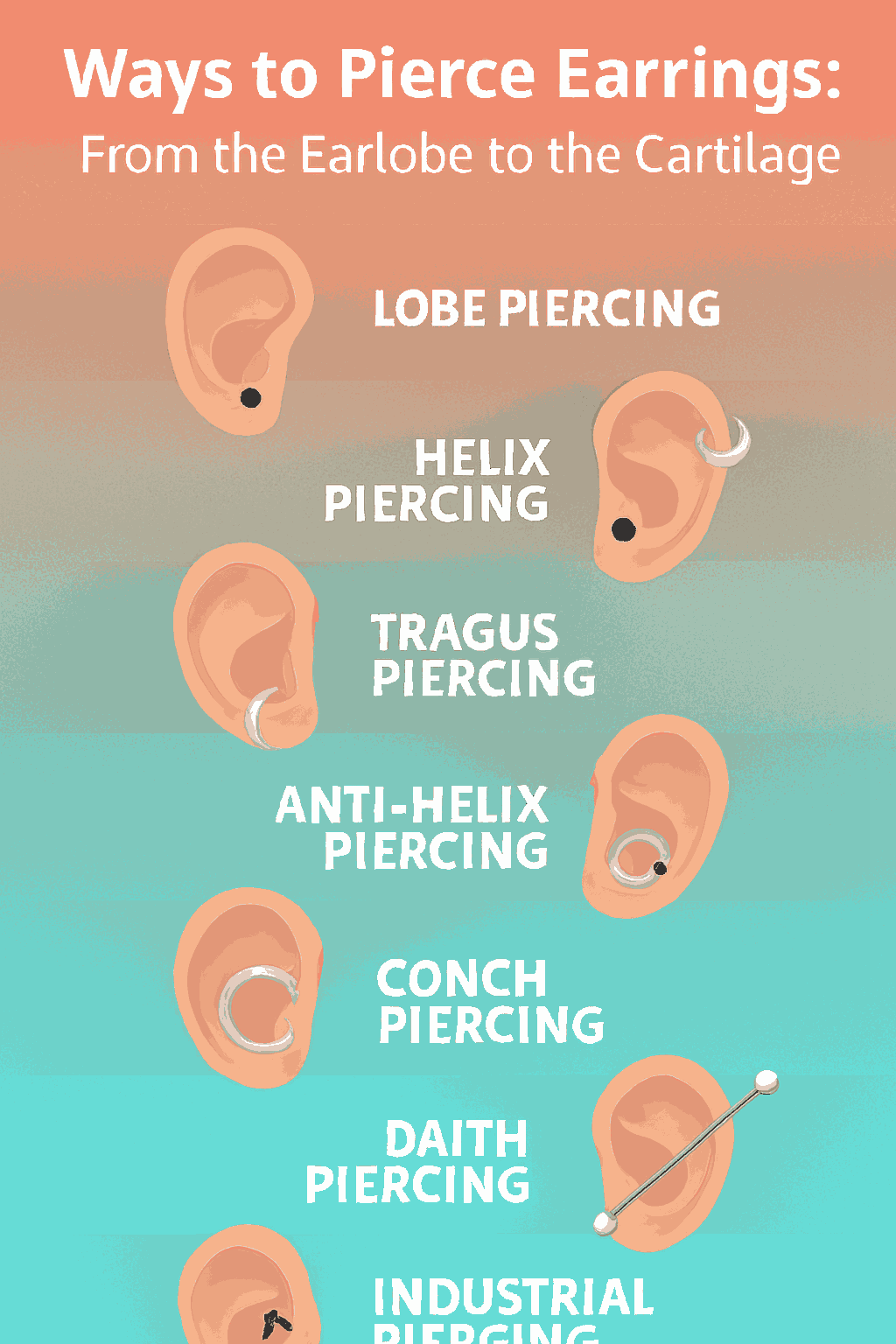

Are you considering getting a new piercing to change your look? Earring piercings have long been more than just a fashion statement—they're an expression of your personality and individuality. With so many options, from traditional earlobe piercings to bold cartilage piercings, choosing can be difficult. Here, you'll find everything you need to know to find the right piercing for you—including valuable aftercare tips and the latest trends.

Table of Contents
The most important things in brief
Types of earring piercings
Lobe Piercing
Helix Piercing
Tragus Piercing
Anti-Helix Piercing
Conch Piercing
Daith Piercing
Industrial Piercing
Factors to consider before choosing a piercing
Pain and healing time
lifestyle
Skin type and sensitivities
Which earring suits your ear shape best?
Current trends in piercings
Care instructions for piercings
Daily cleaning
Preventing infections
Jewelry exchange
Conclusion
The most important things in brief
Earring piercings offer a variety of options, from the traditional lobe piercings to the bolder cartilage piercings, each with its own healing times and specific care requirements.
Factors such as pain, healing time, lifestyle and skin sensitivities should be considered before choosing a piercing.
Current trends include creative combinations of multiple piercings, and proper aftercare is crucial to prevent infection and ensure optimal healing.
Types of earring piercings
From the more traditional earlobe piercings to the bolder cartilage piercings, each type of piercing has its own charm and specific characteristics. In this section, we'll introduce you to the different types of earring piercings, their characteristics, healing times, and required care in detail.
Lobe Piercing
The earlobe is the most common and least painful piercing. It is performed in the soft and fleshy part of the ear, allowing for quick and easy healing.
Healing time : 6-8 weeks.
Recommended jewellery : hoop earrings , stud earrings , light pendants .
Care and Maintenance : Daily cleaning with saline solution and avoiding touching the piercing with dirty hands to prevent infection.
Helix Piercing
The helix piercing is performed in the upper cartilage of the ear. It is a popular option due to its versatility and the ample space available for various jewelry.
Healing time : 3-6 months.
Recommended jewelry : small hoop earrings , barbells, huggies .
Care and maintenance : Avoid sleeping on the side of the piercing and clean regularly with a saline solution.
Tragus Piercing
The tragus is the small cartilage located in front of the ear canal. This piercing is subtle and modern, ideal for those looking for something unique.
Healing time : 3-9 months.
Recommended jewelry : barbell, segment rings, small stud earrings .
Care and Maintenance : Due to its proximity to the ear canal, it is important to keep the piercing clean and avoid the accumulation of earwax.
Anti-Helix Piercing
Also known as forward helix, this piercing is located in the lower cartilage of the ear, directly opposite the helix.
Healing time : 6-12 months.
Recommended jewelry : hoop earrings, curved barbells, huggies .
Care and maintenance : Similar to the helix, pressure on the piercing should be avoided and it should be kept clean.
Conch Piercing
The conch piercing is performed in the inner cartilage of the ear. It can be either an internal or external piercing, depending on the location.
Healing time : 6-12 months.
Recommended jewelry : barbell, large rings, huggies .
Care and maintenance : Cleaning with saline solution and avoiding excessive manipulation.
Daith Piercing
The daith piercing is located in the crease of the inner cartilage of the ear. In addition to its aesthetic appeal, some believe it helps relieve migraines.
Healing time : 6-9 months.
Recommended jewelry : hoop earrings , segment rings, barbell.
Care and maintenance : Due to the special situation, special hygiene measures are required. Avoid in-ear headphones and maintain strict hygiene.
Industrial Piercing
The industrial piercing consists of two piercings connected by a straight bar, usually in the upper part of the ear.
Healing time : 6-12 months.
Recommended jewelry : industrial barbell.
Care and maintenance : Due to the two piercings, double care is required, avoid pressure and abrupt movements.
Factors to consider before choosing a piercing
There are several factors to consider to ensure the choice fits your lifestyle and health. From pain intensity and healing time to your skin type and potential allergies, every aspect can influence your experience.
Pain and healing time
It's important to consider the pain level and healing time of each piercing. Earlobe piercings are the least painful and have a short healing time, while cartilage piercings tend to be more painful and require a longer healing time.

Lifestyle
Your lifestyle can influence your choice of piercing. If you participate in contact sports or have a job that requires wearing headphones, some piercings may be impractical. Consider how your daily activities might affect the healing and care of your piercing.
Skin type and sensitivities
If you have sensitive skin or are prone to keloids, it's important to choose high-quality jewelry made from hypoallergenic materials like titanium or 14-karat gold. Consult a professional piercer for specific recommendations.

Which earring suits your ear shape best?
Choosing the perfect earring depends not only on style but also on the shape of your ears. Here are some recommendations to help you find the ideal option:
l Small earlobes : Opt for small, lightweight earrings like studs or small hoops to avoid overdoing the look. Minimalist earrings with geometric shapes are an excellent choice.
l Large or fleshy earlobes : Larger earrings or styles with a bit more weight, such as medium-sized hoops or dangle designs, help balance proportions and enhance your facial features.
l Protruding ears : If your ears stick out a little more, earrings that hang close to the earlobe (rather than extending far away from the ear) are a discreet and sophisticated option.
l Prominent cartilage : For those with prominent cartilage, huggies (small hoop earrings that encircle the earlobe or cartilage) are an excellent choice. Piercings in the helix or tragus are also suitable for a modern look.
Current trends in piercings
In recent years, multiple piercings have enjoyed tremendous popularity and become a major trend in the jewelry world. This trend allows people to personalize their ears with unique jewelry combinations and create an individual style.
l Ear stacking : Wearing multiple small and medium-sized earrings on one ear, combining studs, huggies, and hoops to create a customized look. This trend is ideal for people with multiple piercings.
l Metal Mix : Wearing earrings in different metal colors (such as white gold, rose gold, and silver) has become increasingly popular, adding a modern and versatile touch to the style. This look allows you to play with different textures and finishes.
l Earrings with colored stones : Jewelry with bright colored gemstones, such as blue sapphire, green emerald or purple amethyst, are trendy and add a touch of color to any look.
l Asymmetrical piercings : Piercings in different locations of the ear, such as the helix, conch, and tragus, offer a unique and modern design. Combined with minimalist jewelry, this style can accentuate the look without appearing overly sophisticated.

Care instructions for piercings
Piercing aftercare is crucial to prevent infection and ensure your new jewelry looks its best. Here, we offer a comprehensive guide with the best tips for keeping your piercings in optimal condition.
Daily cleaning
Daily cleaning is crucial to prevent infection and ensure proper healing. Use a sterile saline solution to clean the piercing and avoid products containing alcohol or hydrogen peroxide, as these can irritate the skin.
Preventing infections
Always keep your hands clean before touching the piercing. Avoid swimming in public pools and natural bodies of water during the first few weeks of healing to prevent infection.
Jewelry exchange
It's tempting to change your jewelry soon after getting it, but it's important to wait until the piercing is completely healed. Consult your piercer before making any changes to avoid complications.
Conclusion
Choosing the right piercing is more than just a jewelry decision—it's a step toward a new expression of your style and personality. Whether you opt for a classic earlobe piercing or something bolder with a modern industrial piercing, remember to follow the recommended aftercare tips to ensure healthy healing and enjoy your new accessory to the fullest.
Leave a Reply