

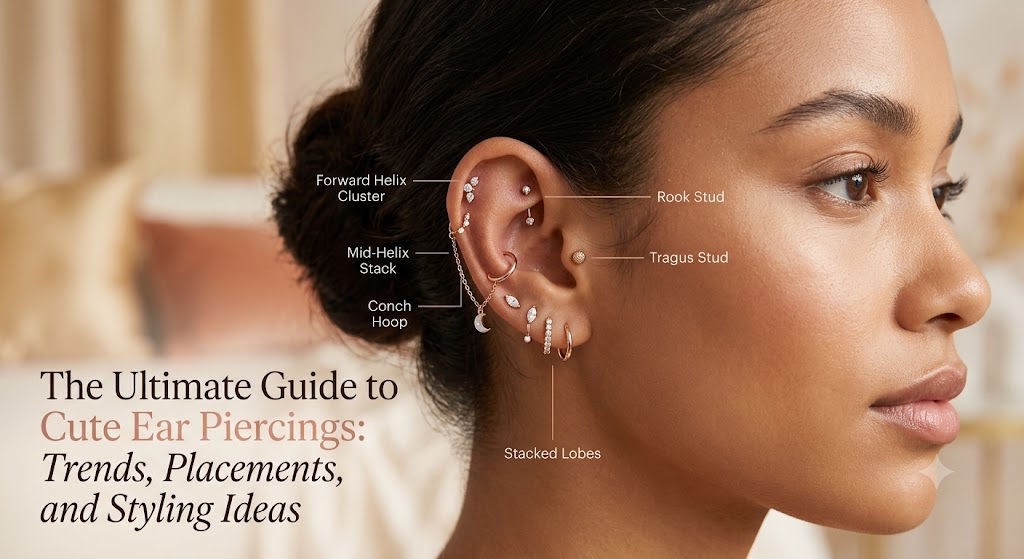

Whether you are a piercing novice looking to get your very first addition to your lobes, or an experienced body modification enthusiast planning your next intricate cartilage arrangement, the world of cute ear piercings offers endless possibilities for self-expression. Gone are the days when a single stud in each earlobe was the only acceptable standard. Today, the ear is viewed as a brilliant canvas for fine jewelry, delicate studs, and intricate hoops that reflect your personal style.
In this comprehensive, in-depth guide, we will explore everything you need to know about cute ear piercings. From the most popular placements and their respective pain levels to the ultimate aftercare tips and jewelry selection guides, this article is designed to be your one-stop resource. By the end of this read, you will be fully equipped to plan your dream ear stack.

Why Cute Ear Piercings Are Taking Over the Fashion World
Ear piercings have evolved from simple fashion statements into a complex art form. Celebrities, influencers, and fashion icons have spearheaded the movement of decorating the ear with multiple, carefully chosen pieces of jewelry. But why has this trend exploded in popularity?
The Rise of the "Curated Ear"
The "curated ear" is a massive trend that involves piercing multiple parts of the ear and filling them with high-quality, aesthetically cohesive jewelry. Instead of randomly getting pierced, individuals now work with professional piercers to design a layout that complements their unique ear anatomy. Cute ear piercings are the foundation of these curated looks, relying on delicate, dainty, and carefully spaced jewelry to create a constellation-like effect.
Self-Expression Through Jewelry
Unlike clothing or makeup, ear piercings offer a semi-permanent form of self-expression. You can switch from a minimalist, elegant look featuring tiny gold studs to an edgy, alternative vibe using bold hoops and chains, all without changing your actual piercings. Cute ear piercings allow you to wear your personality on your sleeve—or rather, on your ear.
Exploring the Cutest Lobe Piercings (Beginner-Friendly)
If you are just dipping your toes into the world of body modification, the earlobe is the perfect place to start. The lobe is the soft, fleshy bottom part of the ear, lacking cartilage, which makes it the easiest and least painful spot to pierce.
Standard Lobe Piercing
The standard lobe piercing is the classic, foundational piercing that most people get when they are children or teenagers. It sits right in the center of the fleshy part of the earlobe. While it may seem basic, it is the cornerstone of all cute ear piercings.
Pain Level and Healing Time
Pain Level: 1/10. It feels like a quick, sharp pinch.
Healing Time: 6 to 8 weeks. Because there is high blood flow to the lobe and no cartilage, this area heals incredibly fast.
Best Jewelry Styles
For a standard lobe, the options are limitless. Tiny diamond studs, small huggie hoops, and dangling charms all look fantastic. For a curated look, simple 14k gold studs are a timeless choice.
Upper Lobe Piercing
The upper lobe piercing sits just above the standard lobe, following the natural curve of the ear upwards. Getting a second or third lobe piercing is often the gateway to more complex ear projects.
Pain Level and Healing Time
Pain Level: 2/10. Slightly higher up, the tissue might be a tiny bit denser, but it is still virtually painless.
Healing Time: 6 to 8 weeks, similar to the standard lobe.
Best Jewelry Styles
Upper lobes look exceptionally cute when decorated with graduated studs. For example, wearing a larger gem in the standard lobe and progressively smaller gems in the second and third upper lobes creates a beautiful, cascading effect.
Stacked Lobe Piercing
Instead of following the curve of the ear upwards, a stacked lobe involves placing a piercing directly above the standard lobe, creating a vertical "stack" of jewelry.
Pain Level and Healing Time
Pain Level: 2/10.
Healing Time: 6 to 8 weeks.
Best Jewelry Styles
Tiny, minimalist studs work best here. Combining a small hoop in the primary lobe piercing with a tiny star or moon stud in the stacked piercing creates a uniquely modern and cute aesthetic.
Transverse Lobe Piercing
This is a more unique, advanced take on the lobe piercing. Instead of piercing from front to back, a transverse lobe piercing goes horizontally through the actual flesh of the earlobe, meaning the jewelry sits parallel to your face.
Pain Level and Healing Time
Pain Level: 4/10. It requires a longer needle to travel through more tissue.
Healing Time: 2 to 4 months, as there is more tissue to heal.
Best Jewelry Styles
A curved barbell is the standard jewelry for this piercing. To keep it looking cute and dainty, choose barbells with tiny, sparkly gemstone ends.
Trendy and Cute Cartilage Piercings (Intermediate)
Once you move past the soft tissue of the lobe, you enter cartilage territory. Cartilage is the firm, flexible tissue that gives the upper part of your ear its shape. These piercings are highly trendy, slightly more painful, and require much more dedication to aftercare.
The Helix Piercing (Classic Cute)
The helix is arguably the most popular cartilage piercing. It refers to any piercing along the outer rim of the upper ear. You can get a single helix, a double helix, or even a triple helix.
Pain, Healing, and Aftercare
Pain Level: 4/10. It is a sharp pinch followed by a warm, throbbing sensation.
Healing Time: 6 to 9 months, up to a year.
Because the helix sits on the outer edge of the ear, it is highly prone to being snagged on hair, clothing, and towels. Strict aftercare is essential to prevent irritation bumps.
Forward Helix vs. Standard Helix
While the standard helix sits on the outer curved edge, the forward helix sits at the front of the ear, closest to your face, right above the tragus. A forward helix is one of the most delicate and cute ear piercings you can get, often adorned with a tiny, sparkling stud.
The Tragus Piercing (Subtle and Sweet)
The tragus is the small, thick flap of cartilage that sits right in front of the ear canal. Piercing this area adds a subtle, unexpected pop of sparkle to the inner portion of the ear.
Pain Level and Healing Time
Pain Level: 5/10. The cartilage here is thicker, so you will feel more pressure than pain.
Healing Time: 6 to 12 months.
Earbuds and Tragus Piercings
One important thing to consider before getting a tragus piercing is your lifestyle. While it is healing, you will not be able to wear in-ear headphones (like AirPods) on that side, as the pressure can irritate the piercing and introduce bacteria.
The Conch Piercing (Bold yet Adorable)
The conch gets its name from the large, cup-shaped area of cartilage in the center of the ear, which resembles a conch shell. It is a stunning centerpiece for any curated ear.
Inner vs. Outer Conch
Inner Conch: Placed directly in the center of the "bowl" of the ear.
Outer Conch: Placed higher up on the flat area of cartilage (sometimes also referred to as a "flat piercing").
Healing and Jewelry Types (Hoops vs. Studs)
Healing Time: 6 to 12 months.
Jewelry: The conch is famous for the "conch hoop"—a large, cute ring that hugs the outer edge of the ear. However, you must always be pierced with a flat-back stud first. You can only switch to a hoop once the piercing is 100% fully healed, otherwise, the curved shape of the hoop will cause severe irritation bumps.
The Daith Piercing (The Heart of the Ear)
The daith (pronounced "doth") passes through the innermost fold of cartilage, just above the ear canal. It perfectly frames the center of the ear.
Pain Level and Healing Time
Pain Level: 6/10. The tissue here is thick, and the piercing angle is awkward, leading to a feeling of intense pressure.
Healing Time: 9 to 12 months.
Migraine Relief Myth vs. Fact
Many people seek out the daith piercing hoping it will cure their migraines, as it aligns with an acupuncture pressure point. While some people report anecdotal relief, there is no scientific evidence supporting this. You should get a daith piercing because it is a stunningly cute ear piercing, not for medical reasons.
Advanced Cute Ear Piercings for the Daring
If you have mastered standard cartilage piercings and want to add something highly unique and eye-catching to your collection, these advanced piercings are the way to go. They require specialized anatomy and a high pain tolerance.
The Industrial Piercing
The industrial piercing consists of two holes connected by a single, long barbell, usually crossing the upper part of the ear from a forward helix to a standard helix.
Anatomy Requirements
Not everyone can get an industrial piercing. You must have a prominent ridge on the outer rim of your ear to hold the barbell, and the flat part of your ear must not touch the bar. If your anatomy is not suited for it, the bar will cut into your ear over time.
Pain Level and Healing Process
Pain Level: 7/10. You are essentially getting two cartilage piercings back-to-back.
Healing Time: 9 to 12 months. Because the two piercings are connected, moving the bar irritates both holes simultaneously, making healing a long and careful process.
The Rook Piercing
The rook is situated on the inner ridge of ear cartilage, located just above the daith and below the outer rim. It is a highly vertical piercing that looks incredibly chic.
Pain Level and Healing Time
Pain Level: 6/10. Like the daith, this is a thick fold of cartilage.
Healing Time: 9 to 12 months.
Best Jewelry Styles
Curved barbells are standard for a fresh rook. Once healed, switching to a tiny, snug-fitting seamless hoop or a jeweled clicker makes this one of the most cute ear piercings you can showcase.
The Snug Piercing
The snug is pierced right through the anti-helix—the inner ridge of cartilage that runs down the middle of the outer ear rim. It sits parallel to the earlobe.
Why It’s Unique
The snug is one of the most distinctive piercings because it is completely contained within the inner cartilage, meaning the entry and exit points are both visible from the front.
Healing Challenges
Pain Level: 7/10.
Healing Time: 12 to 18+ months. The snug is notorious in the piercing community for being extremely difficult to heal. It swells significantly and is highly prone to irritation.
The Anti-Tragus Piercing
Just opposite the tragus, right above the fleshy lobe, is a small piece of protruding cartilage called the anti-tragus.
Pain Level and Healing Time
Pain Level: 6/10.
Healing Time: 9 to 12 months.
Best Jewelry Styles
A tiny curved barbell or a delicate captive bead ring looks incredibly cute here, creating a perfect balance if you already have a tragus piercing on the other side.
Designing Your Unique Ear Project: How to Combine Cute Ear Piercings
The magic of cute ear piercings lies in how you combine them. Designing a curated ear is like designing a miniature art gallery. Here is how to create a cohesive, stunning look.
The Constellation Piercing Trend
A constellation piercing setup takes inspiration from the night sky. It involves placing small, delicate studs (often in the shape of stars, moons, and tiny diamonds) in asymmetrical, clustered patterns across the lobes and cartilage. The goal is to make the piercings look scattered but deliberate, just like a constellation of stars.
Balancing Hoops and Studs
A common mistake people make is using only hoops or only studs, which can make the ear look cluttered or flat. The best curated ears rely on balance:
Anchor with Hoops: Use hoops on the outer edges of the ear (like the helix or the primary lobe).
Fill with Studs: Use dainty flat-back studs for inner ear piercings like the conch, tragus, and forward helix.
This dynamic contrast between the hugging shapes of the hoops and the bright flashes of the studs creates a visually appealing rhythm.
Choosing a Color Palette (Gold, Silver, Rose Gold)
To keep your ear piercings looking cute and cohesive, pick a primary metal tone and stick to it.
Yellow Gold: Offers a warm, vintage, and highly luxurious feel. It pops beautifully against all skin tones.
White Gold or Silver (Titanium): Gives a sleek, modern, and edgy vibe.
Rose Gold: Exceptionally feminine, soft, and trendy.
If you want to mix metals, do so intentionally—for example, alternating gold and silver studs in a stacked lobe, rather than randomly mixing tones across the whole ear.
The Complete Ear Piercing Pain Scale
Fear of pain is the number one reason people hesitate to get cute ear piercings. While everyone's pain tolerance is different, understanding the anatomy of the ear can help you anticipate what to expect.
Low Pain Piercings
Standard Lobe (1/10): Barely a pinch.
Upper Lobe (2/10): Very mild discomfort.
Stacked Lobe (2/10): Similar to a standard lobe.
Moderate Pain Piercings
Helix (4/10): A sharp pinch, followed by dull throbbing.
Tragus (5/10): More pressure than sharp pain due to cartilage thickness.
Conch (5/10): A noticeable pinch right in the center of the ear.
High Pain Piercings
Daith (6/10): Heavy pressure and an awkward crunching sensation.
Rook (6/10): High resistance due to thick cartilage folds.
Industrial (7/10): Prolonged pain due to two separate needle passes.
Snug (7/10): High initial pain and intense swelling during the healing process.
Note: The actual piercing process takes less than two seconds. The "pain" is entirely temporary, but the cute ear piercings last a lifetime!
Essential Healing and Aftercare for Cute Ear Piercings
Getting the piercing is only 10% of the journey; the other 90% is the healing process. If you want your cute ear piercings to look their best, you must commit to a strict aftercare routine.
The Golden Rules of Aftercare
Your piercer will provide you with specific instructions, but the foundational rules of piercing aftercare remain universal.
Saline Solution is Your Best Friend
The only thing that should ever touch your fresh piercing is sterile saline wound wash (0.9% sodium chloride). Spray the front and back of the piercing twice a day. Do not use Q-tips or cotton balls, as the tiny fibers can get caught on the jewelry and introduce bacteria. Instead, spray it directly and gently pat it dry with non-woven gauze or a clean paper towel.
Leave It Alone (LITHA Method)
The "Leave It The Hell Alone" (LITHA) method is highly respected in the piercing community. Stop twisting, turning, or playing with your jewelry. Every time you touch your piercing, you tear the fragile new healing tissue inside the fistula (the piercing hole) and reset the healing clock.
What to Avoid During the Healing Process
To ensure your cute ear piercings heal perfectly, avoid the following:
Sleeping on your fresh piercings: This causes pressure, leading to crooked piercings and massive irritation bumps. Buy a travel neck pillow and sleep with your ear in the center hole.
Swimming: Stay out of pools, lakes, and hot tubs for at least two to three months to avoid severe infections.
Harsh Chemicals: Never use rubbing alcohol, hydrogen peroxide, tea tree oil, or antibacterial soap on a piercing. These are too harsh, will dry out the skin, and kill the healthy healing cells.
How to Deal with Piercing Bumps
It is very common to develop a small, red, raised bump next to a healing cartilage piercing. These are rarely infections; they are usually irritation bumps. They are caused by:
Sleeping on the piercing.
Knocking or snagging the jewelry.
Wearing low-quality metal.
Keeping the original long bar in for too long (failing to downsize).
To get rid of a bump, find the source of irritation and eliminate it. Continue cleaning with sterile saline, do not pop the bump, and visit your piercer to see if your jewelry needs to be downsized to a shorter bar.
Choosing the Best Jewelry for Your Cute Ear Piercings
The jewelry you are pierced with is not just about aesthetics; it is about health. Cheap jewelry can cause allergic reactions, turning your cute ear piercings into a painful nightmare.
Safe Materials for Fresh Piercings
Always ensure your piercer uses implant-grade materials for initial piercings.
Implant-Grade Titanium
This is the gold standard for body jewelry. It is entirely hypoallergenic, nickel-free, lightweight, and can be anodized into vibrant colors. If you have sensitive skin, implant-grade titanium (ASTM F-136) is your safest bet.
14k or 18k Solid Gold
If you prefer a luxurious look, solid 14k or 18k yellow, white, or rose gold is safe for fresh piercings. Ensure it is solid gold, not gold-plated, as the plating can chip off inside the healing wound and cause infections.
Niobium
Niobium is an elemental metal similar to titanium. It is highly biocompatible, hypoallergenic, and slightly softer, making it great for certain types of hoop jewelry.
Materials to Avoid Initially
Do not let anyone pierce you with the following materials, as they can cause severe complications.
Surgical Steel (The Nickel Problem)
"Surgical steel" is a buzzword that actually means very little. Most steel contains varying amounts of nickel. A large percentage of the population is allergic to nickel, which will cause the ear to swell, itch, and reject the piercing.
Sterling Silver
Never put sterling silver into a fresh or unhealed piercing. Silver oxidizes and tarnishes when exposed to body fluids, which can permanently stain your skin a black or grey color (a condition known as argyria).
Frequently Asked Questions About Cute Ear Piercings
How much do cute ear piercings cost?
The cost varies heavily based on your location, the experience level of the piercer, and the jewelry you choose. Generally, the piercing fee ranges from $30 to $60 per hole. The jewelry is usually sold separately. High-quality titanium basics might cost $20-$40, while solid gold pieces with genuine diamonds can cost upwards of $100-$500 per piece.
Can I get multiple piercings at once?
Yes, but you should not overdo it. Reputable piercers will generally refuse to do more than 3 or 4 piercings in one sitting. Your body's immune system has to work incredibly hard to heal these puncture wounds. Healing too many at once will drastically slow down the healing timeline for all of them and increase the risk of infection.
When can I change my piercing jewelry?
For lobe piercings, you can usually change the jewelry after 6 to 8 weeks. For cartilage piercings, you should wait at least 6 to 9 months before changing the jewelry yourself. However, you must return to your piercer after 4 to 6 weeks for a "downsize"—they will swap the long initial healing bar for a shorter one to prevent the piercing from healing at a crooked angle.
Do cartilage piercings ever close up?
Yes. Unlike lobe piercings, which can sometimes remain open for years without jewelry, cartilage piercings are notorious for closing up incredibly fast. Even a fully healed helix or conch piercing can shrink or close within a few hours if the jewelry is removed. If you love your cute ear piercings, keep jewelry in them 24/7.
Conclusion: Embrace Your Ear Piercing Journey
Getting cute ear piercings is an exciting, transformative journey that allows you to express your individual style in a uniquely beautiful way. From the simplicity of a classic standard lobe to the intricate beauty of a curated daith and conch combination, there is a piercing style out there for everyone.
Remember that while the aesthetic payoff is massive, body piercing is a serious commitment. Always do your research, seek out reputable, APP-certified (Association of Professional Piercers) studios, invest in high-quality implant-grade jewelry, and follow a strict saline aftercare routine. By treating your body with care, your cute ear piercings will heal beautifully, providing you with a lifelong canvas for stunning, curated jewelry.
Whether you are planning a delicate, minimalist constellation or a bold, gold-heavy stack, use this guide as your ultimate blueprint. Happy piercing!
Leave a Reply