


Monroe Piercing: Complete Guide to Placement, Pain, Healing, Jewelry & Aftercare
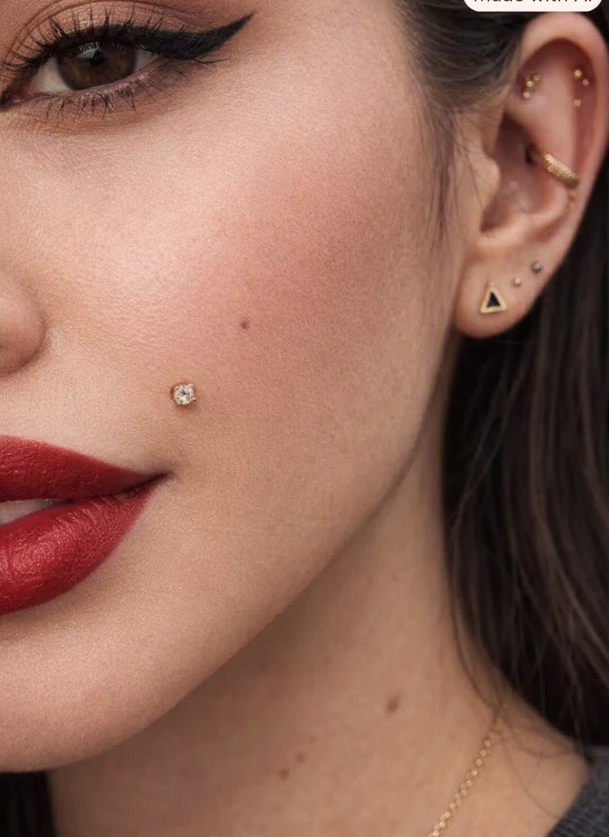
A Monroe piercing is a facial piercing placed above the upper lip, usually on one side. Its position is inspired by the famous beauty mark associated with Marilyn Monroe, giving the piercing its distinctive name.
Usually worn with a small labret stud, this style can be subtle or decorative depending on the jewelry. Although the finished look is simple, getting a Monroe piercing involves several considerations, including anatomy, placement, jewelry quality, healing, oral hygiene, and possible dental complications.

This guide covers everything you need to know before getting one, from the piercing procedure and pain level to aftercare, jewelry selection, healing time, risks, and frequently asked questions.
What Is a Monroe Piercing?
A Monroe piercing is an upper-lip piercing positioned above the lip and toward one side of the face. The traditional placement creates an appearance similar to a beauty mark.
The piercing normally uses a flat-back labret stud. The decorative end remains visible on the outside, while the flat backing sits inside the mouth.
Depending on personal preference, the visible end may feature:
A small metal bead
A gemstone
An opal
A minimalist disc
A decorative shape
The exact position should be determined according to individual facial anatomy rather than copied from another person's piercing.
Why Is It Called a Monroe Piercing?
The name refers to Marilyn Monroe, whose recognizable beauty mark was located above her upper lip.
The piercing does not recreate an actual mole. Instead, its placement produces a similar visual effect using jewelry.
The style became particularly associated with alternative fashion and facial-piercing culture and remains popular because it offers a noticeable look without requiring large jewelry.
Where Is a Monroe Piercing Located?
A traditional Monroe sits above the upper lip on one side of the face.
The exact position can vary according to:
Lip shape
Facial proportions
Tissue thickness
Natural symmetry
Tooth position
Gum placement
Existing facial piercings
Desired jewelry size
An experienced piercer should examine your anatomy before marking the location.
Because the piercing is on the face, placement matters aesthetically as well as functionally. You should be able to see and approve the proposed position before the procedure.
Monroe vs. Madonna Piercing
The terms Monroe piercing and Madonna piercing are often used to describe similar upper-lip piercings.
Traditionally:
Monroe: left side of the upper lip
Madonna: right side of the upper lip
Terminology can differ between piercing studios, so it is better to specify the exact side you want rather than relying only on the name.
Monroe vs. Medusa Piercing
These styles have different placements.
A Monroe is positioned above the upper lip toward one side, creating an asymmetrical appearance.
A Medusa is centered beneath the nose through the philtrum, creating a symmetrical focal point.
Both are facial piercings, but their anatomy, appearance, and jewelry positioning are different.
How Is a Monroe Piercing Done?
A professional Monroe piercing should be performed by an experienced piercer in a hygienic studio.
The procedure generally follows these steps:
1. Consultation
The piercer examines your anatomy and discusses placement, jewelry, healing, and potential risks.
2. Preparation
The area is cleaned using appropriate professional hygiene procedures.
3. Marking
The intended position is marked on the skin. You should check the placement before the piercing begins.
4. Piercing
A sterile, single-use piercing needle is used to create the channel, followed by insertion of suitable jewelry.
A piercing gun should not be used for this type of facial piercing.
5. Aftercare
The piercer should provide clear instructions about cleaning, healing, jewelry changes, and signs of complications.
Does a Monroe Piercing Hurt?
Pain varies considerably between individuals.
Most people experience a short, sharp sensation during the piercing, followed by some tenderness or swelling.
Your experience can be influenced by:
Personal pain tolerance
Anxiety
Anatomy
Tissue thickness
Piercer technique
Previous piercing experience
The actual procedure is brief, but the area may remain sensitive during the early healing period.
There is no scientifically reliable pain score that applies to everyone, so online ratings should be treated as personal experiences rather than universal measurements.
Does a Monroe Piercing Swell?
Some swelling is normal after an upper-lip piercing.
You may notice:
Puffiness
Tenderness
Mild redness
Sensitivity
Temporary discomfort
Initial jewelry is often selected with enough room for expected swelling. After the swelling decreases, your piercer may recommend downsizing to a shorter post.
Jewelry should not be shortened prematurely because swelling may still be present.
How Long Does a Monroe Piercing Take to Heal?
Healing time varies from person to person. An upper-lip piercing can take several weeks to several months to fully stabilize.
A piercing may appear healthy externally while the internal channel is still healing.
For that reason, avoid changing the jewelry simply because the outside looks normal.
Healing can be affected by:
Jewelry quality
Placement
Aftercare
Trauma
Irritation
Individual healing ability
Your piercer can assess whether the piercing is ready for a jewelry change or downsizing.
Monroe Piercing Aftercare
Good aftercare is essential during healing.
General practices include:
Wash your hands before touching the area.
Keep the piercing clean.
Use sterile saline when recommended.
Avoid unnecessary movement.
Do not twist or spin the jewelry.
Protect it from pulling and snagging.
Avoid harsh chemicals and cosmetic products around the fresh piercing.
Follow the instructions provided by your professional piercer.
More cleaning does not necessarily mean faster healing. Excessive cleaning can irritate the tissue.
What Should You Use to Clean a Monroe Piercing?
A sterile saline product intended for wound or piercing care is commonly used.
Avoid applying harsh household products such as:
Rubbing alcohol
Hydrogen peroxide
Perfume
Essential oils
Toothpaste
Strong disinfectants
Homemade chemical mixtures
These substances can irritate healing tissue.
If your piercer recommends a specific product or routine, follow that guidance.
Should You Twist Monroe Jewelry?
No.
Rotating or spinning jewelry is unnecessary and can irritate the healing channel.
Repeated movement may cause:
Swelling
Redness
Tenderness
Small tissue injuries
Delayed healing
The best approach is to leave the jewelry alone except when performing necessary aftercare.
Monroe Piercing and Oral Hygiene
Because the backing sits inside the mouth, maintaining good oral hygiene is particularly important.
Continue your regular dental-care routine while avoiding unnecessary contact with the piercing.
Use a clean toothbrush and be careful not to repeatedly hit the jewelry while brushing.
If the backing constantly rubs against your teeth or gums, ask your piercer to check the jewelry fit.
Can a Monroe Piercing Damage Teeth?
It can.
A lip piercing may cause dental problems when jewelry repeatedly contacts the teeth or gums.
Possible concerns include:
Enamel wear
Tooth sensitivity
Chipping
Gum irritation
Gum recession
The level of risk depends on anatomy, jewelry design, placement, movement, and individual habits.
Properly fitted jewelry can reduce unnecessary contact, but it cannot eliminate every potential dental risk.
Can a Monroe Piercing Cause Gum Recession?
Repeated pressure or friction from the backing can irritate the gums and may contribute to recession.
Watch for:
Persistent gum tenderness
Receding gum tissue
Bleeding
Tooth sensitivity
Continuous rubbing
If you notice these changes, have the jewelry checked by a professional piercer and consider seeing a dentist.
Best Jewelry for a Monroe Piercing
A flat-back labret stud is commonly used because its smooth backing can be more comfortable inside the mouth.
The jewelry should have:
An appropriate post length
Suitable thickness
Smooth surfaces
High-quality material
A secure decorative end
The correct size depends on your anatomy and healing stage.
Best Materials for Monroe Jewelry
Implant-Grade Titanium
Implant-grade titanium is widely used for fresh piercings because it is lightweight and generally well tolerated.
It can also be a useful option for people concerned about certain metal sensitivities.
Solid Gold
High-quality solid gold can be suitable for body jewelry when it meets appropriate standards.
Avoid low-quality plated jewelry for a healing piercing.
Niobium
Niobium is another material used for body jewelry and may be suitable for some people.
Rather than choosing jewelry based only on its color or price, ask your piercer about the material, finish, size, and suitability for a fresh piercing.
Titanium vs. Gold for a Monroe Piercing
Both can work when the jewelry is high quality and correctly fitted.
Titanium is often favored for new piercings because of its lightweight nature and biocompatibility.
Solid gold offers a different aesthetic and can be appropriate when the piece is made to suitable standards.
The material is only one factor. Jewelry shape, finish, fit, and placement are equally important.
Monroe Piercing Jewelry Size
There is no universal size suitable for everyone.
Your piercer may consider:
Tissue thickness
Expected swelling
Piercing location
Lip movement
Jewelry style
A longer post may be used initially to accommodate swelling. Once the tissue settles, it can often be replaced with a shorter post.
What Is Jewelry Downsizing?
Downsizing means replacing the initial longer post with a shorter one after swelling has reduced.
A post that is too long can move excessively or catch on teeth, clothing, or other objects.
However, downsizing too early can place pressure on swollen tissue.
A professional should decide when the change is appropriate.
When Can You Change Monroe Jewelry?
There is no single date that guarantees a piercing is ready.
The tissue should be sufficiently healed and stable.
If you still have:
Significant tenderness
Swelling
Bleeding
Persistent redness
Unusual discharge
Ongoing irritation
have the piercing checked before changing jewelry.
During healing, professional jewelry changes are preferable.
Can You Change Monroe Jewelry Yourself?
It is safest to have the first jewelry change performed by an experienced piercer.
They can inspect the channel and confirm that the new piece has the correct:
Size
Material
Shape
Fit
Once fully healed, some people can change jewelry themselves, but the pieces should be clean, high quality, and correctly sized.
Never force jewelry through a partially closed or irritated piercing.
Monroe Piercing Infection
A fresh piercing is a healing wound, so infection is a possible complication.
Normal healing can involve mild swelling, tenderness, redness, and small amounts of clear or pale fluid.
More concerning symptoms include:
Increasing pain
Significant swelling
Spreading redness
Pus-like discharge
Increasing warmth
Fever
Feeling generally unwell
If these symptoms occur, seek medical advice.
Severe facial swelling accompanied by difficulty breathing or swallowing requires urgent medical attention.
Monroe Piercing Bump
A bump around the jewelry can develop for different reasons.
Possible causes include:
Mechanical irritation
Excessive movement
Pressure
Trauma
Poor jewelry fit
Metal sensitivity
Infection
Not every bump is a keloid.
If the growth persists, enlarges, becomes painful, or produces unusual discharge, seek professional assessment.
Monroe Piercing Rejection and Migration
Piercing migration occurs when jewelry gradually shifts from its original position. Rejection is a more advanced process in which the body pushes the jewelry toward the surface.
Warning signs include:
Jewelry becoming increasingly shallow
Thinning tissue
More of the post becoming visible
A noticeable change in position
Potential contributing factors include poor placement, pressure, repeated trauma, unsuitable jewelry, and individual anatomy.
If you notice significant movement, have it assessed promptly.
Can a Monroe Piercing Leave a Scar?
Yes.
Any piercing can leave a mark after removal.
Some people are left with a tiny dot, while others develop a more visible scar.
The result can depend on:
Individual healing
Length of time the piercing was worn
Infection
Trauma
Jewelry quality
Skin characteristics
There is no reliable way to guarantee a scar-free result.
Can a Monroe Piercing Close?
Yes.
When jewelry is removed, the piercing may begin to shrink or close.
Newer piercings generally have a greater tendency to close, although even older piercings can narrow.
There is no universal amount of time a Monroe piercing can safely remain empty.
If you accidentally lose the jewelry and want to keep the piercing, contact a professional piercer promptly.
Can You Eat After Getting a Monroe Piercing?
Yes, although eating may be uncomfortable at first.
Swelling can affect lip movement, so eat slowly and take smaller bites.
Be cautious with foods that:
Catch on the jewelry
Cause burning
Irritate the area
Require excessive chewing
You do not usually need an extremely restrictive diet. The main goal is to avoid unnecessary irritation while maintaining normal nutrition.
Foods to Be Careful With
During early healing, some foods may cause discomfort.
You may want to limit:
Extremely spicy foods
Highly acidic foods
Very hot foods
Sticky foods
Foods requiring excessive chewing
If a particular food irritates the area, avoid it temporarily.
Can You Kiss With a New Monroe Piercing?
Kissing creates movement, friction, and direct contact around the piercing.
During early healing, avoid activities that put pressure on the jewelry or introduce unnecessary contamination.
Follow your piercer's instructions regarding when intimate contact can safely resume.
Can You Smoke After Getting a Monroe Piercing?
Smoking can irritate healing tissue and expose the area to additional substances.
If you smoke, discuss the issue with your piercer and consider reducing or avoiding smoking while the piercing heals.
Good oral hygiene is particularly important for anyone with a lip piercing.
Can You Drink Alcohol After Getting a Monroe Piercing?
Alcohol can irritate sensitive tissue, especially if it contacts the piercing.
Avoid unnecessary exposure during early healing and follow the aftercare instructions provided by your professional.
Can You Wear Makeup With a Monroe Piercing?
Avoid putting makeup directly on or immediately around a fresh piercing.
Products such as:
Foundation
Concealer
Lipstick
Lip liner
Facial creams
may irritate healing tissue or introduce contaminants.
After complete healing, cosmetics can generally be used more normally, provided you maintain good hygiene.
Can You Exercise With a Monroe Piercing?
Exercise is usually possible, but protect the piercing from impact, excessive touching, and contamination.
Be careful during activities where the jewelry could be:
Hit
Pulled
Scratched
Caught
Repeatedly touched
Follow your normal aftercare routine after exercising.
Can You Swim With a Fresh Monroe Piercing?
Fresh piercings should be protected from potentially contaminated water while healing.
Swimming pools, lakes, rivers, hot tubs, and similar environments can expose the piercing to microorganisms and irritants.
Ask your piercer when swimming can safely resume.
Monroe Piercing and Braces
Braces can increase the chance of jewelry catching on orthodontic hardware or contacting the teeth and gums.
If you wear braces, discuss the idea with your orthodontist before getting pierced.
Your piercer should also evaluate whether the jewelry can sit safely without causing excessive contact.
Monroe Piercing and Lip Fillers
Tell your piercer if you have had lip or facial fillers.
Changes in tissue volume can affect the placement and fit of jewelry.
If you recently received cosmetic injections, allow the area to settle and consult the appropriate qualified professional before getting pierced.
Does a Monroe Piercing Affect Your Smile?
Temporary swelling can change how the upper lip feels and moves during early healing.
Once healed, properly fitted jewelry should allow normal facial movement.
Persistent problems such as difficulty eating, repeated tooth contact, or discomfort should be assessed by a professional.
Who Is a Good Candidate for a Monroe Piercing?
A suitable candidate should be able to commit to proper aftercare and understand the potential risks.
Before getting pierced, consider:
Your facial anatomy
Oral health
Workplace requirements
Healing commitment
Jewelry preferences
Possible scarring
Potential tooth and gum contact
An experienced piercer should determine whether your anatomy is suitable rather than relying on appearance alone.
Who Should Postpone a Monroe Piercing?
You may need to delay the procedure if you currently have:
An infection near the intended area
Significant irritation or skin problems
Serious untreated oral health concerns
A condition affecting wound healing
A recent cosmetic treatment affecting the area
If you have a medical condition or take medication that may affect bleeding or healing, speak with a healthcare professional before getting pierced.
How to Choose a Professional Piercer
The quality of the piercing depends heavily on the professional performing it.
Look for a studio that:
Uses sterile, single-use needles
Maintains strong hygiene practices
Offers quality body jewelry
Assesses anatomy before piercing
Explains possible complications
Provides clear aftercare instructions
Has experience with facial piercings
Do not choose a studio solely because it offers the lowest price.
Questions to Ask Your Piercer
Before your appointment, ask:
What jewelry material do you recommend?
What size will be used initially?
How will you determine the placement?
When should I return for downsizing?
What saline product should I use?
When can I safely change the jewelry?
How can I reduce contact with my teeth and gums?
What symptoms should prompt medical attention?
A reputable professional should be willing to answer these questions clearly.
Monroe Piercing Pros
Distinctive Appearance
The placement creates a recognizable facial accent.
Small Jewelry
A tiny stud can produce a noticeable effect without bulky jewelry.
Versatile Style
You can choose minimalist metal ends, gemstones, opals, or decorative designs.
Easy to Personalize
After healing, changing the decorative end can create a different look.
Works With Other Piercings
A Monroe can complement various facial and ear-piercing combinations.
Monroe Piercing Cons
Dental Risks
Jewelry can potentially irritate teeth and gums.
Facial Visibility
It is difficult to completely conceal because of its location.
Initial Swelling
The upper lip may become swollen and tender after piercing.
Potential Scarring
A small mark can remain if the jewelry is removed.
Healing Requirements
Consistent care is necessary during the healing period.
Monroe Piercing Cost
The price varies by location, studio, piercer experience, and jewelry selection.
The total cost may include:
Piercing service
Initial jewelry
Follow-up care
Downsizing
Premium jewelry can increase the price substantially.
When comparing studios, consider hygiene, professional experience, jewelry quality, and aftercare support rather than choosing solely by cost.
Can You Pierce a Monroe at Home?
Home piercing is not recommended.
Trying to perform the procedure yourself can increase the risk of:
Incorrect placement
Contamination
Tissue injury
Excessive bleeding
Scarring
Infection
Dental complications
A facial piercing should be performed by a trained professional using appropriate sterile equipment.
Common Monroe Piercing Mistakes
Touching the Jewelry Constantly
Frequent handling can introduce contaminants and irritate the tissue.
Changing Jewelry Too Soon
The internal channel may still be healing even when the outside looks normal.
Using Poor-Quality Jewelry
Unsuitable materials or rough finishes can cause irritation.
Ignoring Tooth or Gum Contact
Persistent rubbing should be addressed instead of simply tolerated.
Overcleaning
Excessive cleaning can irritate the area.
Using Harsh Products
Alcohol, peroxide, and other strong substances can damage healing tissue.
Choosing a Piercer Based Only on Price
Professional skill and hygiene should be higher priorities than finding the cheapest service.
How to Care for a Healed Monroe Piercing
Once completely healed, maintenance becomes much easier.
Continue practicing good oral hygiene and keep your jewelry clean.
Periodically check the piece for:
Loose components
Cracks
Sharp edges
Excessive movement
Tooth contact
Gum irritation
Replace damaged jewelry promptly.
Is a Monroe Piercing Worth It?
A Monroe piercing can be a good choice if you like facial jewelry and want a small but noticeable feature above the upper lip.
It may be less appealing if you are concerned about:
Visible facial jewelry
Dental complications
Workplace restrictions
Potential scarring
Healing requirements
The best decision depends on your anatomy, lifestyle, aesthetic preferences, and willingness to maintain the piercing properly.
Frequently Asked Questions About Monroe Piercing
What is a Monroe piercing?
It is an upper-lip facial piercing placed above the lip toward one side, traditionally inspired by Marilyn Monroe's beauty mark.
Is a Monroe piercing the same as a Madonna piercing?
They are very similar. Traditional terminology usually distinguishes them according to which side of the upper lip is pierced.
How painful is a Monroe piercing?
Pain differs between individuals, but the procedure usually produces a brief sharp sensation followed by temporary tenderness.
How long does a Monroe piercing take to heal?
Healing varies and may take several weeks to several months. A professional should determine when the piercing is fully stable.
Does a Monroe piercing swell?
Yes. Temporary swelling, tenderness, and mild redness can occur after the procedure.
What jewelry is best for a Monroe piercing?
A properly fitted flat-back labret made from a suitable high-quality material, such as implant-grade titanium, is a common choice.
Can a Monroe piercing damage teeth?
It can potentially contribute to enamel wear, tooth damage, or gum irritation if the jewelry repeatedly contacts the mouth.
Can it cause gum recession?
Persistent pressure or friction against the gums can contribute to irritation and recession.
When can I change the jewelry?
Wait until the piercing is sufficiently healed and have the first change performed by an experienced piercer whenever possible.
Can I remove a Monroe piercing?
Yes, but the opening may shrink or close after jewelry removal.
Will it leave a scar?
It may leave a small mark. The final appearance depends on individual healing and other factors.
Can I eat after getting pierced?
Yes, although swelling may make eating uncomfortable initially. Eat slowly and avoid anything that irritates the area.
Can I kiss after getting a Monroe piercing?
Avoid direct contact and activities that create friction or contamination while the piercing is fresh.
Can I smoke after getting one?
Smoking can irritate healing tissue, so avoiding or reducing it during healing is preferable.
Can I swim with a fresh Monroe piercing?
It is generally advisable to avoid potentially contaminated water while the piercing heals.
Can I wear makeup?
Avoid applying cosmetics directly around a fresh piercing. Normal cosmetic use is easier once the area has completely healed.
What causes a Monroe piercing bump?
Irritation, trauma, pressure, poor jewelry fit, metal sensitivity, and infection can all contribute.
What are signs of infection?
Increasing pain, significant swelling, spreading redness, pus-like discharge, increasing warmth, and fever are concerning signs that warrant medical attention.
Can I get a Monroe piercing with braces?
Braces can increase contact between jewelry and orthodontic hardware, teeth, or gums. Consult your orthodontist and piercer first.
Is a Monroe piercing permanent?
No. The jewelry can be removed, but the piercing may leave a small mark and can shrink or close.
Final Thoughts
A Monroe piercing is a distinctive upper-lip style that combines a relatively small piece of jewelry with a highly recognizable placement. Its beauty-mark-inspired appearance makes it easy to personalize with different metals, gemstones, and decorative ends.
The most important decision is not simply which jewelry looks best. Professional placement, suitable sizing, quality materials, proper healing, and good oral hygiene all matter.
Because the jewelry sits close to the teeth and gums, long-term dental contact deserves particular attention. Persistent rubbing, discomfort, or changes in the gums should be professionally assessed.
If you decide to get one, choose an experienced piercer, discuss your anatomy and jewelry options beforehand, follow appropriate aftercare, and give the piercing enough time to heal before changing the jewelry.
With informed preparation and responsible care, a Monroe piercing can be an attractive addition to your personal style while reducing avoidable problems.
Leave a Reply