



1. What Is a Medusa Piercing?
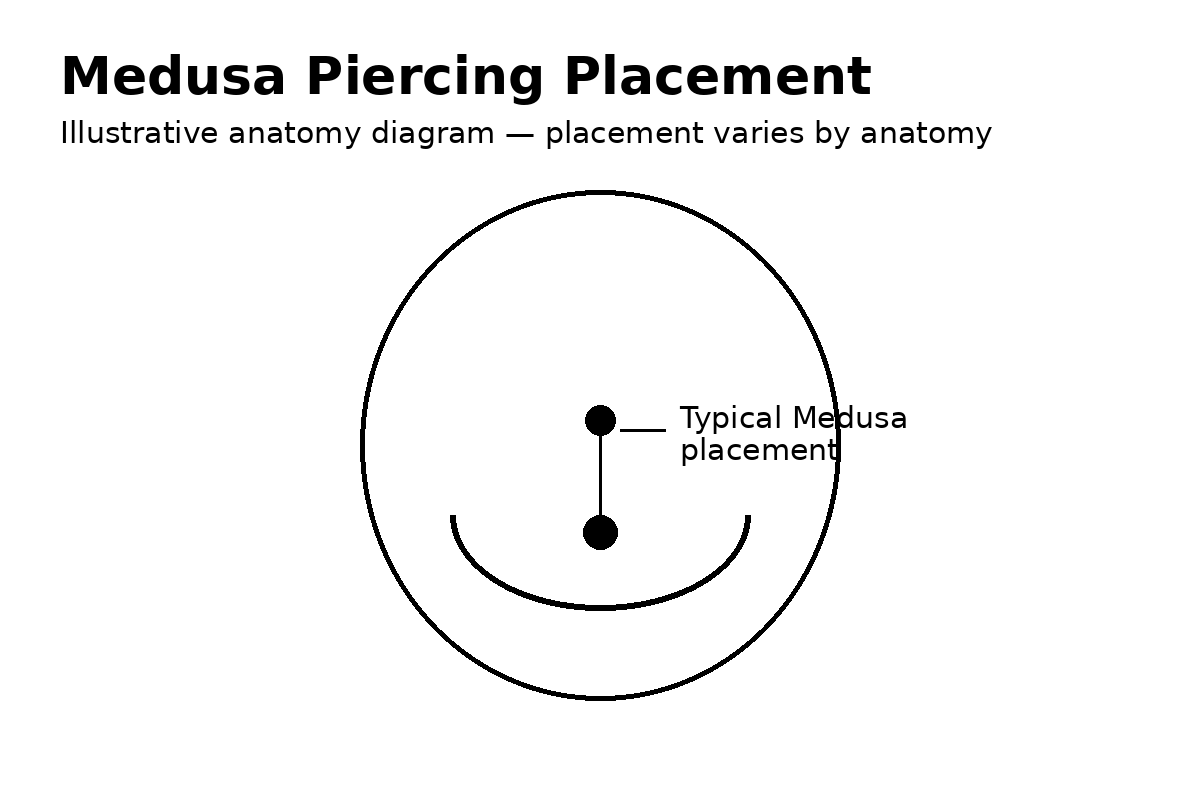
A Medusa piercing, also called a philtrum piercing, passes through the center of the upper lip area directly below the nose. From the front, the jewelry appears centered above the upper lip. A small bead, disc, or decorative end is visible externally, while the back of the jewelry rests inside the mouth.
The name “Medusa” is widely used in piercing culture, while “philtrum piercing” is the more anatomical description. It should not be confused with a vertical labret or a Monroe piercing, because those piercings occupy different positions.
2. Medusa Piercing Placement and Anatomy
Correct placement depends on the individual anatomy of the philtrum and upper lip. A professional piercer should inspect the tissue before performing the procedure and choose jewelry dimensions that provide enough room for expected swelling without leaving excessive length once swelling settles.
The final position should look centered from the front while allowing the back of the jewelry to sit comfortably inside the mouth. Anatomy, lip movement, existing dental work, and the relationship between the jewelry and teeth or gums should all be considered before piercing.
3. How Is a Medusa Piercing Done?
A reputable studio should begin with a consultation and an anatomy assessment. The piercer should explain placement, jewelry, expected swelling, healing, and aftercare before proceeding.
The area is prepared using appropriate hygiene and aseptic technique. A sterile single-use needle is used to create the piercing channel, after which properly sized initial jewelry is inserted. Professional piercing organizations emphasize training, sterilization, anatomy, jewelry quality, and a clean work environment when choosing a piercer.
Do not attempt a Medusa piercing at home or with a piercing kit. Improvised methods can increase the risk of poor placement, tissue trauma, contamination, and avoidable complications.
4. Does a Medusa Piercing Hurt?
Pain varies from person to person. The procedure is usually brief, but the philtrum is a sensitive facial area, so you may feel a sharp pinch followed by pressure or warmth. Tenderness and swelling are more noticeable during the first part of healing.
Pain that steadily worsens, becomes severe, or occurs with significant heat, spreading redness, fever, or substantial discharge should not be treated as routine healing. Seek medical advice when infection or another complication is suspected.
5. Swelling, Bruising, and Early Healing
Mild swelling, tenderness, localized bruising, and a small amount of bleeding can occur after a fresh piercing. Some whitish or yellowish fluid that dries into light crust can also occur during normal healing.
A piercing can look healthy externally before the internal tissue has finished healing. Avoid changing jewelry simply because the outside feels comfortable. A professional piercer can determine when a downsize or jewelry change is appropriate.
6. How Long Does a Medusa Piercing Take to Heal?
Healing time varies with anatomy, jewelry, lifestyle, aftercare, and irritation. There is no single guaranteed number of days that applies to everyone. The safest approach is to treat the piercing as a healing wound until a qualified piercer confirms that it is ready for a jewelry change.
The outside may appear settled while the internal channel remains delicate. Repeated touching, playing with the jewelry, friction, harsh cleaning products, and premature jewelry changes can prolong the process.
7. Medusa Piercing Aftercare
Wash your hands before touching the area. For external care, a sterile saline wound wash is a simple option. The Association of Professional Piercers recommends sterile saline labeled as a wound wash, with 0.9% sodium chloride as the key ingredient, and advises against harsh products that can irritate healing tissue.
Do not twist, spin, or rotate the jewelry. Let the piercing remain as undisturbed as possible. After cleaning, dry gently with a clean disposable product rather than rubbing with a rough towel.
Avoid alcohol, hydrogen peroxide, strong antibacterial products, ointments, and excessive cleaning. More cleaning is not automatically better; irritation can slow healing.
8. Oral Hygiene and the Inside of the Lip
Because a Medusa piercing passes through the upper lip, oral hygiene deserves special attention. Brush and floss normally while being gentle around the jewelry. An alcohol-free mouth rinse may be useful when appropriate, but it should not be overused.
Rinsing the mouth with clean water after eating or drinking can help remove food debris. Keep the jewelry clean and avoid playing with it against the teeth or gums.
If the jewelry repeatedly rubs against teeth or gum tissue, ask a qualified piercer to assess the fit. Dental or gum irritation is a reason to address jewelry size and placement rather than simply ignoring the friction.
9. Best Jewelry for a Medusa Piercing
A flat-back labret is commonly used because the interior disc can sit relatively flush against the inside of the lip. The correct length is important: initial jewelry must allow for swelling, while later jewelry may need to be shortened by a professional once swelling decreases.
Jewelry should be made from a reputable body-jewelry material appropriate for fresh piercings. Implant-grade titanium is a commonly chosen option because it is lightweight and well tolerated by many people. High-quality gold can also be appropriate when it meets suitable purity and manufacturing standards and is intended for body piercing.
Avoid cheap, unknown alloys or plated jewelry in a fresh piercing. Material quality, surface finish, threading, and sizing all affect comfort and healing.
10. When Should You Downsize the Jewelry?
Fresh piercings are often fitted with extra length to accommodate swelling. Once swelling has settled, excessive length can move around, catch on teeth, or encourage unnecessary irritation.
Do not guess the size or replace it yourself during early healing. Have a qualified piercer inspect the piercing and select a shorter post when appropriate. A correctly fitted piece should allow normal tissue movement without constant pressure or excessive movement.
11. Infection vs. Normal Healing
Normal healing can include mild swelling, tenderness, itching, discoloration, and a small amount of pale secretion that forms crust. These signs do not automatically mean infection.
More concerning symptoms can include rapidly increasing swelling, severe or worsening pain, spreading redness, significant heat, foul-smelling discharge, fever, or feeling generally unwell. If you suspect infection, seek medical attention. Do not rely on internet advice to diagnose a facial infection.
If an infection is suspected, do not automatically remove the jewelry without professional guidance. A healthcare professional can advise whether jewelry should remain in place or whether another approach is needed.
12. Piercing Bumps, Irritation, and Migration
A bump near a piercing may result from irritation, pressure, trauma, poor jewelry fit, or other causes. It is not automatically a keloid or an infection.
Reduce unnecessary touching and friction, review the jewelry size with a professional, and use gentle aftercare. Avoid aggressive squeezing, popping, or applying random home remedies.
Migration means the piercing gradually shifts toward the surface. If the tissue becomes unusually thin or the jewelry appears to be moving, have it assessed promptly by an experienced piercer.
13. Can a Medusa Piercing Damage Teeth or Gums?
Any oral-area piercing can create friction against teeth or gum tissue, particularly when jewelry is too long or repeatedly played with. A good fit and proper downsizing can reduce unnecessary contact, but they cannot eliminate every possible dental risk.
Pay attention to persistent rubbing, chipped enamel, tooth sensitivity, gum irritation, or recession. If you notice a dental change, arrange an examination with a dentist and have the piercing evaluated by a professional piercer.
14. Eating, Drinking, Kissing, Smoking, and Alcohol
Eating is generally possible after the initial procedure, but swelling and tenderness may make chewing uncomfortable. Choose foods that are easy to manage and keep the area clean afterward.
During early healing, avoid activities that introduce unnecessary trauma, pressure, or bodily fluids to the piercing. The APP specifically advises avoiding oral contact and bodily-fluid exposure on or near a healing piercing.
Smoking and vaping can prolong healing and increase irritation. Alcohol can also be problematic during the early period, particularly while bleeding or swelling is present. Follow your piercer's aftercare instructions and use common-sense hygiene.
15. Makeup, Skincare, Exercise, and Swimming
Keep cosmetics, creams, sprays, and other personal-care products away from a fresh piercing. Exercise is generally compatible with healing, but avoid activities that repeatedly bump or contaminate the area.
Pools, hot tubs, lakes, oceans, and other bodies of water can expose a healing piercing to microorganisms. Avoid submerging a fresh piercing when possible. If your lifestyle makes water exposure unavoidable, discuss practical protection with your piercer.
16. Can You Get a Medusa Piercing With Braces or Dental Work?
Braces, retainers, crowns, veneers, and other dental appliances can change how jewelry contacts the mouth. This does not automatically mean a Medusa piercing is impossible, but it makes an anatomy and dental assessment more important.
If jewelry repeatedly catches on orthodontic hardware or rubs against dental surfaces, the piercing may need a different jewelry configuration or may simply be unsuitable for your current setup. Ask both your dentist or orthodontist and an experienced piercer when appropriate.
17. Medusa Piercing and Lip Fillers
If you have had lip filler or plan to get it, discuss timing with both the qualified injector and your piercer. Swelling, tissue changes, and altered anatomy can affect piercing placement and healing.
Do not schedule cosmetic injections over or immediately around a fresh piercing without professional advice. Combining procedures too closely can make swelling and complication assessment more difficult.
18. Who Is a Good Candidate?
A good candidate is someone who understands the healing commitment, can follow aftercare instructions, has suitable anatomy, and is willing to monitor dental and gum contact.
You may want to postpone the piercing if the area is currently irritated, infected, injured, or undergoing a dental or cosmetic procedure that could interfere with healing. A professional consultation is the best way to determine suitability.
19. Choosing a Professional Piercer
Look for a piercer who provides an anatomy consultation, explains jewelry materials and sizing, uses appropriate sterilization procedures, works in a visibly clean environment, and provides clear written aftercare.
Ask about their training, experience with philtrum piercings, sterilization process, jewelry materials, and follow-up support. A professional should be comfortable telling you when your anatomy is not suitable instead of promising that every piercing can be done.
20. Common Mistakes to Avoid
The most common avoidable mistakes include touching the piercing with dirty hands, rotating the jewelry, over-cleaning, using alcohol or peroxide, changing jewelry too early, choosing poor-quality jewelry, sleeping or playing in a way that repeatedly traumatizes the area, and ignoring persistent dental or gum contact.
Another mistake is assuming that a piercing is completely healed simply because it no longer hurts. Internal tissue can remain fragile after external symptoms improve.
21. Removing a Medusa Piercing
If you no longer want the piercing, a professional can remove the jewelry, especially if the area is irritated or the jewelry is difficult to handle. Continue gentle cleaning while the opening closes.
A small mark may remain after removal, although the final appearance varies. If you suspect infection, seek medical advice before deciding to remove the jewelry.
22. Medusa Piercing Cost
The price varies widely by country, studio, piercer experience, jewelry material, and jewelry design. A very low price should not be the main reason for choosing a studio. Sterilization, professional skill, consultation, and quality jewelry are more important than finding the cheapest appointment.
Ask for the total price before booking, including the initial jewelry and any planned follow-up or downsize fee.
23. Pros and Cons
Pros include a centered facial accent, a wide range of jewelry styles, and a distinctive appearance that can complement many looks.
Cons include a healing period, possible swelling, the need for careful aftercare, possible dental or gum irritation, and the possibility of scarring or other complications. The decision should be based on both appearance and your willingness to maintain the piercing properly.
Leave a Reply