

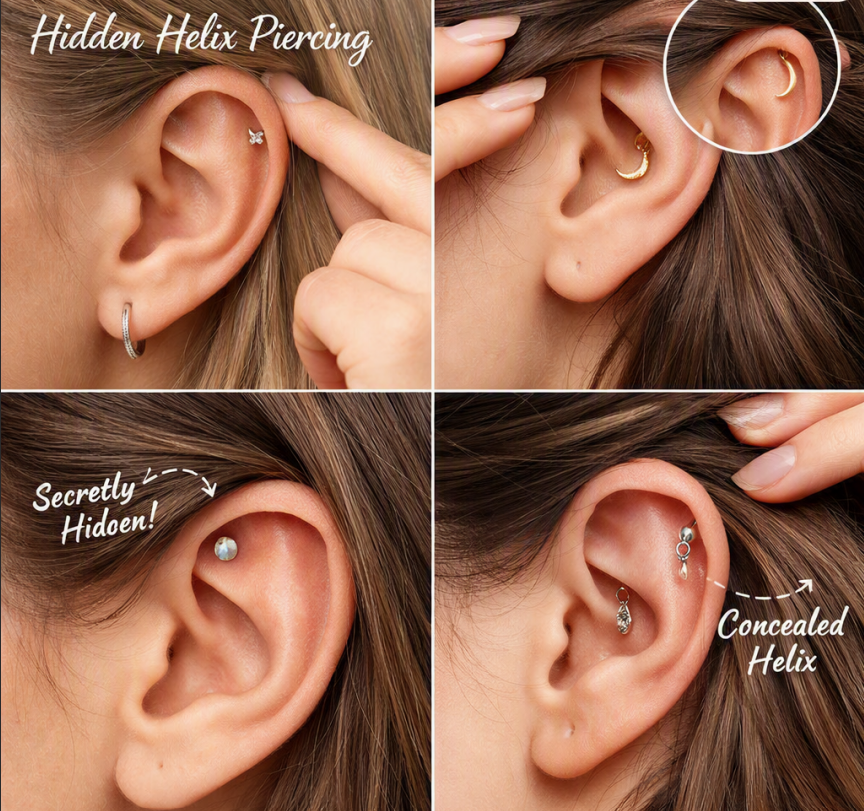

A hidden helix piercing is a cartilage piercing placed around the upper outer ear in a position that can make the jewelry look partly concealed by the ear's natural folds. It offers a subtle alternative to a conventional helix piercing and can work well in a minimalist ear-curation style. Because ear anatomy varies, the exact placement and jewelry choice should be decided after an individual assessment by a qualified professional piercer.
What Is a Hidden Helix Piercing?
A hidden helix piercing is a cartilage piercing positioned in the upper outer region of the ear, around the helix area. Unlike a traditional helix, the jewelry may sit behind or beneath a natural fold, so it can appear more discreet from some angles.

The term describes a style of placement rather than one identical spot that works for every ear. The shape, thickness and folds of your ear determine whether this placement is practical.
Where Is a Hidden Helix Piercing Located?
A hidden helix is generally placed in the upper cartilage near a suitable fold of the helix. The exact location varies from person to person. A professional piercer should check the available tissue, cartilage thickness, jewelry angle, existing piercings and how the area is likely to behave after swelling develops.
How Does a Hidden Helix Piercing Work?
A professional piercer first assesses the ear and marks a placement that suits its anatomy. A sterile, single-use piercing needle should be used by a trained professional. Initial jewelry should allow appropriate room for swelling and should not put unnecessary pressure on the tissue. After swelling decreases, a professional may recommend downsizing the jewelry.
Does a Hidden Helix Piercing Hurt?
Yes. Because the piercing passes through cartilage, you can expect a brief sharp pinch or pressure sensation. Pain varies with individual tolerance, anatomy, placement and technique. The procedure is usually very quick, while tenderness and irritation can last much longer during healing.
How Long Does a Hidden Helix Piercing Take to Heal?
Cartilage generally heals more slowly than soft tissue. A hidden helix may take several months to heal fully, and some piercings can take longer. Healing may be prolonged by sleeping on the ear, headphone pressure, hair snagging, frequent touching, poorly fitting jewelry or repeated irritation.
A piercing can look healthy on the outside while deeper tissue is still healing, so appearance alone should not determine when it is ready for a jewelry change.
Hidden Helix Piercing Healing Stages
Early healing may involve mild redness, swelling, tenderness and a small amount of clear or pale fluid. Dried lymph fluid can form around the jewelry. As healing progresses, tenderness should gradually decrease, although pressure or accidental trauma can cause temporary flare-ups. Later, the tissue should become more stable and less sensitive.
Hidden Helix Piercing Aftercare
Good aftercare reduces avoidable irritation while the piercing heals. Wash your hands before touching the piercing. Use an appropriate sterile saline wound wash according to its product directions. Do not twist or rotate healing jewelry unnecessarily. Avoid sleeping directly on the piercing, keep hair from catching on it, and be careful with headphones. Avoid routinely applying alcohol, hydrogen peroxide or other harsh substances unless a healthcare professional specifically advises them.
Hidden Helix Piercing Aftercare Checklist
· Wash your hands before touching the piercing.
· Use sterile saline as directed by the product or your professional piercer.
· Do not twist or rotate the jewelry unnecessarily.
· Avoid sleeping directly on the fresh piercing.
· Keep hair, clothing and other objects from snagging the jewelry.
· Reduce headphone pressure if it causes rubbing or discomfort.
· Avoid harsh cleaning chemicals and unnecessary products.
· Do not change jewelry prematurely.
What Jewelry Is Best for a Hidden Helix Piercing?
Jewelry should be selected according to anatomy, placement and healing needs. Suitable options can include high-quality flat-back studs and other low-profile pieces made from appropriate implant-grade materials. Implant-grade titanium is commonly chosen for fresh piercings because it is lightweight and suitable for many people. A reputable piercer can advise on the appropriate material, length and fit.
Can You Wear a Ring in a Hidden Helix Piercing?
A ring may work for some fully healed placements, but it is not automatically appropriate for a fresh hidden helix. Rings can move more than studs and may introduce additional friction. For a new piercing, a professional may prefer a stable, low-profile piece.
Hidden Helix Piercing Pros and Cons
Potential advantages include a distinctive appearance, a discreet style, compatibility with minimalist ear curation and the ability to complement other piercings. Potential disadvantages include strong dependence on anatomy, a long cartilage-healing period, pressure-related irritation, difficulty accessing the jewelry in some placements, and limitations caused by headphones or sleeping position.
Can Everyone Get a Hidden Helix Piercing?
No. A professional needs to examine the ear first. Some ears do not have an appropriate fold, tissue depth or space for the desired placement. Do not copy a placement from a photograph because the same position may not be suitable for your anatomy.
How Much Does a Hidden Helix Piercing Cost?
Cost varies by city, studio, piercer experience, jewelry material and jewelry design. When comparing studios, look beyond price and consider hygiene, experience, jewelry quality and aftercare support.
Hidden Helix Piercing Risks
Potential complications include prolonged swelling, irritation, allergic reactions to unsuitable metals, jewelry embedding, infection and scarring. Cartilage infections can become serious. Increasing pain, spreading redness, significant warmth or swelling, pus-like drainage, fever or feeling unwell should prompt medical assessment.
Irritation Bump vs. Infection
A bump does not automatically mean infection. Irritation can follow pressure, friction, sleeping on the piercing, jewelry movement or hair snagging. Infection can involve worsening pain, spreading redness, marked warmth, significant swelling or pus-like drainage, sometimes with fever or feeling unwell. Persistent or worsening problems should be assessed by a healthcare professional.
When Can You Change Hidden Helix Jewelry?
Do not change jewelry simply because the outside looks healed. Cartilage can continue healing beneath the surface. A professional piercer can assess whether downsizing or a jewelry change is appropriate.
How to Sleep With a Hidden Helix Piercing
Avoid direct pressure on a fresh cartilage piercing. Sleep on the opposite side, keep bedding clean, and avoid repeatedly touching the ear. A clean travel pillow can sometimes help keep pressure off the ear.
Hidden Helix Piercing and Headphones
Headphones can cause pressure, rubbing or snagging. Check whether the device touches the jewelry or traps moisture. If it repeatedly irritates the piercing, reduce or avoid use until the area is more comfortable.
Can You Swim With a Hidden Helix Piercing?
Fresh piercings are vulnerable to contamination and irritation. Avoid unnecessary exposure to swimming pools, hot tubs, lakes and other bodies of water while the piercing is healing, and follow your professional piercer's aftercare guidance.
How to Choose a Piercer
Ask how the studio assesses anatomy, what jewelry materials it uses, how sterile equipment is handled and what aftercare it recommends. Looking at examples of healed work can also be useful. A good consultation should include an anatomy assessment before the piercing is performed.
Hidden Helix Piercing for Different Ear Shapes
Ear anatomy differs substantially. Some people have prominent outer cartilage, deeper folds, thicker cartilage or less available space. These differences can change the ideal placement and jewelry style, which is why copying an exact position from an online image is not recommended.
Hidden Helix vs. Other Cartilage Piercings
Piercing | Typical placement | Main distinction |
Hidden helix | Upper ear cartilage/fold | More concealed or subtle appearance |
Traditional helix | Outer upper ear rim | Usually more visible |
Forward helix | Front portion of upper ear | Located toward the front of the helix |
Flat piercing | Relatively flat upper-ear cartilage | Usually placed on the flatter cartilage area |
Hidden Helix Piercing: Quick Facts
Area | Upper outer ear cartilage/fold |
Appearance | Subtle or partly concealed |
Pain | Brief cartilage piercing pain; varies by person |
Healing | Several months or longer |
Jewelry | Low-profile, suitable high-quality jewelry |
Anatomy | Highly anatomy-dependent |
Main concern | Pressure and irritation during healing |
Frequently Asked Questions
Is a hidden helix piercing painful?
It can be painful because it passes through cartilage, but the intensity varies. The piercing itself is usually brief.
How long does a hidden helix piercing take to heal?
It generally takes several months, and some cartilage piercings take longer. Individual healing varies.
Is a hidden helix piercing safe?
No piercing is completely risk-free. Professional placement, sterile technique, suitable jewelry and appropriate aftercare can reduce avoidable risks.
Can I get a hidden helix piercing on either ear?
Potentially, but it depends on your anatomy. A professional should assess the ear first.
Can I sleep on a hidden helix piercing?
Avoid direct pressure while it is healing because pressure can contribute to irritation and delayed healing.
Can I use a hoop immediately?
A hoop is not automatically suitable for a fresh hidden helix. Jewelry should be selected according to anatomy and healing needs.
What is the best jewelry for a new hidden helix piercing?
A suitable low-profile piece such as a quality flat-back stud may work well for many placements. The exact material, size and fit should be selected by a professional.
Why is my hidden helix piercing swollen?
Some swelling can be normal after a new cartilage piercing. Increasing or severe swelling, worsening pain, spreading redness, warmth or other concerning symptoms should be medically assessed.
Can a hidden helix piercing get infected?
Yes. Any piercing can become infected. Worsening pain, spreading redness, significant swelling, pus-like drainage or fever should not be ignored.
Does a hidden helix piercing leave a scar?
Any piercing can leave a mark or scar, particularly after trauma, infection or significant irritation. Individual results vary.
Leave a Reply